




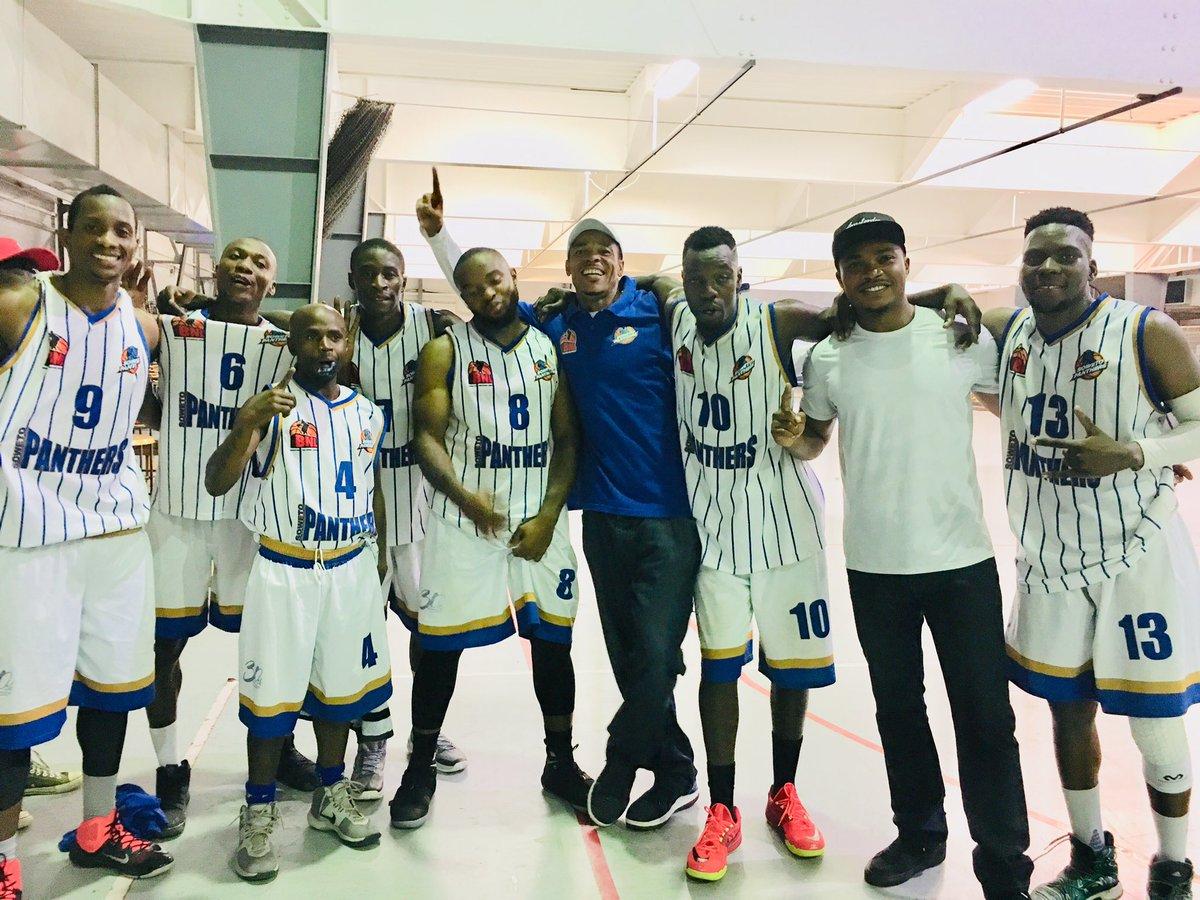
“South African basketball is facing renewed uncertainty following a disagreement between Basketball South Africa (BSA) and the Basketball National League (BNL) over which club should represent the country in the Road to Basketball Africa League 2027 competition. While the BNL announced Soweto Panthers as its champions and South Africa’s representatives, BSA maintains that Johannesburg Giants earned the right through its national club championships, raising wider questions about governance, sporting authority and the future of the game.”
South African Basketball Faces Major Governance Test as Soweto Panthers and Johannesburg Giants Dispute Road to BAL Representation
South African basketball is confronting an important moment in its development as disagreements over national representation, sporting administration and institutional authority threaten to overshadow the achievements of its clubs and players. At the centre of the controversy is the dispute between Basketball South Africa (BSA) and the Basketball National League (BNL) over which club should represent the country in the Road to the Basketball Africa League (BAL) 2027 qualification competition.
The disagreement involves two prominent South African basketball clubs, Soweto Panthers and Johannesburg Giants. Both have emerged as central figures in a complicated situation that raises important questions about competition recognition, administrative responsibility and the country’s ability to establish a stable pathway towards continental basketball.
The controversy became public in October 2026 after the Basketball National League announced that Soweto Panthers would represent South Africa in the Road to BAL competition. The announcement followed the club’s success in the 2026 BNL championship. However, Basketball South Africa challenged the decision, arguing that Johannesburg Giants had earned the right to represent the country through its national club championships.
The disagreement over South Africa’s continental representative
The announcement of Soweto Panthers as South Africa’s representatives initially appeared to be an important achievement for the Soweto-based basketball organisation. Representing the country in a continental competition offers clubs an opportunity to demonstrate their abilities against strong opponents from other African basketball nations.
For Soweto Panthers, the opportunity also represents the possibility of increasing the club’s visibility, attracting commercial partners and inspiring young basketball players.
Nevertheless, Basketball South Africa rejected the announcement, questioning the authority of the BNL to determine the country’s continental representative.
According to reporting by Eyewitness News, BSA maintains that Johannesburg Giants were crowned national champions following its official national club championships. The federation also says that it had already submitted the Giants’ details to the FIBA Africa Competitions office as South Africa’s representatives.
BSA described the endorsement of Soweto Panthers as irregular and procedurally flawed. It indicated that it intended to challenge the decision through the appropriate FIBA Africa and international basketball structures.
This disagreement has created uncertainty for both clubs because international competition requires clear administrative recognition, eligibility confirmation and compliance with the relevant regulations.
A longstanding disagreement between BSA and the BNL
Although the controversy became prominent in October, the disagreement between the two basketball organisations has deeper roots.
Documents reported by Eyewitness News indicate that Basketball South Africa and the Basketball National League previously operated under a licensing agreement signed in October 2013.
However, BSA subsequently informed the league that the agreement would not be renewed. In correspondence dated 10 June 2024, the federation stated that the contractual relationship had ended on 30 September 2023.
The disagreement reportedly followed unsuccessful engagements intended to establish organisational cooperation and develop a national league aligned with the federation’s objectives.
BSA also indicated that it did not endorse competitions organised by the BNL and requested that the league stop using its branding and FIBA logos.
This history is important because it helps explain why the two organisations have different positions regarding the authority to organise competitions and select clubs for international participation.
The BNL has continued operating its competition structure, while BSA maintains that its national federation responsibilities should determine the official pathway for international representation.
However, the existence of a contractual disagreement does not automatically resolve the separate question of which club should participate in the Road to BAL. That issue requires clarification through the relevant sporting rules and recognised decision-making processes.
Government intervention and the future of basketball administration
South Africa’s basketball governance challenges have attracted attention from government authorities and international sporting organisations.
On 28 January 2026, the Department of Sport, Arts and Culture announced that it had started a process to rebuild and stabilise basketball administration following the derecognition of Basketball South Africa because of prolonged governance and administrative failures.
The initiative involves cooperation between the department, FIBA Africa and the South African Sports Confederation and Olympic Committee (SASCOC).
Its objectives include developing a recovery roadmap, strengthening accountability, establishing a properly governed national federation and creating credible leadership structures.
The government also recognised that administrative problems had affected the sport’s ability to realise its development potential.
The intervention is particularly important because basketball offers opportunities for young people across different communities. Unlike some sports requiring expensive equipment and extensive facilities, basketball can be introduced through relatively accessible community courts and organised development programmes.
Government involvement therefore represents an opportunity to address structural weaknesses and create a more sustainable foundation for the sport.
Why the dispute matters to South African basketball players
The disagreement is about more than the identity of one club participating in a continental tournament.
For professional players, international competition offers opportunities to improve their experience, demonstrate their abilities and attract attention from coaches, scouts and organisations outside South Africa.
A successful Road to BAL campaign could provide South African players with valuable exposure to different playing styles and stronger opposition.
However, administrative uncertainty can make preparation more difficult.
Players and coaching staff need reliable information about competition schedules, registration procedures, eligibility requirements and the organisations responsible for their participation.
Uncertainty can also affect sponsorship negotiations, travel arrangements and financial planning.
Clubs preparing for continental competition must be able to concentrate on training, tactical preparation, physical conditioning and team development.
When institutional disagreements become the main focus, those sporting priorities risk receiving less attention.
The situation also affects supporters. Fans want to know which team will represent their country and how they can follow its progress.
A transparent resolution would therefore benefit not only the two clubs but also the wider basketball community.
The growing importance of the Basketball Africa League
The Basketball Africa League has become an important platform for the development and international visibility of African basketball.
Launched in 2021 through a partnership involving the National Basketball Association and FIBA, the competition provides a professional platform for leading clubs across the continent.
South Africa has already demonstrated its potential to contribute to the league’s growth.
In an interview published on 27 October 2026, NBA South Africa head Zeph Masote described the Basketball Africa League as being in a strong position as preparations for its seventh season continue.
Masote highlighted attendance exceeding 38,000 people at SunBet Arena during the 2026 season as evidence of growing interest.
He also encouraged South African businesses and municipalities to collaborate on expanding basketball infrastructure.
This is an important development because a stronger domestic basketball environment can help create opportunities for athletes, coaches, administrators and commercial partners.
The success of the BAL also demonstrates that African basketball can attract substantial audiences and international attention.
For South Africa, participating consistently and competitively in continental tournaments could strengthen the country’s position within the African basketball landscape.
Opportunities for young players and community development
One of the most important considerations in resolving the current dispute is protecting the development opportunities available to young basketball players.
South Africa has communities with significant sporting potential, and basketball can provide an alternative pathway for young people interested in organised competition.
Community clubs, schools, universities and provincial structures all have important roles to play in developing future talent.
However, these development programmes require dependable administration.
Young athletes need access to qualified coaches, regular competitions, appropriate facilities and opportunities to progress through different levels of the sport.
A properly coordinated national basketball structure could help connect grassroots programmes with elite club competitions.
It could also encourage greater investment from private companies, municipalities and educational institutions.
The growth of three-on-three basketball provides another opportunity. Its relatively flexible format makes it suitable for community tournaments, youth programmes and public sporting events.
South Africa’s achievements in street basketball and other alternative formats demonstrate that development does not have to depend exclusively on traditional professional competitions.
A stable administrative environment would make it easier to expand these opportunities.
Commercial investment and sponsorship opportunities
The current disagreement also highlights the importance of creating a trustworthy environment for commercial investment.
Sponsors are more likely to support competitions when organisational responsibilities are clear and events can be delivered consistently.
Basketball has several attractive commercial opportunities, including team sponsorships, court branding, sports apparel, broadcasting, digital content and community tournaments.
The Road to BAL provides an additional opportunity to introduce South African basketball to international audiences.
However, commercial partners need confidence that the competition structures they support are legitimate and properly administered.
The government, basketball organisations and commercial stakeholders therefore have a shared interest in resolving the existing governance challenges.
Investment should extend beyond professional teams to include youth development, coaching education, refereeing and infrastructure.
Such an approach would help create a sustainable basketball ecosystem rather than concentrating resources exclusively on a small number of elite clubs.
What happens next?
The immediate priority is resolving the competing claims involving Soweto Panthers and Johannesburg Giants.
Basketball South Africa has indicated that it intends to pursue formal objections through FIBA’s structures. Meanwhile, the BNL has announced that FIBA Africa confirmed the registration of Soweto Panthers as South Africa’s representatives for the Road to BAL 2027, subject to the applicable competition requirements.
These competing positions need to be addressed through transparent procedures and authoritative clarification.
The relevant organisations should communicate the criteria used to determine national representation, explain the status of the competing competition structures and provide clear information about eligibility.
It is equally important that the players and clubs receive timely updates so that preparations are not unnecessarily disrupted.
Beyond the immediate dispute, the government-led governance recovery process must continue to establish a credible and sustainable national structure.
South Africa has the potential to become a stronger force in African basketball, but achieving that ambition requires cooperation, institutional accountability and long-term investment.
Conclusion: South African basketball needs unity and credible leadership
The disagreement involving Soweto Panthers, Johannesburg Giants, Basketball South Africa and the Basketball National League represents a significant challenge for the country’s basketball community.
Although the immediate issue concerns continental representation, the wider implications involve the administration, credibility and future development of the sport.
South Africa has talented athletes, established clubs, passionate supporters and growing opportunities through the Basketball Africa League.
The challenge is ensuring that these strengths are supported by reliable sporting structures.
Resolving the dispute transparently would be an important step towards restoring confidence and allowing clubs to focus on competing successfully.
Ultimately, South African basketball’s future should be determined by sporting merit, fair procedures, responsible leadership and the interests of the athletes.
The country has an opportunity to turn its current administrative difficulties into a foundation for meaningful reform. Achieving that goal will require all stakeholders to put the long-term interests of basketball ahead of organisational disagreements.



