




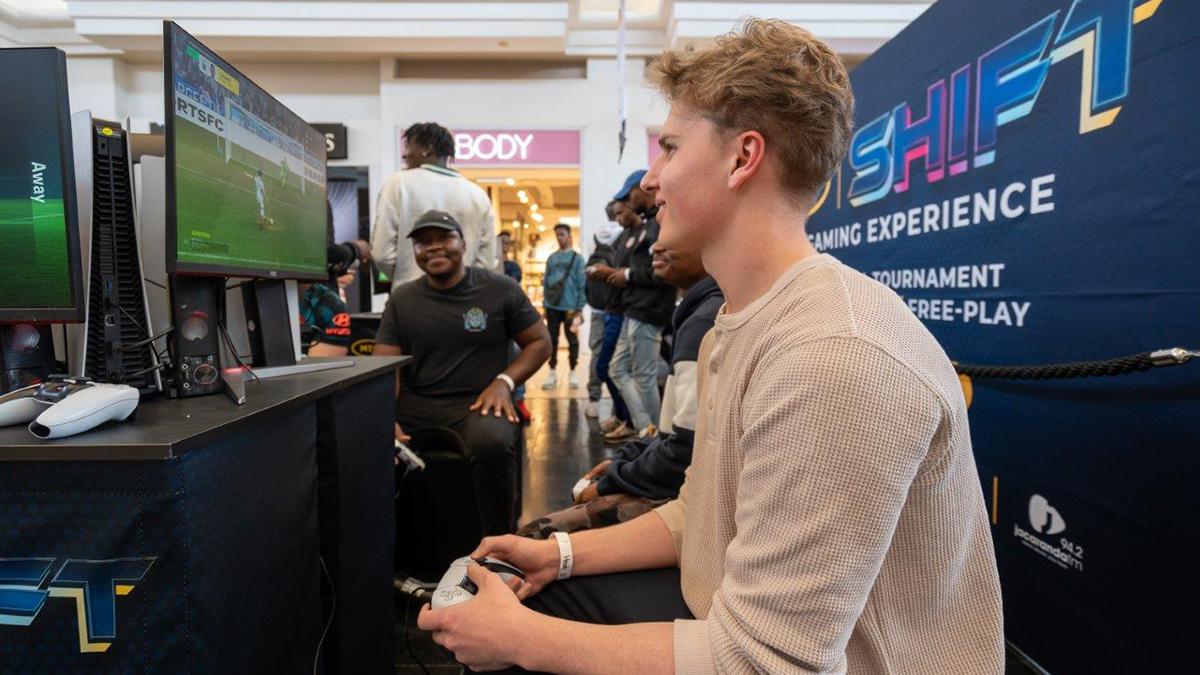
“South Africa’s Hyprop MTN SHIFT Gaming Experience concluded its national finals at Canal Walk Shopping Centre in Cape Town, celebrating champions in Beat Saber, EA SPORTS FC 26 and Brawlhalla after a competition series involving eight shopping centres and 42,327 competitors and visitors. The tournament demonstrates how accessible gaming events can connect emerging players with competitive opportunities while strengthening South Africa’s wider esports community.”
South African Esports Champions Crowned as SHIFT Gaming Experience Highlights the Rise of Competitive Gaming
A major moment for South African competitive gaming
South Africa’s competitive gaming community has received another significant boost following the conclusion of the Hyprop MTN SHIFT Gaming Experience national finals at Canal Walk Shopping Centre in Cape Town. The tournament series brought together players and spectators across the country, culminating in a final celebration of gaming talent, competition and community participation.
According to a report published by Cape Town Guy on 9 October 2026, the competition crowned winners in three gaming titles: Beat Saber, EA SPORTS FC 26 and Brawlhalla. The wider series attracted 42,327 competitors and visitors across eight Hyprop shopping centres, demonstrating the appeal of organised gaming events outside traditional esports arenas.
The event represents an important development for South African esports because it connects competitive play with public entertainment. By placing tournaments inside busy shopping centres, organisers create opportunities for experienced players, newcomers and spectators to encounter esports in an accessible environment.
Although gaming competitions have long attracted dedicated online communities, events such as SHIFT can introduce competitive gaming to people who might not otherwise attend a specialist tournament. This broader exposure could help develop future players, audiences and sponsors.
Three champions take the spotlight
The national finals celebrated three winners across different gaming formats, each requiring distinct abilities and competitive preparation.
Ethan Luck, known in gaming circles as Nova, won the Beat Saber competition. The rhythm-based game combines musical timing, coordination and physical movement, requiring players to respond accurately to visual patterns while maintaining their rhythm. Its inclusion demonstrates that esports events can accommodate more than conventional keyboard-and-mouse competitions.
Mogamat Zaid April, competing under the name Zaid April, secured the EA SPORTS FC 26 football title. The football simulation attracts players who must combine tactical awareness, precise controls, defensive organisation and quick decisions under pressure.
Jayden Devlal won the Brawlhalla competition, adding a fighting-game discipline to the national finals. Brawlhalla rewards timing, positioning, movement, matchup knowledge and the ability to adapt quickly to an opponent’s strategy.
These victories illustrate the diversity of modern esports. Competitive gaming encompasses sports simulations, rhythm games, fighting games, strategy competitions and numerous other genres. Each attracts different audiences and requires different combinations of technical skill, concentration and practice.
The available report confirms the champions’ names and titles but does not provide detailed match scores or full tournament brackets. Consequently, the significance of the results is best understood through the competition’s wider reach and the opportunities it creates for players.
A national competition with substantial participation
One of the most notable figures from the SHIFT Gaming Experience was its reported total of 42,327 competitors and visitors across eight shopping centres.
That figure reflects combined participation and attendance, rather than the number of unique esports competitors. Nevertheless, it demonstrates the capacity of a multi-location tournament series to attract substantial public interest.
The EA SPORTS FC 26 football competition alone recorded 2,029 registrations. Following the qualifying process, 12 finalists advanced to the national finals at Canal Walk.
This progression illustrates how a large participation base can be narrowed through competitive stages into a final event featuring selected players. For participants, qualifying can provide a measurable achievement and an opportunity to compete in front of a live audience.
For organisers, the model also offers a practical way to connect local competitions with a national showcase. Rather than requiring every player to travel to one central venue from the beginning, regional events can give participants an opportunity to compete closer to home before the strongest qualifiers advance.
Such structures can help gaming communities develop in different locations, although their long-term effectiveness depends on regular events, transparent rules, reliable tournament administration and opportunities for players to progress beyond individual competitions.
Prize money strengthens the competitive appeal
The report states that R350,000 in prize money was awarded throughout the SHIFT Gaming Experience. The EA SPORTS FC 26 final carried a R50,000 prize pool shared among the top four finishers.
Prize money can strengthen the appeal of esports by giving competitors a tangible reward for preparation and performance. It can also attract attention from aspiring players who want to understand whether competitive gaming offers realistic opportunities to develop their abilities.
However, prize money alone does not establish a sustainable professional career. Players seeking long-term success may also need sponsorships, tournament consistency, coaching, reliable equipment, content creation skills and careful financial planning.
The broader value of competitions such as SHIFT therefore extends beyond the amount distributed to winners. Organized tournaments can give participants experience in competitive settings, help them build reputations and introduce them to communities where they can find teammates, mentors and future opportunities.
The reported prize pool also demonstrates why commercial partnerships are important. Hosting tournaments across multiple shopping centres requires coordination, equipment, staffing, promotion and operational support. Sponsors and venue partners can help meet those requirements while creating experiences for visitors.
Shopping centres become competitive gaming venues
Canal Walk’s role as the host of the national finals highlights how commercial venues can contribute to the growth of esports.
Shopping centres already attract large numbers of people for shopping, dining and entertainment. Adding gaming competitions can introduce a different activity to these spaces, encouraging visitors to watch matches, discover new games and engage with local players.
Christie Stanbridge, Hyprop’s Brand and Campaigns Marketing Manager, said the tournaments made competitive gaming more accessible by bringing professionally organised competitions into shopping centres. The report also quoted Canal Walk General Manager Mandy Bellamy expressing support for the final and interest in building on the event’s success in 2027.
These comments point to a potential long-term relationship between esports organisers and physical venues. Shopping centres can provide public visibility, while tournament operators contribute competition formats, technical expertise and gaming communities.
For esports to benefit from this approach, events need to offer more than equipment placed in a public space. Fair competition, clear schedules, effective broadcasting, accessible registration and knowledgeable staff all contribute to the quality of the experience.
Spectators should also be able to understand what is happening. Displays, commentary and explanations of game mechanics can make matches more engaging for people unfamiliar with competitive gaming.
When these elements work together, a tournament can serve both as a sporting competition and as a public introduction to esports.
The importance of grassroots participation
The SHIFT Gaming Experience also raises a wider question about how South Africa can develop future competitive players.
Grassroots participation provides an important foundation. Players generally need opportunities to practise, enter competitions, learn from defeats and gradually improve before they can compete consistently at higher levels.
Multi-location events can help establish that foundation by creating entry points for people with different levels of experience. A first-time participant may not become a professional immediately, but an accessible competition can provide motivation to continue practicing and join a local gaming community.
Schools, universities, community organizations, gaming clubs and tournament operators can contribute to this development. Their roles may include providing supervised practice, hosting competitions, identifying promising players and teaching responsible participation.
South Africa already has organizations supporting structured esports participation. Mind Sports South Africa describes its esports strategy as prioritizing national representation, structured athlete pathways and institutional governance. Its website also lists upcoming online championships and national team activities.
The existence of these structures matters because grassroots events and formal competitive pathways can complement one another. Community tournaments introduce people to gaming, while organized leagues and representative competitions can provide more advanced goals.
Nevertheless, one successful event does not automatically guarantee sustained development. Consistent opportunities, inclusive participation, good administration and access to suitable technology remain important.
Building a wider gaming economy
Competitive gaming also creates opportunities beyond the players who appear on the tournament stage.
Events require organizers, commentators, broadcasters, technicians, marketing professionals, designers, photographers and content creators. Game publishers, equipment suppliers, venues and sponsors may also benefit when competitions attract audiences and encourage engagement.
South Africa’s wider gaming industry has begun attracting partnerships that treat gaming as a cultural and commercial platform. In a separate report dated 9 October 2026, Business Explainer reported that Nedbank had become the headline sponsor of rAge Nation, scheduled for 27–29 November 2026 at Level 8, Fourways Mall, Johannesburg. The event is planned as a broader gaming, technology and entertainment festival.
That announcement is distinct from the SHIFT Gaming Experience, but both developments point towards growing interest in organised gaming experiences and the communities surrounding them.
For businesses, esports can offer opportunities to reach audiences through event sponsorships, branded experiences and digital content. For participants, it can create routes into work that do not necessarily depend on becoming a professional player.
Still, growth should be assessed carefully. Sponsorship announcements and attendance figures demonstrate interest, but they do not by themselves establish profitability, stable employment or long-term market performance. Sustainable development requires repeat participation, responsible commercial practices and opportunities that continue after an event ends.
Inclusion and accessibility remain important
A successful esports ecosystem must make room for participants with different backgrounds, resources and abilities.
Gaming venues can help introduce new audiences to competition, but organisers should consider entry fees, transport, accessibility, equipment availability and the needs of participants with disabilities.
Accessibility is particularly relevant because not every player can use conventional controllers or standard gaming setups comfortably. Adapted equipment, alternative control methods and inclusive tournament rules can broaden participation when they are suitable for a particular game.
Community-focused gaming initiatives in South Africa have already explored these issues. Good Things Guy reported in May 2026 on Konke Gamers and its work to promote accessible esports participation.
The lesson for future tournaments is that accessibility should be considered during planning, rather than added only after problems emerge. Organisers can consult players, communicate available accommodations and make participation requirements clear.
Inclusion can strengthen communities while helping events reach people whose skills might otherwise remain undiscovered.
What comes next for South African esports?
The conclusion of the SHIFT Gaming Experience creates an opportunity to assess what worked and how future editions might improve.
Organizers could build on the multi-venue model by expanding qualifying opportunities, publishing clearer competitive information and providing more ways for participants to follow results online. They could also evaluate how many players return for subsequent tournaments and whether regional competitions generate lasting local communities.
Hyprop’s stated interest in making the tournament bigger in 2027 offers a potential next step, although further details about dates, participating venues and competition formats would need official confirmation.
Meanwhile, South African players can continue following national esports developments through organizations such as Mind Sports South Africa and specialist tournament platforms. Upcoming competitions, published rules and verified registration information will be particularly important for players seeking their next opportunity.
The strongest measure of success will not simply be whether a final attracts a large crowd. It will also be whether participants gain meaningful competitive experience, whether communities continue to engage and whether emerging players have accessible routes to improve.
Conclusion: A promising platform for competitive gaming
The Hyprop MTN SHIFT Gaming Experience national finals placed South African esports talent in the spotlight, recognizing champions in Beat Saber, EA SPORTS FC 26 and Brawlhalla. Its reported reach across eight shopping centres, combined with 42,327 competitors and visitors and R350,000 in prize money, illustrates the potential of public-facing tournaments to connect gaming with wider audiences.
The event is also a reminder that esports development involves much more than winning a final. It depends on accessible participation, reliable organization, investment, community engagement and pathways that help players progress.
South Africa’s competitive gaming scene still faces challenges, including unequal access to technology and the need for consistent opportunities. However, events that bring competition into accessible public spaces can help address some of those barriers while introducing new audiences to the activity.
As organizers consider future editions and other gaming festivals prepare to bring players and fans together, the key question is whether today’s enthusiasm can be converted into sustained participation and lasting opportunities.
For South African esports, the SHIFT Gaming Experience provides an encouraging example of how competition, community and commercial partnerships can meet on the same stage.



