




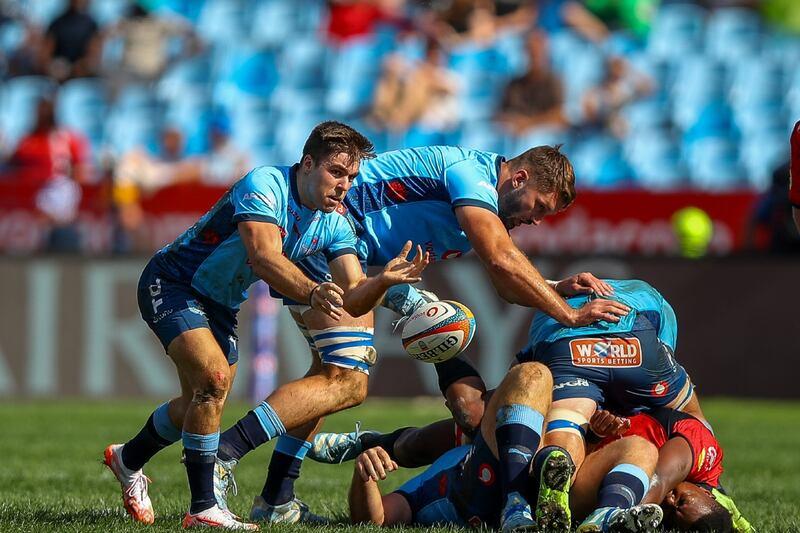
“The Bulls defeated the Lions 57–15 on 10 October, scoring nine tries in a commanding derby performance that showcased their attacking strength and forward dominance. Coach Johan Ackermann praised his returning Springbok players, while Cameron Hanekom and Johan Grobbelaar each scored twice as the Bulls responded impressively to their previous defeat against Munster.”
Bulls Deliver a Powerful Statement With 57–15 Victory Over Lions in Pretoria
A dominant derby performance strengthens Bulls’ URC ambitions
The Vodacom Bulls produced one of their most impressive performances of the early 2026/27 United Rugby Championship season when they defeated the 10bet Lions 57–15 at Loftus Versfeld in Pretoria on Saturday, 10 October. The emphatic result, reported on Sunday, 11 October, highlighted the Bulls’ attacking quality, physical strength and ability to convert scoring opportunities into points.
The Pretoria side scored nine tries against the Lions’ two, establishing a commanding advantage through effective forward play, intelligent attacking combinations and clinical finishing. The victory was particularly significant because the Bulls were looking to respond positively after their 26–22 defeat against Munster the previous week.
For head coach Johan Ackermann, the performance offered encouraging evidence that his players were absorbing the team’s tactical approach and developing the cohesion required to compete consistently in the demanding URC competition.
Bulls find their rhythm after a nervous opening
Although the final score suggested a one-sided contest, the Bulls initially needed time to settle. Captain Hanro Liebenberg acknowledged that the opening 10 to 15 minutes were somewhat nervous as the team worked to establish its rhythm.
Nevertheless, the hosts gradually gained control, using their physicality and attacking movement to put the Lions under sustained pressure. Their ability to identify opportunities and finish promising attacking sequences proved decisive.
Harold Vorster opened the scoring after a productive attacking movement. According to the match reporting, Vorster exploited space on the blindside, moved down the left touchline, chipped over a defender and gathered the ball before completing the try.
That early breakthrough helped establish the momentum that the Bulls would maintain throughout much of the encounter. Their attacking play became increasingly confident, with runners supporting one another and creating opportunities across the field.
The Lions struggled to contain the home team’s combination of direct running and intelligent distribution. Although they managed to score twice, they were unable to sustain sufficient defensive pressure to prevent the Bulls from extending their advantage.
Returning Springboks bring quality and experience
One of the most encouraging aspects of the Bulls’ performance was the contribution of their returning Springbok players. Their involvement demonstrated how international experience can strengthen a club side when national representatives return to domestic competition.
Ackermann praised the players for adapting quickly to the team’s expectations despite having limited preparation time together.
The coach explained that staff had sent information to returning players early in the week, followed by separate meetings and a training session designed to help them understand the team’s systems.
Although the preparation period was short, the returning internationals made important contributions. Their technical ability, decision-making and experience helped the Bulls maintain their attacking momentum and apply pressure in key areas.
Five of the Bulls’ nine tries were credited to returning Springboks, underlining their influence on the contest. However, Ackermann also stressed that individual performances depended on the collective work that created scoring opportunities.
This balance between international quality and coordinated team play could prove important as the Bulls pursue their objectives throughout the season.
Cameron Hanekom leads the charge
Cameron Hanekom was among the standout performers, earning man-of-the-match recognition after scoring two tries and contributing strongly to the Bulls’ forward effort.
The loose forward demonstrated his ability to exploit gaps, support attacking movements and finish opportunities close to the try line. His performance also highlighted the importance of mobility and decision-making among modern loose forwards.
Hanekom’s contribution was particularly encouraging because his effectiveness reflected more than individual strength. The Bulls regularly created space through coordinated running, support lines and pressure on the Lions’ defensive structure.
Ackermann was careful to recognise the teammates who helped create those opportunities, noting that rugby tries often result from several players contributing across a sequence of phases.
His comments reflected a broader coaching principle: successful attacking rugby depends on collective execution rather than isolated individual brilliance.
Hanekom’s performance will nevertheless attract attention from supporters who want to see the young forward continue developing at both club and international level. Sustaining that form will require consistency, fitness and the ability to reproduce his influence against different opponents.
Johan Grobbelaar provides another attacking weapon
Hooker Johan Grobbelaar also scored twice, providing another example of the Bulls’ ability to generate points through their forward pack.
Traditionally, forwards are associated with scrums, lineouts, tackling and close-range carrying. However, modern rugby increasingly demands that front-row players contribute to attacking sequences across wider areas of the pitch.
Grobbelaar’s two tries demonstrated the value of forward players who can recognise openings and finish effectively when opportunities arise.
The Bulls’ forward dominance also helped establish a platform for their backs. Strong set-piece execution and effective ball carrying can force defenders to commit close to the breakdown, creating additional space for attacking players elsewhere.
When those elements operate together, a team becomes more difficult to defend because opponents must prepare for several different threats.
For the Bulls, the performance suggested that their forwards could provide both physical control and a direct scoring contribution.
Attacking depth overwhelms the Lions
The Bulls continued to extend their lead after the interval, with tries from Canan Moodie, JF van Heerden, Cheswill Jooste and Sebastian de Klerk contributing to the final margin.
Their scoring variety demonstrated that the threat did not depend on a single player. Instead, different members of the team found opportunities as the Lions struggled to contain repeated attacking movements.
The home side’s willingness to maintain pressure was especially important. Rather than becoming conservative after establishing a substantial lead, the Bulls continued looking for opportunities and punished defensive weaknesses.
Their replacements also contributed positively, helping preserve the intensity during the closing stages. Ackermann specifically praised the bench for maintaining pressure and influencing the game after entering the field.
In a competition as physically demanding as the URC, the ability to introduce effective replacements can make a considerable difference. Teams must manage fatigue, injuries and the changing pace of matches while ensuring that their overall performance does not decline late in the contest.
The Bulls’ contribution from the bench therefore offered another encouraging sign for their coaching staff.
Lions face important questions after heavy defeat
For the Lions, the 57–15 loss was a difficult result that exposed weaknesses against a powerful and well-organised opponent.
The Johannesburg side was unable to consistently disrupt the Bulls’ attacking rhythm or prevent the home team from converting possession into tries. Defending against a team with multiple attacking threats requires excellent communication, disciplined positioning and rapid decision-making.
When one defender misses a tackle or a defensive line becomes disconnected, opponents can exploit the resulting space. Against the Bulls, those problems contributed to a contest in which the hosts repeatedly found opportunities to advance and score.
The Lions will need to review their defensive organisation, particularly their responses to attacking runners and their ability to maintain structure when opponents move the ball quickly.
Set-piece performance is another area that deserves attention. Scrum stability and reliable possession provide the foundation for sustained attacking pressure, while weaknesses can leave a team defending repeatedly.
However, one defeat does not determine the Lions’ entire season. The value of the result will ultimately depend on how the team responds in its next fixtures and whether the coaching staff can turn the lessons into measurable improvements.
A significant response after the Munster defeat
The Bulls’ victory carried additional importance because it followed their narrow loss to Munster.
After that setback, the Pretoria team needed to demonstrate improved execution and greater composure in the moments that determine close contests. Against the Lions, the players responded by making better use of their opportunities and maintaining their attacking intent.
Captain Liebenberg acknowledged that the team had failed to capitalise on enough opportunities against Munster. Improving that area became a central objective for the derby.
The Lions match offered a more convincing outcome, with the Bulls turning promising movements into points and maintaining their intensity after establishing an early advantage.
Nevertheless, the coaching staff will understand that a high-scoring win is only one part of a long campaign. Consistency against different styles of opposition remains essential.
The challenge now is to ensure that the performance becomes a foundation for further progress rather than an isolated highlight.
What the result means for South African rugby
The result provided a positive talking point for South African club rugby, particularly because it showcased the depth of talent available across domestic franchises.
The Bulls’ performance illustrated how returning Springboks, developing forwards and established club players can combine to produce an effective team effort.
Meanwhile, the derby also demonstrated the competitive demands facing South African sides in the URC. Domestic rivals understand each other’s strengths and weaknesses, making tactical preparation and execution especially important.
Strong performances by local franchises can also help develop players competing for national selection. Club rugby gives emerging talents opportunities to demonstrate their ability under pressure, while experienced internationals can help establish demanding standards in training and matches.
For supporters, matches such as this underline the entertainment value of South African rugby, where physical contests can develop into high-scoring encounters when attacking teams find space and maintain their momentum.
However, the wider significance should not be overstated. The Bulls must continue performing against varied opposition, and the Lions require time to demonstrate their response.
Conclusion: Bulls send a clear warning to their rivals
The Bulls’ 57–15 victory over the Lions was a convincing response to their previous defeat and an encouraging demonstration of their attacking potential in the 2026/27 United Rugby Championship.
Cameron Hanekom and Johan Grobbelaar each scored twice, returning Springboks made important contributions, and the team’s attacking depth proved too much for the Lions to contain.
Ackermann’s praise for the players reflected the importance of preparation, adaptability and collective commitment. The performance also showed how effective coaching, forward dominance and confident finishing can combine to produce a substantial victory.
For the Lions, the defeat creates an opportunity to reassess their defensive structure and improve their consistency before the next challenge.
Ultimately, the Bulls will be judged not only by the scale of this derby win but by their ability to reproduce its strongest features throughout the season. If they can maintain their physical intensity, sharpen their execution and integrate their returning internationals effectively, they could become an increasingly formidable contender in the URC.
The result has given their supporters plenty to celebrate, while reminding their rivals that the Pretoria side possesses the attacking quality and depth to punish mistakes.



