




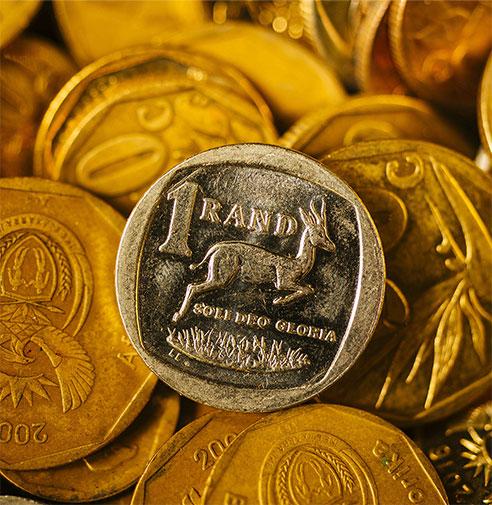
“The South African rand was on course to end a four-week losing streak, supported by stronger gold prices, a weaker US dollar and declining oil prices. The currency’s recovery offered some relief to South Africa’s import-dependent economy, although domestic economic weaknesses and uncertainty in global markets continued to pose risks.”
South African Rand Poised for Recovery as Gold Prices Rise and Oil Costs Ease
South Africa’s currency showed signs of recovery in early October 2026, as stronger gold prices, a weaker United States dollar and declining oil prices helped the rand prepare to end a four-week losing streak. The development offered a measure of relief for an economy that remains sensitive to international financial markets, commodity prices, energy costs and changes in global investor sentiment.
The rand’s performance matters well beyond currency trading. Movements in the exchange rate can influence the price of imported fuel, machinery, transport equipment and industrial inputs. They can also affect inflation, business confidence, investment decisions and the cost of servicing foreign-currency obligations.
According to a Reuters report published on 9 October, the rand was on track to record a weekly gain after several weeks of losses. Firmer gold prices and a subdued US dollar supported demand for the South African currency, while lower oil prices offered additional relief to the country as a net energy importer.
Although the recovery was encouraging, it did not necessarily signal a permanent improvement in South Africa’s economic outlook. The currency remains exposed to international developments, while domestic growth, inflation, industrial performance and structural economic challenges continue to shape the country’s prospects.
Gold prices provide support for the rand
Gold is an important commodity for South Africa because the country has a long-established mining industry and substantial mineral resources. Changes in international gold prices can influence mining revenues, export earnings, investment decisions and expectations about the broader economy.
When gold prices rise, mining companies may receive more revenue for the metal they produce, assuming production volumes and other conditions remain relatively stable. Higher export receipts can support foreign-currency inflows and improve perceptions of South Africa’s external economic position.
Gold can also attract investors seeking protection during periods of uncertainty. When international investors increase their exposure to the precious metal, changes in global investment flows may affect other currencies and financial markets.
The recent strengthening of gold prices therefore provided a favourable backdrop for the rand. However, the relationship between gold and the currency is not automatic. Investors also consider domestic interest rates, political and fiscal developments, international risk appetite and the relative attractiveness of competing investment destinations.
For South Africa, the important question is whether stronger commodity prices can translate into sustained economic benefits. Higher export prices can improve mining-sector profitability, but the overall effect depends on production costs, electricity availability, logistics capacity, labour conditions and the efficiency of transporting minerals to export markets.
Consequently, a stronger gold market can support the economy without resolving the structural constraints that limit production and investment.
A weaker US dollar offers additional relief
The US dollar is one of the most influential currencies in international finance. It is widely used in trade, commodity pricing, borrowing and investment transactions. As a result, changes in the dollar’s strength can have significant consequences for emerging-market currencies, including the rand.
When the dollar weakens, some investors become more willing to consider assets in other currencies. This can support demand for emerging-market investments, particularly when global financial conditions are favourable and investors are comfortable accepting additional risk.
The rand is particularly sensitive to shifts in international sentiment because South Africa participates in global capital markets and depends on foreign investment to support parts of its financing needs.
A weaker dollar can therefore provide short-term support even when South Africa’s domestic economic conditions have not changed substantially.
Nevertheless, this influence can reverse quickly. Stronger-than-expected American economic data, changes in Federal Reserve interest-rate expectations or renewed demand for safe-haven assets could strengthen the dollar again. Such developments could place renewed pressure on the rand.
South African businesses and policymakers must therefore distinguish between improvements caused by favourable international conditions and improvements resulting from stronger domestic economic fundamentals.
Lower oil prices could help contain imported inflation
Oil prices are another major factor affecting South Africa’s economic outlook. As a net energy importer, the country is vulnerable to changes in international energy prices, particularly when higher costs coincide with a weaker domestic currency.
Petroleum products influence transport expenses, agricultural operations, distribution networks and manufacturing costs. When fuel prices increase, companies may pass some of the additional expenses on to consumers through higher prices for goods and services.
Lower international oil prices can help reduce these pressures. They may ease the cost of importing fuel, limit increases in transport expenses and provide businesses with greater flexibility when planning their budgets.
The benefit is especially significant when lower oil prices coincide with a stronger rand. An improvement in the exchange rate can reduce the local-currency cost of imports, while lower international prices reduce the underlying cost of the commodity.
However, the final retail price of fuel also depends on domestic levies, regulated pricing components, refining and distribution costs, and the exchange rate used in the relevant pricing calculations. Consequently, falling international oil prices do not automatically produce an immediate or equivalent reduction at petrol stations.
The broader macroeconomic implication is that reduced energy costs could help moderate inflation. If businesses experience slower increases in transport and production expenses, some of that relief may eventually reach households.
Inflation remains a major concern
Despite the improvement in currency conditions, inflation remains an important risk for South Africa.
The South African Reserve Bank’s October 2026 Monetary Policy Review, published on 6 October, described a challenging global inflation environment. It highlighted disruptions to energy supplies associated with the Middle East conflict, increased transport and production costs, and additional risks to food prices arising from the prospect of El Niño and constraints affecting fertiliser supplies.
The review reported that headline inflation increased from 3.2% in the first quarter of 2026 to 4.5% in the second quarter. It projected that inflation would remain above 5% until the second quarter of 2027 before easing towards the inflation target from the fourth quarter.
The Bank also reported that the Monetary Policy Committee had raised the policy rate by a cumulative 50 basis points to 7.25% over the April-to-October review period. These developments illustrate the difficulty of maintaining price stability when external supply shocks affect energy, food and transport costs.
A stronger rand could help reduce imported inflation, but exchange-rate improvements alone cannot guarantee that inflation will decline. If international oil prices rise again, food supplies tighten or businesses continue passing higher costs to consumers, price pressures could remain persistent.
The Reserve Bank must therefore assess whether temporary price increases are becoming embedded in inflation expectations, wage negotiations and the pricing decisions of businesses.
Interest rates and household finances
Interest rates are central to the relationship between inflation, economic growth and household financial security.
When the central bank increases its policy rate, borrowing conditions can become more expensive. Commercial banks may adjust lending rates, affecting mortgage repayments, vehicle finance, personal loans and the cost of credit for businesses.
Higher borrowing costs can help restrain demand and reduce inflationary pressure. However, they may also discourage investment and consumption, particularly when households already face high living expenses.
For consumers, the combination of fuel costs, food prices, housing expenses and debt repayments can leave less money available for discretionary spending. Businesses may experience a similar squeeze if they must finance working capital or expansion at higher interest rates.
The rand’s recovery could provide some assistance by reducing imported inflationary pressures. If currency strength persists and contributes to a sustained improvement in the inflation outlook, it could give monetary policymakers greater flexibility over time.
However, a few days of currency gains would not be sufficient evidence to justify a major change in interest-rate policy. The Reserve Bank must consider inflation trends, wage growth, inflation expectations, domestic demand and global risks before determining its next steps.
Economic growth faces structural obstacles
South Africa’s longer-term economic outlook depends on more than currency movements.
The Reserve Bank’s October review forecast average economic growth of 1.2% for 2026, down from its April projection of 1.4%. It anticipated a gradual improvement towards 2% by 2029 as structural reforms progress.
These forecasts highlight the challenge of achieving faster and more inclusive economic expansion. Sustained growth requires reliable electricity, efficient transport networks, investment, productive businesses and conditions that encourage companies to create jobs.
Manufacturing illustrates the difficulties facing the domestic economy. BusinessTech’s 9 October report, drawing on economic data and Reuters reporting, noted that South African manufacturing output declined by 4.3% year on year in August 2026, following an increase in July.
The reported decline was substantially weaker than the 0.6% increase economists polled by Reuters had expected. High input and electricity costs, US tariffs and elevated fuel prices were among the pressures identified in the reporting.
Weak manufacturing output matters because the sector supports employment, supply chains, industrial investment and exports. Persistent weakness can limit productivity improvements and reduce the economy’s ability to benefit from favourable international demand.
A stronger rand may make imported machinery and production inputs less expensive, but it can also make South African exports more expensive for foreign buyers if the appreciation is substantial and sustained. The net effect depends on the industry’s exposure to imported inputs, the competitiveness of its products and conditions in overseas markets.
Implications for investors and businesses
For investors, the rand’s recovery highlights the importance of monitoring both domestic economic fundamentals and international market conditions.
Currency movements affect the returns international investors receive when converting South African investments back into their home currencies. A stronger rand can improve those translated returns, while renewed depreciation can reduce them.
Investors also need to consider bond yields, inflation expectations, interest-rate decisions and the country’s fiscal position. Currency performance alone is not a complete measure of economic health.
Businesses face similar considerations. Importers may benefit from a stronger rand because overseas supplies can become less expensive in local-currency terms. Exporters, meanwhile, need to assess how exchange-rate changes affect their revenue, operating expenses and pricing competitiveness.
Companies can manage some of these risks through careful budgeting, appropriate foreign-exchange hedging and diversification of suppliers and markets. However, hedging costs and operational limitations mean that not every business can eliminate its exposure.
For smaller businesses, the practical priority is to avoid assuming that a temporary currency improvement will continue indefinitely. Financial planning should consider scenarios involving both stronger and weaker exchange rates, alongside changes in fuel prices and borrowing costs.
What households should watch
For households, the economic consequences of the rand’s recovery are likely to emerge gradually rather than immediately.
A stronger currency and lower oil prices can help ease imported inflation, but consumers may not see an immediate reduction in grocery bills, transport fares or other household expenses. Businesses often adjust prices with a delay, and domestic costs can offset improvements in imported inputs.
Households should also monitor interest-rate developments, particularly if they have variable-rate loans or substantial debt obligations. A currency recovery does not automatically mean that borrowing costs will fall.
The key issue is whether improvements in financial-market conditions translate into lower inflation, stronger business activity and more stable household purchasing power.
Conclusion
South Africa’s rand was poised to end a four-week losing streak on 9 October 2026, supported by stronger gold prices, a weaker US dollar and declining oil prices. These developments offered a welcome improvement in market conditions and the potential for some relief from imported inflation.
However, the currency’s performance should not be mistaken for a complete economic recovery. The Reserve Bank continues to face inflation risks, while its October review points to modest growth prospects. Manufacturing weakness and structural constraints also demonstrate the difficulty of converting favourable global conditions into sustained domestic economic progress.
The outlook will depend on whether the improved external environment persists and whether South Africa can strengthen investment, productivity, infrastructure and industrial competitiveness.
For policymakers, the challenge is to preserve price stability while supporting conditions for sustainable growth. For businesses and households, the priority is to prepare for continuing uncertainty in exchange rates, fuel costs and borrowing conditions.
Ultimately, a durable improvement in South Africa’s economic performance will require more than a stronger rand. It will depend on consistent progress in domestic reforms, investment and productivity, supported by a stable macroeconomic environment.



