




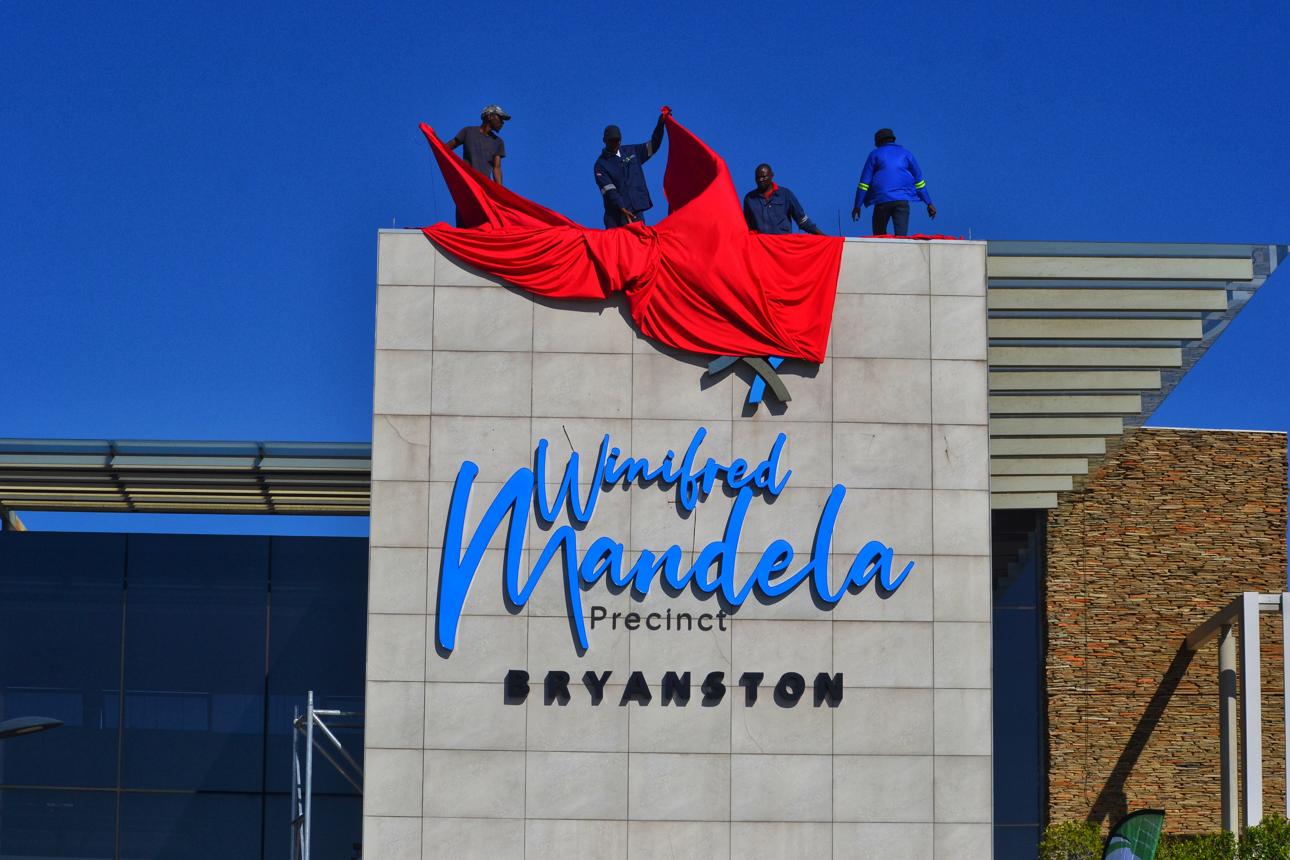
Johannesburg’s Winifred Mandela precinct, formerly known as Nicolway Shopping Centre, is launching an African-inspired “diamond walk” concept as part of a strategy to strengthen its premium retail and fashion offering in Bryanston. The development reflects a wider shift in South African real estate towards repositioning existing properties, creating experience-led destinations and responding more closely to changing consumer and tenant demand.”
South Africa’s property development market is increasingly moving beyond conventional shopping-centre expansion, with developers placing greater emphasis on experience, local identity and carefully targeted neighbourhood destinations. A recent example is the redevelopment of the Winifred Mandela precinct in Bryanston, Johannesburg, formerly known as Nicolway Shopping Centre. The precinct is launching an African-inspired “diamond walk” concept that will combine premium retail, fashion and design in a more intimate, community-oriented environment.
The development was reported by Business Day on September 25, 2026, making it the latest qualifying development-focused property story identified in the sources reviewed for this report. The project is being positioned around demand from shoppers in Bryanston and surrounding affluent suburbs, while also creating space for South African designers and luxury brands. The first major retail presence associated with the concept is a boutique by designer Gert-Johan Coetzee.
Business Day reports that the precinct was acquired by Akani Properties in 2022. Centre manager Tshepo Monnamoroe said the diamond walk idea developed from observations of the existing customer base, particularly its interest in premium boutiques and distinctive African brands. The objective is therefore not simply to add shops, but to create a more curated destination that brings established and emerging local brands into one retail environment.
The Winifred Mandela project is especially relevant because it illustrates how neighbourhood-scale development can be used to compete for consumers who already have access to large regional and super-regional malls. Instead of attempting to replicate those centres, the precinct is pursuing differentiation through fashion, design, local identity and a more intimate shopping experience.
According to Business Day, the centre’s management believes its customers are already familiar with international luxury products, including through travel abroad. The opportunity is to provide a South African luxury proposition closer to home. Coetzee’s boutique is intended to bring ready-to-wear, fragrances, accessories, leather goods and limited-edition products together, alongside private appointments and associated service.
The development also reflects the growing importance of experience in commercial property. Retail competition is no longer based only on floor space, tenant numbers or convenience. Landlords are increasingly trying to create destinations that encourage customers to spend more time on site. Fashion events, restaurants, entertainment, design, hospitality and community programming can all contribute to this strategy.
This trend can be placed alongside broader evidence of continued property development activity in South Africa. Engineering News reported in September that Cape Town’s Central City Improvement District had a record R12.8 billion investment pipeline across 29 property developments for 2025/26. Although residential projects accounted for much of that investment, the number of commercial builds in the pipeline had doubled from the previous year.
The Cape Town example is important because it shows that commercial development is not disappearing from South African cities. Instead, demand is becoming more selective. Engineering News reported that six developments in the Cape Town CBD pipeline were purely commercial, representing R2.38 billion in investment, while mixed-use projects would add further office space.
In Johannesburg, the Winifred Mandela precinct is taking a similar demand-led approach. Its focus is not primarily on large-scale new construction, but on repositioning an established shopping destination. The strategy demonstrates how redevelopment can extend the economic life of existing property while changing its tenant mix and customer proposition.
The project also connects with the increasing visibility of African design within South Africa’s premium retail market. Monnamoroe told Business Day that African designers have been producing high-quality fashion but have not always had sufficient representation in established premium shopping environments. The precinct’s concept seeks to address that gap by placing local designers alongside other high-end offerings.
For developers, this kind of positioning can have implications beyond retail. A stronger destination can influence surrounding property values, leasing demand and future investment decisions. When a precinct becomes more attractive to consumers, neighbouring properties may benefit from increased foot traffic and improved perceptions of the area. However, those outcomes depend on execution, tenant performance, consumer spending and wider economic conditions.
The wider South African development environment remains shaped by infrastructure, financing and economic confidence. A September 23 Moneyweb report, citing Bloomberg, said the government was discussing the creation of a development fundraising vehicle linked to a proposed South African National Property Company. The planned entity is intended to manage a state property portfolio valued at R155 billion, covering about 88,000 buildings and 5 million hectares of land. Public Works and Infrastructure Minister Dean Macpherson said external funding would be important for meeting infrastructure needs.
That national initiative is different from the Winifred Mandela redevelopment, but both illustrate the importance of unlocking value from property assets. At the national level, the discussion is about mobilising capital for public property and infrastructure. At the precinct level, the focus is on improving an existing commercial asset by matching it more closely with consumer demand.
South Africa’s development pipeline also includes residential, hospitality, logistics, office and mixed-use projects. Moneyweb recently reported that Attacq’s Waterfall City development pipeline under construction and approved was valued at R2.2 billion at its June 2026 year-end, covering 85,247 square metres of gross lettable area. The company also reported investments in energy and water infrastructure, reflecting the growing importance of service reliability in property development.
These examples suggest that the definition of successful development is becoming broader. A modern project must consider not only the building itself, but also its location, services, customer base, operating environment and long-term adaptability. Energy and water resilience can affect tenant decisions, while retail developments increasingly depend on differentiated experiences and strong local relevance.
For Johannesburg’s Winifred Mandela precinct, the immediate test will be whether the African-inspired diamond walk can translate its concept into sustained commercial performance. The arrival of recognised designers gives the precinct an initial anchor, but long-term success will depend on tenant demand, customer traffic, spending patterns and the ability to maintain a distinctive offer.
For South Africa’s broader real estate sector, the story is another indication that development is becoming increasingly specialised. Investors and developers are looking for opportunities where property can meet clearly defined consumer, business or infrastructure needs. In some locations, that means premium retail and African design; in others, it means offices, affordable housing, logistics or mixed-use regeneration.
As the sector enters the final months of 2026, these projects will be watched against a backdrop of changing financing conditions, infrastructure constraints and evolving consumer behaviour. The Winifred Mandela precinct provides a useful case study of how an established Johannesburg property is being repositioned around local identity and premium experiences rather than competing solely through scale.
For readers following South African real estate development, the key issue is therefore not simply how much new space is being built. It is also how effectively existing and new properties are being adapted to the needs of their markets. The Winifred Mandela redevelopment, Cape Town’s growing commercial pipeline and larger national property initiatives all point to a sector where strategy, positioning, infrastructure and capital are increasingly interconnected.
The latest development story ultimately shows that South Africa’s property market is evolving through both new construction and the transformation of existing assets. As developers seek sustainable demand, projects that understand their communities, create differentiated experiences and respond to changing market conditions are becoming an increasingly important part of the country’s real estate landscape in 2026.



