




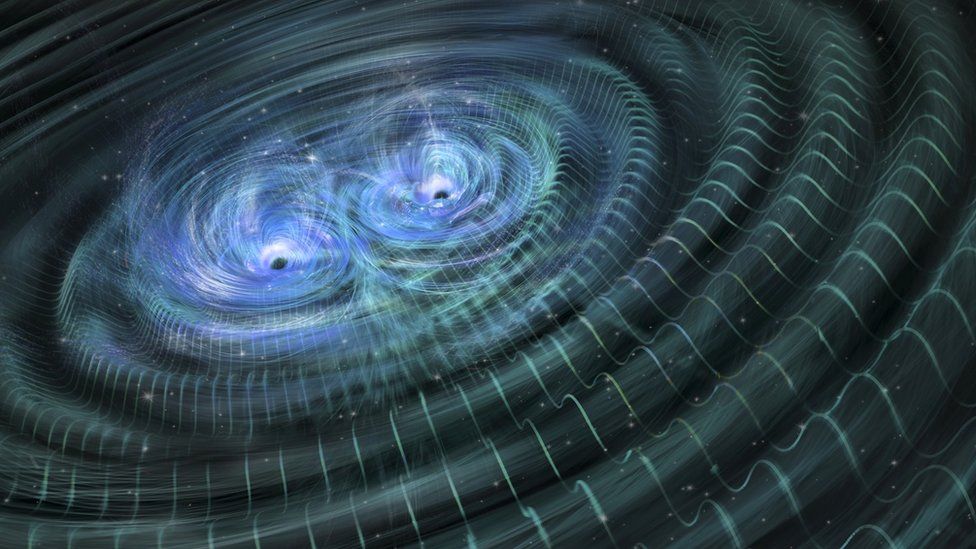
“Astronomers using South Africa’s MeerKAT radio telescope have detected the most distant hydroxyl megamaser ever observed, located in a galaxy merger more than 8 billion light-years away. This discovery provides a rare glimpse into the chaotic, star‑forming environments of the early universe, opening new frontiers in radio astronomy.”
South Africa has once again demonstrated its leadership in global astronomy with a groundbreaking discovery that pushes the boundaries of our understanding of the cosmos. Using the MeerKAT radio telescope, a team of astronomers has detected the most distant hydroxyl megamaser ever observed, a signal originating from a galaxy merger more than 8 billion light-years away. This achievement not only sets a new record but also provides scientists with a unique window into the early universe, when galaxies were far more chaotic and dynamic than they are today.
A hydroxyl megamaser is a type of “cosmic laser” that emits intense radio waves. These signals are produced when galaxies collide, compressing gas and triggering bursts of star formation. The megamaser detected by MeerKAT is extraordinary because of its distance: the light we see today left its host galaxy when the universe was less than half its current age. In other words, astronomers are observing a “toddler” version of the cosmos, offering clues about how galaxies evolved in their formative years.
Dr. Thato Manamela, a postdoctoral researcher at the University of Pretoria, explained that the discovery is akin to receiving a letter that was mailed billions of years ago. “The light from this galaxy traveled across space for 8 billion years before reaching us. What we are seeing is not the galaxy as it exists today, but as it was in the distant past,” she said. This time capsule effect allows scientists to study the conditions of galaxy mergers and star formation during an era when the universe was still young and turbulent.
The MeerKAT telescope, located in South Africa’s Karoo region, has been instrumental in advancing radio astronomy. Comprising 64 dishes, it is one of the most sensitive instruments of its kind and serves as a precursor to the Square Kilometre Array (SKA), the world’s largest radio telescope currently under construction. Discoveries like the hydroxyl megamaser underscore the importance of South Africa’s investment in cutting-edge scientific infrastructure and highlight the country’s growing influence in international space research.
Professor Roger Deane, director of the Inter-University Institute for Data-Intensive Astronomy, emphasized the broader implications of the finding. “This detection opens a new frontier in radio astronomy. By studying megamasers at such extreme distances, we can better understand the processes that shaped galaxies in the early universe. It also demonstrates the incredible capabilities of MeerKAT and the potential of the upcoming SKA project,” he noted.
The discovery also has socio-economic significance. South Africa’s leadership in astronomy fosters international collaboration, attracts global talent, and drives innovation in data science and engineering. The MeerKAT project has already created opportunities for local communities, from job creation to educational initiatives that inspire the next generation of scientists. As the SKA project advances, these benefits are expected to multiply, positioning South Africa as a hub for scientific excellence.
Beyond its scientific and economic impact, the megamaser detection carries profound philosophical meaning. It reminds humanity of the vastness of the universe and the extraordinary timescales involved in cosmic evolution. The signal we see today is a whisper from a galaxy that existed billions of years ago, long before Earth itself had formed. Such discoveries deepen our appreciation of the interconnectedness of space and time, and of our place in the cosmos.
In conclusion, the detection of the most distant hydroxyl megamaser by the MeerKAT telescope is a landmark achievement for South African astronomy. It provides invaluable insights into galaxy formation, strengthens the country’s role in global science, and underscores the transformative power of investment in research and innovation. As South Africa continues to chart its path toward becoming a leading space-faring nation, discoveries like this will serve as milestones in its journey to the stars.



