




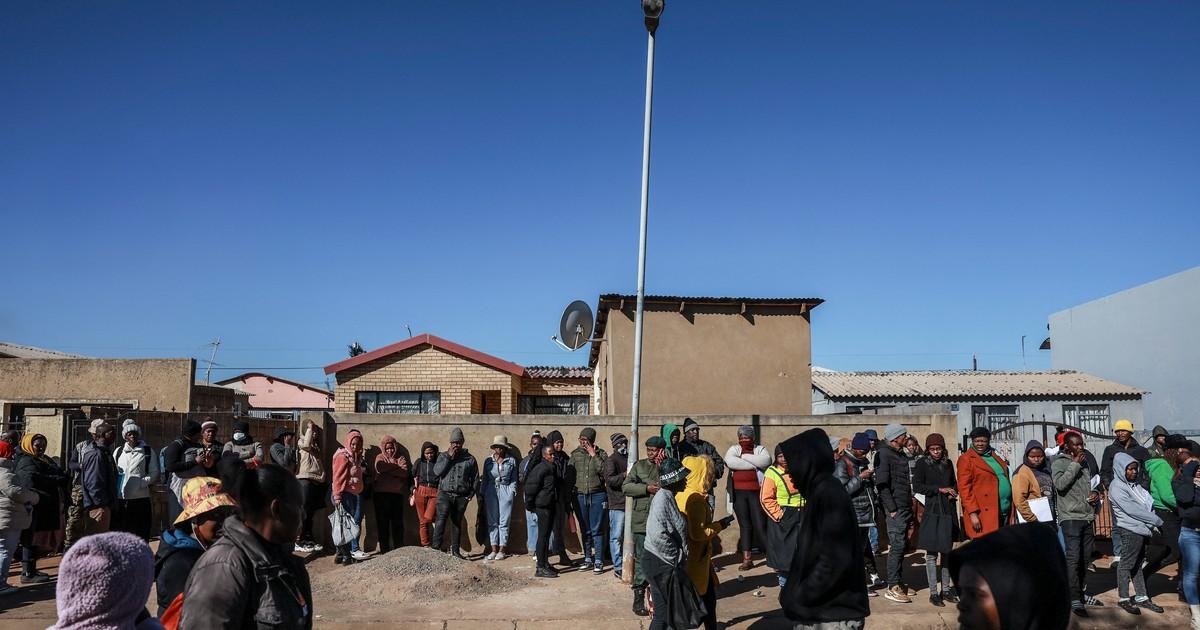
“South Africa’s currency remained relatively stable ahead of the release of third-quarter labour-market figures, with investors watching unemployment trends for evidence of economic weakness. Rising fuel costs, subdued business confidence and difficult operating conditions have continued to constrain hiring, highlighting the country’s persistent employment challenge.”
South Africa’s Unemployment Rate Edges Higher to 33.7% as Economic Pressures Continue to Weigh on Jobs
South Africa | 10 November 2026
South Africa’s unemployment rate increased marginally to 33.7% in the third quarter of 2026, reinforcing concerns about the country’s persistent employment crisis and the difficulties facing businesses operating in an increasingly challenging economic environment. The latest figures, released by Statistics South Africa on Tuesday, highlight the continuing struggle to translate economic activity into sufficient employment opportunities for millions of job seekers.
The official unemployment rate increased from 33.6% in the second quarter to 33.7% in the third quarter, representing a 0.1 percentage-point deterioration. Although the increase was relatively small, the figure remains exceptionally high and illustrates the structural challenges confronting Africa’s largest economy.
The labour-market release attracted considerable attention from investors, policymakers and economists, who have been closely monitoring employment conditions following a difficult period for economic activity. The figures are particularly significant because employment remains one of the most important indicators of whether economic growth is translating into improved living standards.
Unemployment Remains Above One-Third of the Labour Force
South Africa’s unemployment crisis continues to represent one of the country’s most serious economic and social challenges. With the official unemployment rate reaching 33.7%, approximately one-third of the labour force remains without employment despite years of policy interventions aimed at stimulating economic growth and expanding opportunities.
The latest increase follows the deterioration recorded during the second quarter, when unemployment climbed from 32.7% in the first quarter to 33.6%. This previous increase reflected a combination of employment losses and a growing number of people seeking work.
The latest figures indicate that the labour market has continued to struggle to recover sufficiently to absorb available workers.
The unemployment rate is calculated using the number of unemployed people actively seeking employment as a proportion of the labour force. Consequently, it does not include everyone who wants employment but has stopped searching because opportunities are unavailable or because repeated unsuccessful applications have discouraged them.
This distinction is particularly important in South Africa, where discouraged job seekers constitute a significant part of the population outside the labour force.
The broader employment challenge therefore extends beyond the headline unemployment figure and includes millions of individuals who remain economically inactive despite wanting to participate in productive activity.
Economic Conditions Continue to Restrict Employment Creation
The unemployment increase comes against a backdrop of subdued economic growth, rising business operating costs and persistent uncertainty affecting investment decisions.
South Africa’s government reduced its economic growth forecast for 2026 to 1.2% in the October Medium-Term Budget Policy Statement, down from the earlier projection of 1.6%.
The weaker outlook reflects international economic disruptions, elevated energy costs, pressure on export-linked industries and domestic structural constraints.
Although economic growth remains positive in the government’s forecast, the pace is insufficient to generate the employment opportunities needed to substantially reduce unemployment.
Economists have also highlighted the effect of higher fuel prices on companies operating across manufacturing, transport, logistics and distribution.
When businesses face rising production costs, profitability becomes more difficult to maintain. Companies may consequently delay expansion projects, reduce recruitment plans or postpone investments that would otherwise create employment.
Nedbank economists previously warned that difficult operating conditions and higher oil-related expenses could encourage businesses to adopt more cautious hiring strategies.
This environment helps explain why relatively modest economic growth has not translated into a meaningful improvement in employment conditions.
Manufacturing and Industrial Activity Remain Important Concerns
Manufacturing continues to play a crucial role in South Africa’s economic development because of its potential to generate employment across different skill levels and support other industries.
However, the sector has faced persistent challenges involving electricity costs, transport infrastructure, international competition and subdued domestic demand.
September manufacturing production figures were also scheduled for release on Tuesday, providing additional information about the industrial economy.
Economists surveyed by Reuters had expected manufacturing output to decline by approximately 2% year on year in September following a 4.3% contraction in August.
A sustained decline in industrial production can negatively affect employment because manufacturers frequently adjust production schedules, recruitment and investment according to demand.
Furthermore, manufacturing companies depend on numerous supporting businesses, including logistics providers, maintenance contractors, suppliers and distributors.
When industrial production weakens, the consequences can therefore extend beyond factories into other areas of the economy.
South Africa’s recent GDP rebasing exercise also highlighted the changing structure of the national economy, with manufacturing accounting for a smaller share of measured output than previously estimated.
These developments reinforce the importance of improving industrial competitiveness and supporting sectors capable of generating employment at scale.
Youth Unemployment Remains a Particularly Serious Challenge
Young South Africans continue to face disproportionate difficulties entering the labour market.
The second-quarter unemployment figures showed youth unemployment increasing to 47.4%, highlighting the difficulties confronting young people seeking their first employment opportunities.
Young job seekers frequently face a combination of limited workplace experience, inadequate access to professional networks and competition for relatively few entry-level positions.
These challenges are particularly severe for individuals from disadvantaged communities who may lack financial resources to undertake unpaid internships, additional training or extended job searches.
The consequences of youth unemployment extend beyond immediate income losses.
Prolonged periods without employment can undermine skills development, reduce future earning potential and increase dependence on family members or social assistance.
Furthermore, the economy loses opportunities to benefit from the productivity, innovation and entrepreneurial potential of its younger population.
Expanding access to apprenticeships, internships, technical education and practical workplace experience remains essential to improving the transition from education into employment.
Investors Monitor Economic Conditions and the Rand
South Africa’s labour-market developments also carry implications for financial markets.
The rand remained relatively stable ahead of Tuesday’s employment release, trading around R16.36 against the United States dollar during early market activity, according to Reuters.
Investors were watching the labour-market figures for evidence of the economy’s condition during the third quarter.
Employment statistics can influence assessments of economic growth, consumer spending and the outlook for monetary policy.
A weaker labour market generally indicates reduced household income and potentially weaker consumer demand.
However, the currency’s movements also depend on international developments, commodity prices, interest-rate expectations and investor appetite for emerging-market assets.
The rand’s relative stability ahead of the announcement therefore did not necessarily indicate that domestic economic challenges had disappeared.
Rather, financial markets were balancing domestic economic concerns against broader international conditions.
Inflation and Fuel Prices Complicate the Economic Outlook
South Africa’s employment challenges are occurring alongside inflationary pressures that continue to affect households and businesses.
Consumer inflation increased to 4.5% in September 2026 from 4.4% in August, according to Statistics South Africa.
Transport inflation accelerated significantly, reflecting the effect of higher fuel prices on the cost of moving goods and people.
The international oil-market disruption associated with the Middle East conflict has created additional uncertainty for energy-importing economies.
South Africa’s dependence on imported petroleum products exposes its economy to international oil-price movements and currency fluctuations.
Higher fuel prices increase transport expenses for businesses and can contribute to rising consumer prices.
This combination creates a difficult environment for households already experiencing unemployment or reduced purchasing power.
Government responded by temporarily reducing fuel levies, providing some relief to motorists and businesses.
However, the intervention also carries a fiscal cost because lower levies reduce government revenue.
The challenge for policymakers is therefore to provide assistance without undermining the sustainability of public finances.
Government Growth Strategy Faces an Employment Test
The government has repeatedly emphasised that stronger economic growth is essential to improving employment conditions.
The October Medium-Term Budget Policy Statement outlined plans to support investment, improve public spending efficiency and accelerate structural reforms.
The government expects economic growth to strengthen gradually, reaching 1.6% in 2027 and approximately 2% by 2029.
However, achieving these projections will depend on improvements in electricity supply, transport infrastructure, investment confidence and the competitiveness of domestic businesses.
Energy reforms have encouraged private investment in electricity generation, while efforts to improve railway and port operations are intended to strengthen export capacity.
These reforms could improve economic performance over time by reducing production costs and removing barriers to investment.
Nevertheless, their employment benefits will depend on whether improved infrastructure encourages companies to expand production and recruit additional workers.
Economic growth alone is not sufficient if it remains concentrated in industries that generate relatively few jobs.
Policymakers must therefore ensure that investment supports sectors with strong employment potential, including manufacturing, construction, agriculture, tourism and small-business development.
Small Businesses and Entrepreneurship Could Support Employment Growth
Small and medium-sized enterprises remain important potential contributors to employment creation.
Entrepreneurs can generate opportunities in retail, services, manufacturing, agriculture and technology while supporting economic activity in local communities.
However, small businesses frequently encounter financing difficulties, regulatory barriers, infrastructure constraints and limited access to markets.
Addressing these obstacles could strengthen their ability to employ additional workers.
Improving access to affordable credit, business development services and procurement opportunities may encourage entrepreneurship and support employment growth.
Furthermore, digital platforms and technology-based businesses offer opportunities for individuals to participate in economic activity beyond traditional employment structures.
Nevertheless, entrepreneurship cannot replace the need for broader investment and formal employment creation.
A comprehensive employment strategy requires coordination between government, businesses, educational institutions and development organisations.
The Broader Economic Significance of Unemployment
South Africa’s unemployment figures remain central to the country’s economic debate because they influence household welfare, public finances and long-term development.
High unemployment reduces the number of households receiving regular wages and limits their capacity to purchase goods and services.
Lower household spending can weaken businesses, potentially creating a cycle in which reduced demand discourages investment and employment.
At the same time, unemployment places pressure on government to provide social assistance and support economic inclusion.
The country must therefore balance immediate social protection with measures that expand productive employment.
The latest unemployment increase illustrates why employment remains a central measure of economic performance.
While inflation, exchange rates and fiscal indicators attract significant attention, improvements in employment are ultimately essential for ensuring that economic progress benefits a wider proportion of the population.
Conclusion
South Africa’s unemployment rate increased to 33.7% in the third quarter of 2026, reinforcing concerns about the country’s persistent labour-market difficulties.
The marginal increase nevertheless reflects a broader challenge involving weak economic growth, elevated operating costs, industrial pressures and insufficient employment opportunities.
The government’s growth strategy, infrastructure reforms and investment initiatives could support a gradual improvement in economic conditions.
However, the success of these measures will ultimately depend on whether they generate sustainable employment and improve the ability of businesses to expand.
For millions of South Africans seeking work, the country’s economic recovery will be meaningful only when stronger growth translates into accessible jobs, higher household incomes and improved opportunities for economic participation.
Until then, unemployment will remain one of the most important indicators of South Africa’s economic health and one of its most pressing development challenges.



