




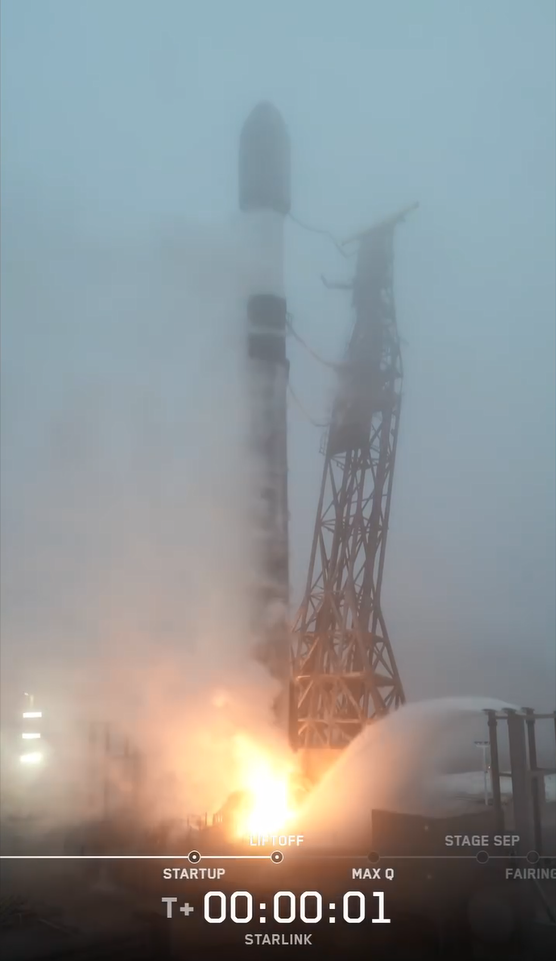
“More than 100 satellite components manufactured in South Africa by NewSpace Systems were successfully launched aboard SpaceX’s Falcon 9 Transporter‑17 mission on 7 July 2026. This achievement underscores South Africa’s expanding presence in the global space industry, with locally made technology now operating in low Earth orbit.”
South Africa’s space industry has reached a defining moment. On 7 July 2026, more than 100 satellite components manufactured by NewSpace Systems, a Somerset West‑based company, were successfully launched aboard SpaceX’s Falcon 9 Transporter‑17 mission from Vandenberg Space Force Base in California. This event represents not only a technological triumph but also a symbolic leap forward for South Africa’s ambitions in aerospace innovation and global competitiveness.
The Mission
The Transporter‑17 mission is part of SpaceX’s rideshare program, which allows multiple companies to deploy satellites at a fraction of the cost of independent launches. This particular mission carried 81 payloads, including cubesats, microsats, hosted payloads, and orbital transfer vehicles. Among these payloads were devices equipped with South African‑made components such as Reaction Wheels, Sun Sensors, Magnetorquer Rods, and Magnetometers.
SpaceX’s Falcon 9 rocket, the world’s first orbital‑class reusable rocket, has revolutionized space access by reducing costs and increasing launch frequency. For emerging space nations like South Africa, the rideshare program offers an affordable pathway to orbit, with companies paying $350,000 for a 50kg satellite slot.
South Africa’s Contribution
NewSpace Systems has steadily grown into one of Africa’s leading satellite technology firms. Earlier this year, the company opened a 5,200m² manufacturing hub, the largest of its kind on the continent. This facility has enabled the production of advanced satellite components that now form part of international missions. Engineers at NewSpace Systems described the experience of watching their hardware lift off aboard Falcon 9 as “something special that never gets old.”
Economic and Technological Impact
The participation of South African companies in international missions has both economic and technological benefits:
- Economic Growth: South Africa is positioned as a competitive player in the global satellite market, attracting investment and creating jobs in advanced manufacturing.
- Technological Advancement: Local engineers gain exposure to cutting‑edge aerospace development, fostering innovation and knowledge transfer.
- Global Integration: South African components are now part of orbital systems, demonstrating the country’s integration into global space operations.
SpaceX’s Role
SpaceX’s reusable rocket technology has dramatically lowered the barrier to entry for space missions. The Falcon 9’s first stage booster, which supported this mission, had already flown 11 times, including launches for Sentinel‑6B, Twilight, NROL‑172, and seven Starlink missions. After stage separation, the booster successfully landed on the Of Course I Still Love You (OCISLY) droneship, stationed in the Pacific Ocean.
Broader Context: Africa in Space
South Africa has long been a leader in African space initiatives. From the launch of SUNSAT in 1999 to its current involvement in projects like Africa2Moon, the country has consistently demonstrated its commitment to space exploration. The success of NewSpace Systems in the Transporter‑17 mission reinforces South Africa’s role as a continental hub for aerospace innovation.
Challenges and Opportunities
While the achievement is significant, challenges remain:
- Funding Constraints: Sustaining large‑scale aerospace projects requires consistent investment.
- Global Competition: South Africa must compete with established space nations and emerging players.
- Policy Support: Continued government backing is essential to ensure long‑term growth.
Opportunities, however, are equally compelling:
- Partnerships: Collaborations with international firms like SpaceX open doors for future missions.
- Innovation: The local manufacturing hub can drive new product development.
- Education: Inspiring the next generation of engineers and scientists strengthens South Africa’s knowledge economy.
Conclusion
The launch of more than 100 South African satellite components aboard SpaceX’s Falcon 9 Transporter‑17 mission is a landmark achievement. It signals South Africa’s arrival as a serious player in the global space industry, blending economic opportunity, technological innovation, and international collaboration. For NewSpace Systems and the broader South African aerospace sector, the sky is no longer the limit—it is just the beginning.



