




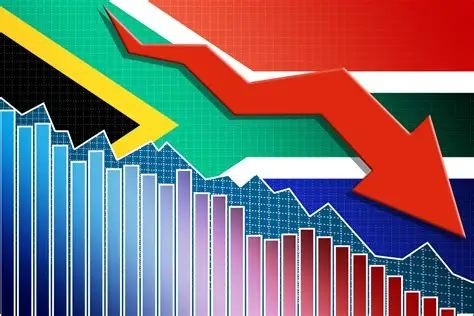
“South Africa’s economy shrank by 0.2% in the second quarter of 2026, marking its first contraction in nearly two years. Rising unemployment, weak mining and manufacturing output, and global oil price shocks from the US–Iran war have deepened economic uncertainty.”
South Africa’s economic trajectory has taken a sharp turn in Q2 2026, with GDP contracting by 0.2%. This marks the end of six consecutive quarters of growth and raises concerns about the country’s ability to sustain recovery amid global and domestic pressures.
Domestic Economic Pressures
- Unemployment Rate: Rose from 32.7% to 33.6%, with 345,000 more people unemployed.
- Job Losses: Mining (-26,000), manufacturing (-15,000), agriculture (-15,000), and utilities (-10,000).
- Sectoral Declines: Mining output fell 3%, manufacturing 1.8%, and trade 1.9%.
Global Factors
- Oil Prices: Brent crude surged near $100 per barrel due to US–Iran conflict.
- Fuel Costs: Higher domestic fuel prices depressed household demand and raised production costs.
- Geopolitical Risks: Shipping disruptions and energy insecurity threaten long-term stability.
Contradictions in Growth and Employment
- Agriculture: Grew for the seventh consecutive quarter but still shed jobs.
- Construction: Expanded and added 39,000 jobs.
- Trade: Contracted but paradoxically added 70,000 jobs, highlighting structural mismatches.
Expert Commentary
- Stats SA: Warned of uneven growth patterns.
- Economists: Recovery is “interrupted and delayed, rather than derailed.”
Long-Term Outlook
- Growth Forecasts: Revised down to 1.2–1.5% for 2026.
- Risks: Continued oil shocks, weak investment, and fragile labor market.
- Opportunities: New trade agreements, such as South African cherries entering China, could offset some losses.
📊 Key Takeaways
- GDP contraction: -0.2% in Q2 2026.
- Unemployment: 33.6%, highest in two years.
- Global oil shock: Brent crude near $100/barrel.
- Sectoral declines: Mining, manufacturing, trade hardest hit.
- Outlook: Recovery delayed, risks remain high.



