




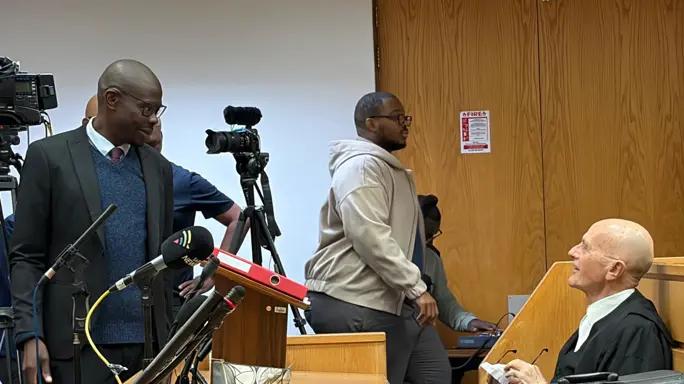
Parliament’s Section 89 Impeachment Committee is preparing to finalise the terms of reference for its inquiry into President Cyril Ramaphosa’s conduct following the Phala Phala farm scandal, even as a fresh legal challenge over the appointment of an evidence leader complicates its work. The Western Cape High Court has reserved judgment after hearing applications challenging the committee’s decision to withdraw Advocate Thandazani Madonsela’s nomination, leaving questions about parliamentary procedure and the timetable for the inquiry unresolved.
South Africa’s Impeachment Committee Faces Fresh Legal Challenge as Parliament Prepares to Advance Phala Phala Inquiry
South Africa’s parliamentary accountability system is facing another significant test as Parliament’s Section 89 Impeachment Committee prepares to finalise the terms of reference for its inquiry into President Cyril Ramaphosa’s conduct in the Phala Phala farm scandal. On 15 October 2026, Eyewitness News reported that the committee would return its attention to this preparatory work following two days of arguments in the Western Cape High Court over its decision to withdraw the nomination of Advocate Thandazani Madonsela as chief evidence leader.
The dispute has placed parliamentary procedure, the management of potential conflicts of interest and the independence of constitutional oversight under renewed scrutiny. Although the committee intends to continue its work, the court proceedings have introduced uncertainty about the process and timing of the inquiry. The case is important not because it establishes that the president has committed misconduct, but because it concerns how Parliament should investigate allegations involving the country’s highest elected office.
The latest legal developments
The immediate dispute concerns the committee’s decision to reverse its earlier recommendation of Madonsela for the position of chief evidence leader. The Economic Freedom Fighters (EFF) and the African Legal Professionals Association (ALPA) approached the Western Cape High Court to challenge that decision.
According to Eyewitness News, the applicants argued that the committee’s reversal should be reviewed and set aside. The committee, chaired by Makashule Gana, opposed the applications and maintained that it acted within the rules governing the National Assembly.
After hearing arguments over two days, the court reserved judgment. Consequently, the committee must continue preparing for its inquiry while awaiting the court’s decision on whether its handling of the nomination was lawful.
The outcome could affect the committee’s next procedural steps. However, the court’s decision on the evidence leader dispute should not be confused with a final determination of the allegations against Ramaphosa. These are separate questions requiring distinct legal and parliamentary processes.
Why the evidence leader appointment matters
An evidence leader is an important participant in an inquiry because the role helps organise and present evidence relevant to the questions under investigation. The appointment must therefore support a process that is orderly, impartial and capable of withstanding scrutiny.
The dispute arose after concerns were raised about Madonsela’s previous legal work for the African National Congress (ANC) on matters connected with the impeachment proceedings. Ramaphosa objected to the proposed appointment, citing concerns about a possible conflict of interest.
The committee subsequently reconsidered its original recommendation and withdrew it in September. The EFF and ALPA challenged that reversal, arguing that the decision should be subjected to judicial review.
The committee’s legal representatives argued that additional information became available after the initial recommendation and justified reconsideration. The disagreement therefore concerns both the circumstances in which a parliamentary committee can reverse an appointment decision and the safeguards that should govern such decisions.
A prior professional association does not, by itself, establish that an advocate is biased or incapable of performing a particular role. Equally, a decision-maker must take credible conflict-of-interest concerns seriously. The relevant questions include what information was available, when it became available, how the committee assessed it and whether the procedure followed complied with parliamentary rules.
The origins of the Phala Phala controversy
The current inquiry follows the theft of foreign currency from Ramaphosa’s Phala Phala farm in Limpopo in 2020. The incident became a major political controversy after allegations emerged concerning the circumstances of the burglary, the handling of the reported theft and the president’s subsequent actions.
The scandal prompted questions about the source and declaration of the money, the reporting of the crime and whether the president’s conduct was consistent with his constitutional and ethical responsibilities. Ramaphosa has denied wrongdoing.
In 2022, an independent panel appointed through Parliament’s process considered whether the available information disclosed grounds for further action under Section 89 of the Constitution. The panel found prima facie evidence that could warrant consideration of possible serious misconduct. That finding was not a criminal conviction or a final determination that the president had breached the Constitution.
The distinction is fundamental. A preliminary assessment identifies matters that may require further investigation; it does not replace the examination of evidence, consideration of responses or application of the relevant legal standards.
The subsequent parliamentary and judicial proceedings have concerned how those findings should be handled and whether the required accountability process should proceed.
Parliament’s constitutional responsibilities
Section 89 of the Constitution provides a framework through which the National Assembly may remove a president on specified grounds, including a serious violation of the Constitution or the law, serious misconduct, or inability to perform the functions of office.
The provision is an exceptional constitutional mechanism. It must be applied according to the Constitution, the applicable parliamentary rules and the standards of fairness required by law.
The impeachment committee’s responsibility is therefore not simply to resolve a political disagreement. It must establish a clear process for examining the relevant allegations, determining how evidence will be presented and ensuring that affected parties receive appropriate procedural protections.
The committee’s work also sits within a broader constitutional framework in which Parliament exercises oversight while courts determine legal disputes brought before them. Judicial review can help establish whether public bodies have acted lawfully, but it does not automatically determine the underlying political or factual questions.
Parliament’s official committee page publishes procedural documents, correspondence, reports and other material relating to the inquiry. These records provide a primary source for understanding the formal steps taken by the committee.
Why the terms of reference are important
With judgment reserved in the latest court challenge, Gana has indicated that the committee will turn its attention to finalising its terms of reference.
Terms of reference establish the scope and structure of an inquiry. They help clarify which issues will be examined, what questions require answers, how evidence will be considered and how the committee will organise its work.
A clearly defined mandate is especially important in a matter involving a sitting president. If the scope is too vague, disagreements can arise over which questions are relevant and whether particular evidence falls within the committee’s responsibilities. If the mandate is clearly articulated, participants and the public can better understand the purpose of the proceedings.
The committee must also ensure that its procedures are consistent with applicable rules and court decisions. Its ability to progress will depend on resolving procedural questions, arranging the necessary expertise and establishing a workable timetable.
Finalising the terms of reference would represent progress in preparing the inquiry, but it would not mean that the substantive investigation had been completed or that any final conclusion had been reached.
Political accountability and institutional trust
The case has consequences beyond the individuals directly involved. It raises questions about the credibility of parliamentary oversight and the public’s ability to see allegations concerning senior officeholders addressed through established institutions.
South Africa’s constitutional system distributes responsibility among Parliament, the executive, the judiciary and other oversight bodies. Each institution has a defined role, and confidence in the system depends partly on whether those roles are exercised consistently and transparently.
For Parliament, this means explaining procedural decisions and demonstrating that committee processes follow established rules. For the courts, it means considering the legal arguments presented and providing reasons for their decisions. For the president, it means having an opportunity to respond through the applicable process while remaining subject to the constitutional framework governing the office.
Political parties may disagree sharply about the meaning and consequences of the controversy. Those disagreements are part of democratic politics, but claims about wrongdoing or procedural misconduct should be assessed against documentary evidence and authoritative findings rather than treated as established facts merely because a party advances them.
Public confidence is more likely to be supported when institutions explain what they are doing, distinguish allegations from findings and make their decisions accessible for scrutiny.
The balance between fairness and timely action
The latest court challenge illustrates a recurring governance problem: accountability procedures must be both fair and effective.
Moving too quickly without addressing legitimate procedural concerns can expose an inquiry to further litigation and undermine confidence in its conclusions. Conversely, repeated procedural disputes can delay the examination of serious questions and leave the public uncertain about when an outcome may be reached.
The committee therefore faces the task of protecting the integrity of its process while avoiding unnecessary delays. That requires careful record-keeping, reasoned decisions, clear communication and compliance with court rulings.
The dispute over Madonsela’s nomination demonstrates why appointment procedures matter. When a committee selects a person for a sensitive role and later reverses that decision, it should be able to explain the relevant considerations and show that the reversal was made under the applicable rules.
The court’s judgment will help clarify the legal position in this particular dispute. It will not, by itself, answer every question about the wider inquiry, but it may determine whether the challenged decision can stand.
What happens next?
The immediate development to watch is the Western Cape High Court’s judgment on the applications brought by the EFF and ALPA. Until the judgment is delivered, the legal position surrounding the challenged withdrawal remains unresolved.
The committee is also expected to continue work on its terms of reference. Its subsequent decisions will help determine the scope, structure and timetable of the Section 89 inquiry.
Other developments may include further procedural decisions about the appointment of an evidence leader, the handling of relevant documentation and the arrangements for considering evidence. The timing and form of those steps should not be assumed before they are formally announced.
Readers should follow Parliament’s official publications and the court’s eventual judgment for confirmation of the next stage. News reports provide useful accounts of proceedings, while official records are particularly important for verifying procedural decisions and the precise wording of orders.
Conclusion
South Africa’s Section 89 Impeachment Committee is confronting a legal challenge that places its decision-making procedures under scrutiny at a sensitive moment in the Phala Phala inquiry. On 15 October 2026, the committee was preparing to refocus on its terms of reference after the Western Cape High Court reserved judgment on challenges to the withdrawal of Advocate Thandazani Madonsela’s nomination as evidence leader.
The central governance issue is how Parliament can conduct a credible and constitutionally compliant inquiry while respecting legal rights and the authority of the courts. The controversy has not established that Ramaphosa is guilty of misconduct, nor has the latest court hearing settled the substantive allegations.
The next stages will depend on the court’s ruling, the committee’s procedural decisions and its ability to define and carry out the inquiry’s mandate. Transparent explanations, fair procedures and reliable public records will remain essential as the process continues. Ultimately, the significance of the case lies not only in its implications for one president, but also in how South Africa’s democratic institutions demonstrate that constitutional accountability can operate according to law, even when the questions under examination are politically consequential.



