




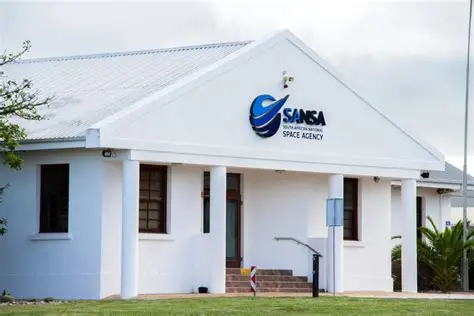
“The South African National Space Agency (SANSA) has confirmed that construction of the Matjiesfontein Deep Space Ground Station in the Karoo is progressing on schedule, with completion expected within two years. The facility will enhance South Africa’s role in global space exploration, boost local economic development, and inspire STEM education initiatives.”
South Africa is steadily carving out a significant role in the global space sector. The latest milestone is the construction of the Matjiesfontein Deep Space Ground Station, a project that symbolizes both national ambition and international collaboration. Situated in the Karoo region of the Western Cape, this facility is poised to become a cornerstone of South Africa’s space infrastructure, reinforcing its scientific leadership and technological independence.
Strategic Importance
The ground station is not just another infrastructure project; it represents a strategic investment in sovereign space capabilities. SANSA CEO Humbulani Mudau emphasized that the facility will allow South Africa to participate more robustly in international space science programs, including deep space missions and satellite communications. By hosting a deep space communication hub, South Africa positions itself as a key partner in collaborations with agencies like NASA and ESA.
Technical Scope
Deep space ground stations are highly specialized, requiring precision antennas, advanced telemetry systems, and robust data processing infrastructure. The Karoo’s low radio-frequency interference makes it an ideal location. Once operational, the station will handle communications with spacecraft exploring lunar and Martian environments, as well as interplanetary satellites. This technical capability will complement South Africa’s existing Hartebeesthoek station in Gauteng, creating a robust national network.
Economic and Social Impact
Beyond science, the project is tied to local development goals. SANSA has partnered with municipalities like Laingsburg to ensure communities benefit through:
- Skills development in engineering, IT, and data science.
- STEM education initiatives targeting schools and universities.
- Infrastructure improvements in surrounding towns.
- Job creation during construction and long-term operations.
Importantly, SANSA has emphasized inspiring young women and girls in STEM, ensuring inclusivity in South Africa’s space future.
Global Collaboration
The station will allow South Africa to contribute meaningfully to global missions, providing critical communication links for spacecraft exploring the Moon, Mars, and beyond. This strengthens South Africa’s scientific leadership and technological independence, while reinforcing its competitiveness in the global economy.
Broader Context
This development comes alongside South Africa’s R10.4 billion investment in science, technology, and innovation, announced earlier this year. Space research, particularly the Square Kilometre Array (SKA) project, remains central to this vision, positioning South Africa as a hub for innovation in Africa and the Global South.
Conclusion
The Matjiesfontein Deep Space Ground Station is more than a construction project—it is a symbol of South Africa’s ambition to be a leader in space science. With its completion expected within two years, the facility will not only strengthen international collaborations but also inspire a new generation of scientists and engineers. For South Africa, the stars are no longer distant—they are within reach.



