




“Eskom has unveiled significant advancements in clean coal and green hydrogen technologies, reinforcing its role in South Africa’s energy transition. With improved financial results and operational performance, the utility is positioning itself as a leader in sustainable, reliable, and affordable electricity generation.”
South Africa’s energy landscape is undergoing a profound transformation. At the center of this shift is Eskom, the state-owned utility that has long been synonymous with both the country’s energy challenges and its potential solutions. On September 2, 2026, Eskom showcased its latest progress in clean coal and green hydrogen technologies at its Research, Testing and Development (RT&D) facility in Johannesburg. This event, attended by Minister of Electricity and Energy Dr. Kgosientsho Ramokgopa, highlighted Eskom’s commitment to modernizing its energy systems, ensuring sustainability, and securing long-term competitiveness.
Financial and Operational Turnaround
Eskom’s FY2025/26 annual results revealed a remarkable turnaround. The utility reported a profit after tax of R30.3 billion, marking its second consecutive profitable year. Cost savings of R22.4 billion were achieved through its CORE programme, while the Energy Availability Factor (EAF) improved to 65.16%, rising further to 67.87% in August 2026. Most notably, South Africa has now surpassed 470 consecutive days without loadshedding, a milestone that underscores Eskom’s operational recovery.
Clean Coal Innovations
Clean coal remains a controversial yet critical component of South Africa’s energy mix. Eskom’s research program is aligned with the Integrated Resource Plan (IRP) 2025, which calls for piloting advanced domestic clean coal technologies by 2030. At the RT&D facility, demonstrations included co-firing ammonia with coal and torrefied biomass with coal, both aimed at reducing emissions while maintaining efficiency. These innovations could help South Africa leverage its abundant coal resources in a more environmentally responsible way.
Green Hydrogen Development
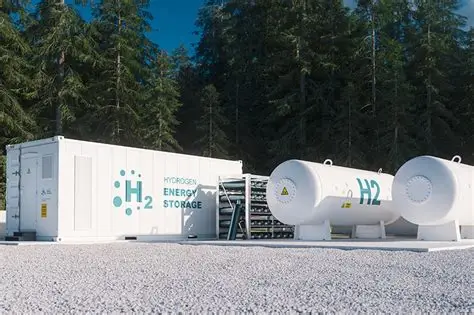
Equally significant is Eskom’s progress in green hydrogen, a technology widely seen as the future of clean energy. Hydrogen produced using renewable electricity can serve as a versatile fuel for power generation, transportation, and industrial applications. Eskom’s pilot projects are exploring hydrogen’s potential to decarbonize sectors that are otherwise difficult to electrify, such as steelmaking and heavy transport. By investing in hydrogen, Eskom is positioning South Africa to participate in the emerging global hydrogen economy.
National Energy Security
The combination of clean coal and green hydrogen research strengthens South Africa’s energy security. By diversifying its energy portfolio, Eskom reduces reliance on imported fuels and mitigates exposure to global price shocks. This is particularly relevant given the R56 billion fuel import shock South Africa faced earlier in 2026 due to Middle East conflicts, which underscored the vulnerability of fossil fuel dependence.
Environmental and Economic Implications
Eskom’s innovations have dual benefits: environmental sustainability and economic resilience. Cleaner coal technologies reduce harmful emissions, while hydrogen offers a pathway to net-zero carbon energy. Economically, Eskom’s profitability and cost savings free up resources for reinvestment in infrastructure and innovation. The broader impact includes job creation in research, engineering, and renewable energy sectors, as well as positioning South Africa as a hub for energy technology in Africa.
Challenges Ahead
Despite these achievements, challenges remain. Clean coal technologies must prove their scalability and cost-effectiveness, while hydrogen infrastructure requires significant investment. Moreover, Eskom must balance innovation with affordability, ensuring that electricity prices remain accessible to households and businesses. The transition also demands careful coordination with government policies, private sector investment, and international partnerships.
Conclusion
Eskom’s showcase of clean coal and green hydrogen progress represents a pivotal moment in South Africa’s energy journey. With profitability restored, operational performance improved, and groundbreaking technologies under development, Eskom is laying the foundation for a sustainable and secure energy future. The road ahead will require continued innovation, investment, and collaboration, but the trajectory is clear: South Africa is moving from recovery to structural sustainability in its energy sector.



