




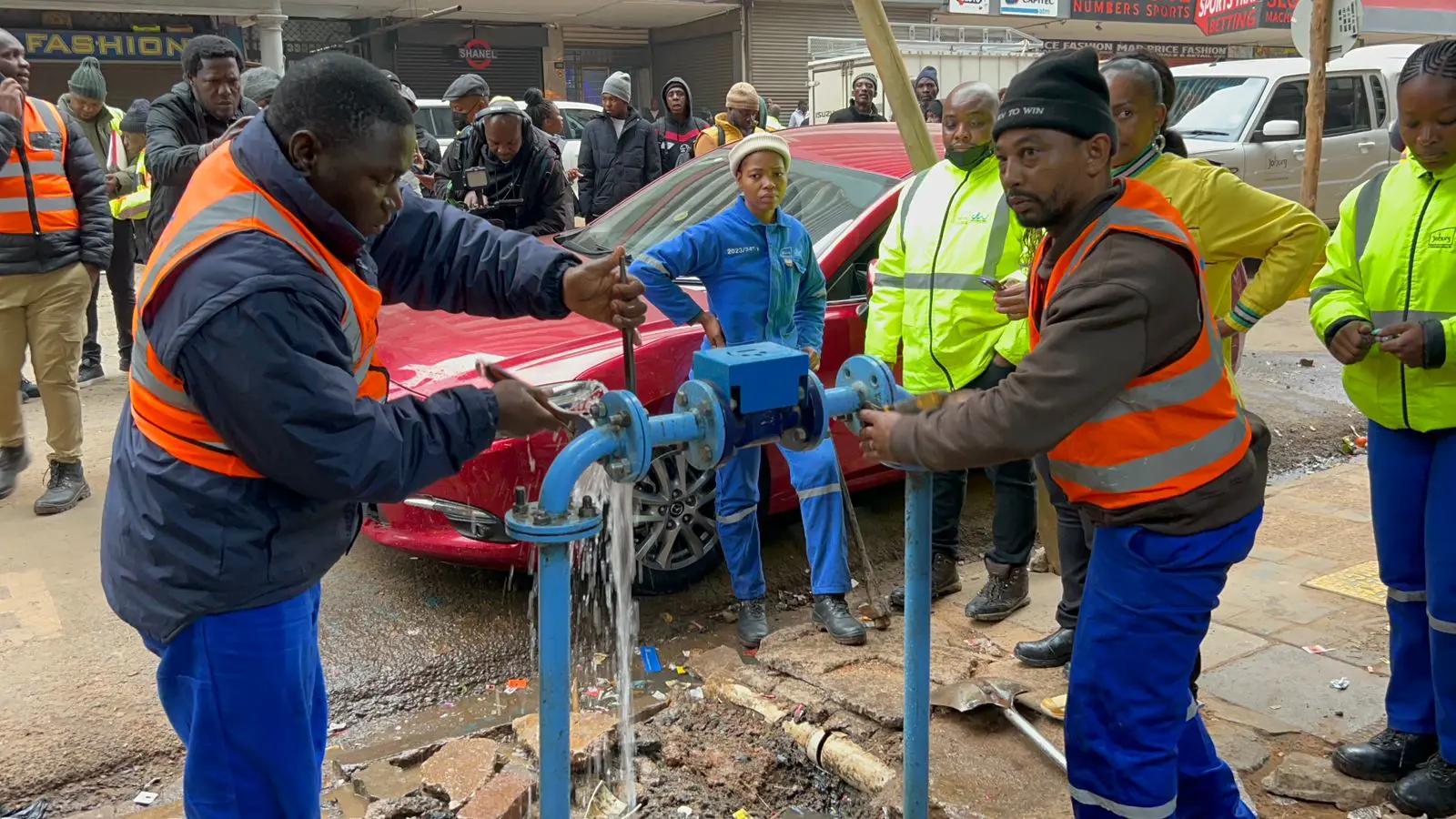
“South Africa is facing growing municipal financial pressure as local government failures, unpaid electricity bills and deteriorating infrastructure undermine public services and economic activity. A Financial Times report published on 31 October highlights that only 39 of the country’s 257 municipalities achieved clean audits, while municipalities owe Eskom approximately R120 billion.”
South Africa’s Municipal Financial Crisis Deepens as Billions in Unpaid Debt Threaten Economic Stability
An investigation into municipal debt, financial mismanagement, infrastructure deterioration, public-sector accountability and the consequences for South Africa’s economy.
Introduction: A growing financial crisis at local government level
South Africa’s municipal financial crisis is becoming an increasingly important threat to the country’s economic stability, public finances and long-term development prospects. Across the country, municipalities are struggling to meet their financial obligations, maintain essential infrastructure and provide reliable public services. These challenges are placing additional pressure on households, businesses, government institutions and the broader economy.
A Financial Times report published on 31 October 2026 highlights the seriousness of the situation, particularly in communities experiencing prolonged water shortages, electricity interruptions, sewage problems and deteriorating roads. The report identifies widespread weaknesses in municipal administration and financial management, with only 39 of South Africa’s 257 municipalities achieving clean audits in the latest financial year covered.
One of the most concerning figures is the approximately R120 billion owed by municipalities to Eskom. Municipalities also owe water boards approximately R23.77 billion. These outstanding obligations illustrate how financial difficulties at local government level can spread throughout the public sector, weakening the ability of essential service providers to maintain and expand infrastructure.
The crisis is particularly significant because municipalities are responsible for delivering services that support everyday economic activity. Water, electricity, sanitation, roads and waste management are essential for businesses, households, industrial operations and investment. When these services become unreliable, the consequences extend beyond local communities and affect national economic performance.
Municipal debt places increasing pressure on public finances
Municipal debt has become one of the major financial challenges facing South Africa’s public sector. Local governments collect revenue through property rates, service charges, electricity and water payments, grants and other municipal income streams. These resources are expected to finance operating expenses, infrastructure maintenance, staff salaries and service delivery.
However, many municipalities are experiencing a growing gap between their financial obligations and their ability to collect sufficient revenue.
The R120 billion owed to Eskom demonstrates the scale of the problem. Electricity distributors depend on payments from municipalities to support their own financial operations, infrastructure investments and electricity procurement obligations. When municipalities fail to pay their accounts, the financial consequences move beyond the individual council.
The same problem affects water boards, which rely on payments from municipalities to maintain water treatment facilities, pipelines and distribution systems.
Consequently, unpaid municipal bills can create a chain reaction across the public sector. Electricity and water providers face increased financial pressure, while municipalities struggle to maintain the infrastructure needed to generate revenue and deliver services.
The broader municipal debt problem was also highlighted in South Africa’s October 2026 medium-term budget discussions. Bloomberg reporting carried by BusinessTech on 22 October indicated that municipal debt owed to creditors had increased by 19% to R185.2 billion in the year through June.
This figure provides important additional context for understanding the national financial risks associated with local government.
Weak financial management undermines municipal accountability
One of the central issues behind South Africa’s municipal financial difficulties is the weakness of financial administration and accountability.
Clean audits are important because they indicate that financial statements are reliable and that municipalities have complied with relevant laws and regulations. They also provide residents, investors, creditors and government institutions with greater confidence that public resources are being managed responsibly.
The fact that only 39 municipalities achieved clean audits among 257 municipalities is therefore a significant warning.
Poor audit outcomes do not automatically mean that every municipality is insolvent or that every financial irregularity involves corruption. Nevertheless, repeated weaknesses in financial controls can make it difficult to identify wasteful expenditure, monitor outstanding payments, prevent irregular procurement and ensure that budgets produce measurable improvements.
Effective municipal financial management requires accurate accounting systems, reliable revenue collection, transparent procurement procedures and consistent oversight.
Municipal leaders must also ensure that expenditure is aligned with approved budgets and that contractors deliver the infrastructure and services for which they are paid.
Without these safeguards, public money can be spent without producing the intended economic or social benefits.
Furthermore, weak financial management can discourage investment. Businesses are less likely to establish operations in areas where electricity, water, sanitation and road infrastructure cannot be relied upon.
For this reason, improving municipal audits should be regarded as an economic development priority rather than simply an administrative requirement.
Infrastructure deterioration increases the cost of service delivery
Financial difficulties are closely connected to the deterioration of municipal infrastructure.
Water treatment facilities, electricity distribution networks, sewage systems and roads require regular maintenance. When municipalities postpone maintenance because of limited funds, poor planning or administrative weaknesses, infrastructure problems become more expensive to resolve.
The Financial Times report describes Maluti-a-Phofung in the Free State as an example of the consequences.
Some residents in higher-lying communities have reportedly experienced approximately ten years without reliable household running water. Damaged roads also make it difficult for emergency water tankers to reach affected areas.
This situation illustrates how infrastructure failure can create additional costs for both government and residents.
When municipal water systems stop functioning, households may have to purchase water from alternative suppliers. Businesses may need to arrange private water deliveries or invest in storage facilities. Public authorities may also have to deploy emergency tankers, which are often more expensive than maintaining a functioning water network.
The economic impact is therefore wider than the cost of repairing a pipeline.
Businesses facing unreliable water supplies may experience reduced production, interruptions to operations and higher operating expenses. Small businesses are particularly vulnerable because they often have limited financial resources to invest in alternative infrastructure.
Similarly, damaged roads increase transportation costs, affect access to markets and make it more difficult for emergency services to reach communities.
Infrastructure deterioration can therefore create a cycle in which municipal financial weakness leads to poor service delivery, which subsequently undermines economic activity and reduces the ability of local government to generate revenue.
The consequences for Eskom and the electricity sector
Municipalities are important participants in South Africa’s electricity distribution system. Many purchase electricity from Eskom and distribute it to households and businesses within their jurisdictions.
This arrangement creates an important financial relationship between municipalities and the national electricity utility.
When municipalities collect electricity payments from customers, they are expected to use the revenue to meet their electricity purchasing obligations and cover legitimate distribution costs.
However, non-payment by customers, inaccurate billing, electricity losses and weak revenue collection can create serious financial difficulties.
Where municipalities fail to settle their Eskom accounts, the electricity utility faces additional pressure to recover outstanding amounts.
This is particularly concerning because electricity infrastructure requires continuous investment. Distribution networks need maintenance, equipment must be replaced and capacity must be expanded to accommodate economic development.
Unpaid municipal debt can therefore contribute to financial uncertainty across the electricity sector.
It also creates difficult decisions for government. Municipalities need assistance to restore their financial health, but financial support without stronger accountability could encourage continued poor management.
A sustainable solution must therefore combine debt management with improved revenue collection, credible financial reporting and clear performance requirements.
Implications for investors and South African businesses
South Africa’s municipal financial problems also have implications for domestic and international investors.
Investment decisions depend on several factors, including political stability, infrastructure quality, operating costs, access to electricity and water, regulatory certainty and the ability to transport goods efficiently.
Municipalities play a direct role in many of these areas.
When infrastructure becomes unreliable, investors may reconsider expansion plans or select locations with more dependable services.
For manufacturing companies, water and electricity interruptions can disrupt production schedules and increase costs. Retailers and service businesses may face additional expenses associated with backup power, water storage, security and alternative logistics arrangements.
Property developers also depend on functioning municipal infrastructure. Residential and commercial developments require access to electricity, water, sewage systems and roads.
If municipalities cannot provide these services consistently, development costs can increase and investment opportunities may become less attractive.
The financial consequences can extend to employment. Businesses that experience rising operating costs may delay recruitment, reduce investment or reconsider whether expansion is commercially viable.
This creates an additional challenge for a country seeking stronger economic growth and improved employment opportunities.
The burden on households and economic inequality
The municipal crisis also has an important social and financial dimension.
Wealthier households and businesses may be able to respond to unreliable public services by installing backup electricity systems, purchasing water storage equipment or paying private service providers.
However, lower-income households generally have fewer alternatives.
For these families, prolonged water shortages, electricity interruptions and inadequate sanitation can create substantial financial and practical difficulties.
They may spend additional money obtaining essential services while continuing to pay municipal charges and taxes.
This creates an unequal situation in which residents with greater financial resources can protect themselves from failing public infrastructure, while poorer communities remain more exposed.
The consequences can also affect education, healthcare and household productivity.
Children may struggle to study when electricity is unavailable. Small traders may lose income when water or power interruptions prevent them from operating. Clinics and other essential facilities may face difficulties maintaining reliable services.
Consequently, municipal financial management is directly connected to the broader objective of reducing inequality.
A financially sustainable municipality should not only balance its accounts but also provide dependable services that support economic participation across different income groups.
National government faces growing fiscal risks
Municipal financial instability also creates risks for the national government.
Although municipalities have their own budgets and revenue responsibilities, their financial difficulties can affect national institutions and government expenditure.
When municipal debt accumulates, pressure increases on public-sector creditors and essential infrastructure providers. National government may face demands for financial assistance, debt restructuring or intervention to prevent further deterioration.
This creates a difficult balancing act for the National Treasury.
On one hand, government must support essential services and prevent financial problems from spreading. On the other hand, repeated financial bailouts without meaningful reforms could weaken fiscal discipline.
South Africa has been working to improve its fiscal position and strengthen investor confidence. Moody’s assessment of the October Medium-Term Budget Policy Statement described the government’s updated fiscal position as credit positive, although sustainable improvements in public finances remain important.
Municipal financial instability could complicate these efforts if outstanding obligations continue increasing.
The national government therefore needs to ensure that municipal reform supports broader fiscal consolidation rather than creating additional long-term financial liabilities.
Local government elections increase pressure for accountability
The municipal financial crisis is also becoming an important political issue ahead of South Africa’s local government elections scheduled for 4 November 2026.
Residents experiencing water shortages, electricity interruptions, sewage problems and deteriorating roads are increasingly concerned about the performance of their local authorities.
Municipal service delivery is particularly important because residents interact with local government through everyday services. Unlike some national policy decisions, municipal failures are immediately visible in communities.
The Financial Times report highlights how dissatisfaction with local government has become connected to broader political concerns.
However, elections alone cannot resolve the financial problems affecting municipalities.
Political parties and incoming municipal administrations will need practical financial recovery plans supported by measurable performance targets.
These plans should explain how municipalities intend to collect outstanding revenue, settle creditor accounts, reduce unnecessary expenditure and restore essential infrastructure.
They should also identify responsible officials, establish transparent reporting systems and provide residents with regular updates on progress.
Without these measures, political promises could fail to translate into meaningful financial improvements.
The importance of stronger revenue collection
Improving municipal revenue collection is one of the most important steps towards restoring financial sustainability.
Municipalities need accurate customer databases, reliable billing systems and effective mechanisms for collecting payments.
Property rates, water charges and electricity accounts must be calculated correctly and collected consistently.
However, revenue collection should also be fair.
Residents should receive accurate bills and have accessible procedures for disputing incorrect charges. Municipalities must also ensure that indigent households receive the support to which they are entitled under applicable policies.
Businesses and households that can afford to pay should meet their obligations, while municipalities must demonstrate that collected revenue is being used responsibly.
An effective payment culture depends on public confidence.
Residents are more likely to pay for services when they believe that their money is being managed transparently and that municipal authorities are delivering value.
For this reason, revenue collection and improved governance must progress together.
Possible solutions and the road towards financial recovery
South Africa needs a comprehensive approach to municipal financial recovery.
First, municipalities should undertake detailed financial assessments to establish the extent of their outstanding obligations, unpaid accounts and revenue collection weaknesses.
These assessments should distinguish between short-term cash-flow problems and deeper structural financial difficulties.
Second, municipalities should negotiate credible payment arrangements with Eskom and water boards. Such agreements should be supported by realistic budgets and enforceable financial targets.
Third, infrastructure maintenance must become a priority. Preventative maintenance is generally more sustainable than allowing infrastructure to deteriorate until expensive emergency repairs become unavoidable.
Fourth, financial controls should be strengthened through improved procurement systems, independent oversight and consistent audit follow-ups.
Municipalities should also publish understandable financial information so that residents can monitor spending, outstanding debt and service delivery commitments.
Fifth, professional municipal administration is essential.
Municipal finance departments need qualified personnel, reliable accounting systems and stable leadership. Frequent management changes and political interference can undermine long-term financial planning.
Finally, national and provincial authorities should strengthen monitoring and intervention mechanisms where municipalities repeatedly fail to meet their obligations.
Financial assistance should be connected to credible recovery programmes, transparent reporting and measurable improvements.
These measures would help ensure that public resources support sustainable service delivery rather than repeatedly financing unresolved financial problems.
Conclusion: Municipal financial reform is essential for South Africa’s economic future
South Africa’s municipal financial crisis represents more than a local government administrative problem. It is a broader economic and financial challenge with implications for national public finances, infrastructure investment, businesses, households and investor confidence.
The approximately R120 billion owed to Eskom and R23.77 billion owed to water boards demonstrate the seriousness of outstanding municipal obligations. Meanwhile, the limited number of municipalities achieving clean audits highlights the need for stronger financial accountability.
As the country approaches its November local government elections, municipal financial management deserves greater attention from political leaders, residents, investors and public institutions.
South Africa cannot achieve sustainable economic growth while essential local infrastructure continues deteriorating and municipalities struggle to meet their financial obligations.
The way forward requires disciplined budgeting, better revenue collection, transparent procurement, professional administration and consistent investment in infrastructure.
Ultimately, successful municipal reform must produce visible improvements in people’s daily lives. Reliable water, electricity, sanitation and roads are not simply public services; they are essential foundations of economic development.
The coming months will be important in determining whether South Africa can turn growing concern about municipal finances into meaningful institutional reform. Restoring municipal financial stability will be essential to strengthening public confidence, protecting national finances and creating an environment in which businesses and communities can prosper.



