




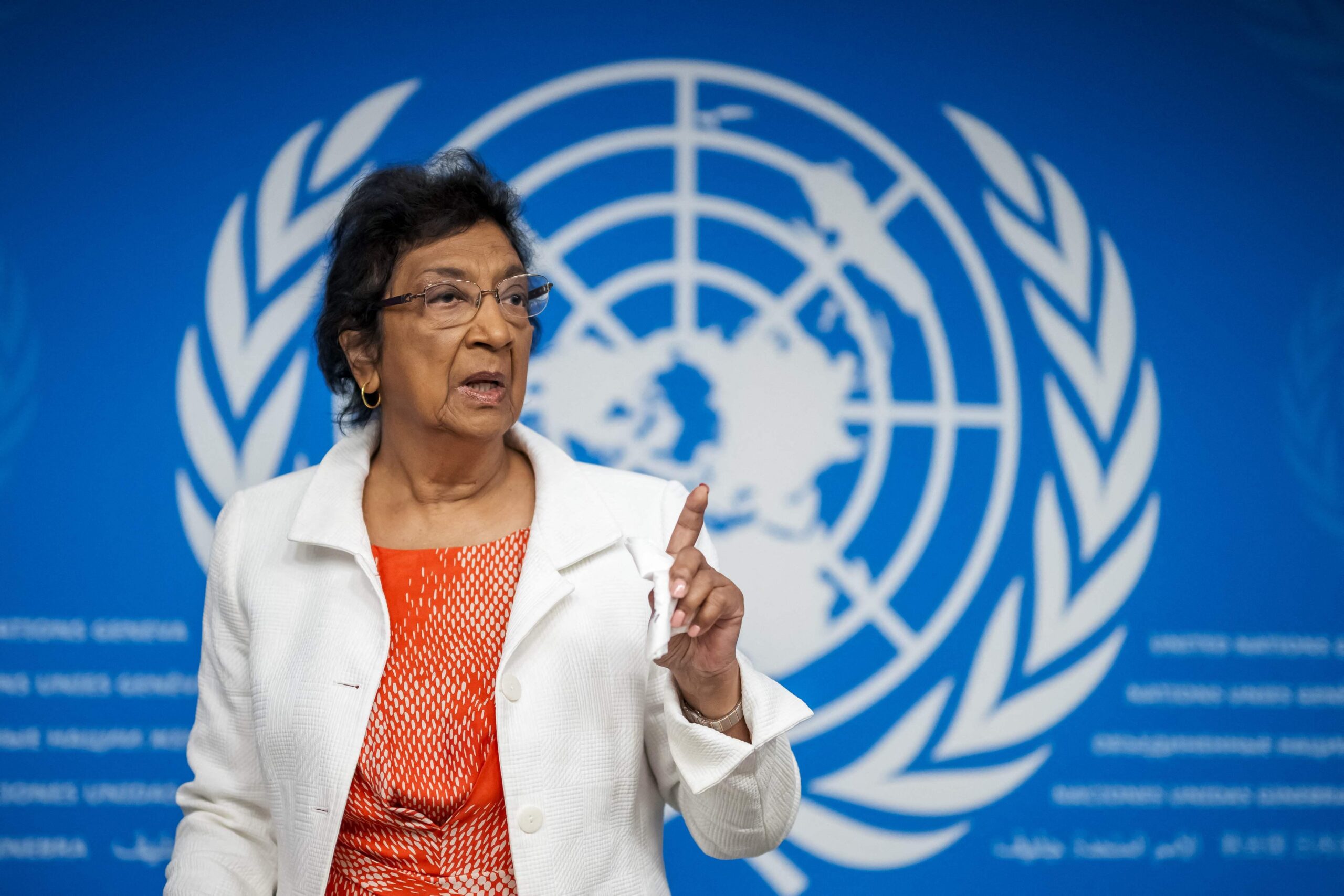
“South African jurist Navi Pillay’s 2026 Nobel Peace Prize has drawn international attention to human rights, accountability and the role of international law, while the United States’ announcement of sanctions against the International Criminal Court (ICC) has intensified debate about the independence of global justice institutions. The developments carry particular significance for South Africa, whose diplomatic engagement with international legal institutions and commitment to multilateral cooperation remain important elements of its foreign policy.”
South Africa’s international relations face renewed scrutiny as global debate over justice intensifies
Recognition of Navi Pillay brings South African legal experience into focus
South African jurist Navanethem “Navi” Pillay’s receipt of the 2026 Nobel Peace Prize has placed questions of international justice, human dignity and accountability at the centre of renewed diplomatic discussion. Pillay, a former United Nations High Commissioner for Human Rights and a former judge of the International Criminal Court, has spent decades working in international law and human rights institutions. Her award has attracted praise from international leaders and human rights organisations, while also generating criticism from the Israeli government. These contrasting reactions demonstrate how questions of justice and accountability continue to intersect with international diplomacy.
For South Africa, Pillay’s recognition has significance beyond the achievements of an individual jurist. Her professional history connects the country’s experience of apartheid and democratic transition with wider international efforts to strengthen human rights protections. Her work has included investigating alleged abuses in Rwanda and in Israel and the occupied Palestinian territories, as well as legal work connected to Nelson Mandela.
President Cyril Ramaphosa congratulated Pillay on the award, describing her achievement as a source of national pride and recognising her efforts to promote peace and international law. DIRCO also published an official statement welcoming the recognition. These responses place the award within South Africa’s public commitment to multilateral engagement and the international legal order.
Nevertheless, international recognition does not automatically resolve disagreements about how international law should be applied. Governments frequently differ over investigations, jurisdiction, the conduct of armed conflicts and the appropriate consequences for alleged violations. Pillay’s award has therefore become part of a broader discussion about whether international institutions can maintain credibility while operating amid competing political interests.
US sanctions against the ICC intensify the debate
The award coincided with another important development in international relations. According to Reuters, the administration of United States President Donald Trump announced sanctions against the International Criminal Court on 9 October 2026. The measures intensified an existing dispute between Washington and the court over its authority and investigations involving matters of concern to the United States and its allies.
The ICC was established under the Rome Statute to prosecute individuals accused of genocide, crimes against humanity, war crimes and, under specified conditions, the crime of aggression. It is separate from the International Court of Justice, which principally resolves legal disputes between states and issues advisory opinions. This distinction matters because the two institutions perform different functions within the international legal system.
The United States has historically opposed the exercise of ICC jurisdiction over American nationals without US consent. Its objections have also extended to investigations involving officials of allied countries. Washington’s position reflects concerns about national sovereignty, the limits of international jurisdiction and potential exposure of its citizens to proceedings it does not accept.
The ICC, by contrast, maintains that its mandate derives from the Rome Statute and that its work must proceed according to the applicable legal framework. Reuters reported that the court condemned the latest American action and called on its member states to defend the international legal order. The disagreement illustrates the tension between national governments’ claims of sovereign authority and efforts to establish international accountability mechanisms.
The immediate implications of the sanctions depend on their detailed implementation, the entities affected and the responses of governments and organisations working with the court. Measures that restrict services or transactions connected to an international institution can create operational challenges even when the institution continues to function legally.
Why the developments matter for South African foreign policy
South Africa has repeatedly emphasised the importance of international law, multilateral institutions and peaceful dispute resolution in its diplomatic engagement. These principles are also reflected in its participation in the United Nations, the African Union and other international forums.
Pillay’s recognition provides an opportunity for South African diplomacy to highlight the country’s contributions to international legal debate. However, the practical challenge is to translate symbolic recognition into sustained cooperation, including support for legal institutions, diplomatic dialogue and the consistent application of international standards.
South Africa’s position on the Israeli-Palestinian conflict has already been a source of diplomatic disagreement with Washington. Pretoria brought a case against Israel before the International Court of Justice under the Genocide Convention, alleging violations of the convention in Gaza. Israel has rejected the allegations. The case is a proceeding before the ICJ and should not be confused with criminal proceedings at the ICC.
These legal processes raise different questions, but both demonstrate the significance of international institutions in disputes involving armed conflict and alleged violations of international law. They also help explain why developments involving Pillay and the ICC attract attention within South Africa’s foreign policy debate.
South African officials must balance their support for international accountability with the practical requirements of maintaining relationships with influential global partners. The United States remains an important economic, technological and diplomatic counterpart. Disagreements over international law can consequently affect discussions that extend beyond the courtroom to trade, investment and wider strategic cooperation.
Diplomatic relations require both principle and dialogue
The relationship between South Africa and the United States has faced additional strain in recent months. DIRCO summoned American Ambassador Leo Brent Bozell III in September over what it described as undiplomatic conduct. Parliament’s Portfolio Committee on International Relations and Cooperation subsequently expressed concern about the repeated diplomatic protests and said it wanted the department to explain the circumstances and implications.
The dispute reflects differences over South African domestic policies, public statements by diplomatic representatives and disagreements about the direction of bilateral relations. South African officials have stressed sovereignty and respect for constitutional institutions, while American representatives have raised objections to certain government policies and called for progress on outstanding bilateral issues.
Diplomatic protests, often called démarches, are established instruments through which governments formally communicate objections or concerns. Their use does not in itself mean diplomatic relations have been severed. Rather, it indicates that a government wishes to register its position through official channels.
Nevertheless, repeated public disputes can make constructive engagement more difficult. Diplomacy depends not only on the formal exchange of notes and meetings but also on confidence that disagreements can be managed without unnecessarily damaging cooperation. Both countries have significant interests in maintaining channels through which disputes can be discussed.
For South Africa, a consistent approach would involve defending its constitutional and foreign policy positions while preserving opportunities for negotiation. For the United States, productive engagement requires clear communication of its concerns through established diplomatic mechanisms. Neither government benefits automatically from an extended public confrontation if practical areas of cooperation remain available.
International institutions and the question of equal accountability
The wider issue raised by the ICC sanctions is whether international legal institutions can operate effectively when powerful states disagree with their decisions or jurisdiction. International courts do not possess the same enforcement resources as national governments. Their effectiveness depends partly on treaty obligations, cooperation from states, access to evidence, and the willingness of governments to implement applicable decisions.
Supporters of international criminal justice argue that such institutions help ensure that serious alleged crimes receive scrutiny regardless of the political or military position of those involved. They maintain that consistent accountability can strengthen the protection of civilians and reinforce the principle that international rules apply to individuals and institutions alike.
Critics, including governments that challenge particular exercises of jurisdiction, raise questions about consent, procedural safeguards, selectivity and the potential for political disputes to influence legal processes. These concerns must be assessed against the specific legal basis for each investigation or proceeding rather than assumed to invalidate international justice as a whole.
The dispute surrounding the latest American sanctions makes this discussion especially relevant. Restrictions can influence the practical capacity of institutions to investigate cases, maintain services and cooperate with international partners. At the same time, the long-term effect will depend on the scope of the measures, subsequent legal developments and the responses of other states.
South Africa can contribute to these discussions by emphasising transparent procedures, respect for international obligations and constructive engagement between states and institutions. A credible commitment to international law requires careful attention to the legal merits of individual cases, not simply support for outcomes that align with a government’s diplomatic preferences.
African diplomacy and the importance of multilateral cooperation
The developments also matter for African countries that participate in international institutions while pursuing their own regional priorities. African governments have diverse views on international criminal justice, sovereignty and the relationship between global institutions and domestic political processes. It would therefore be inaccurate to describe the continent as having a single position on the ICC or the wider dispute.
For South Africa, regional cooperation through the African Union and the Southern African Development Community remains important to its foreign policy. Such forums provide opportunities to discuss conflict prevention, economic integration, development and diplomatic responses to international crises.
International legal questions can influence these priorities because conflict, displacement and political instability frequently cross borders. Cooperation among governments can help facilitate humanitarian assistance, strengthen legal processes and address the effects of crises on neighbouring states.
South Africa’s international credibility will depend partly on how consistently it applies its stated principles across different situations. That includes supporting peaceful resolution of disputes, recognising the legal rights and responsibilities of states, and encouraging accountability through established procedures.
Pillay’s Nobel Peace Prize offers a moment to recognise the contribution of South African legal professionals to global affairs. However, its wider importance will be determined by how governments, institutions and civil society respond to the underlying challenges rather than by the award alone.
Economic and diplomatic consequences
International legal disputes can also influence economic relationships, although the scale and direction of any effects should not be assumed without evidence. Investors and businesses may monitor diplomatic tensions because they can affect regulatory cooperation, market access, technology partnerships and the predictability of relations between governments.
South Africa’s relationship with the United States encompasses trade, investment, scientific collaboration and development initiatives. Preserving those areas of cooperation requires continued communication, even when governments disagree about international courts or domestic policies.
The ICC dispute could also affect how other countries assess their own relationships with international legal institutions. Governments may review legal exposure, institutional cooperation and the possible consequences of sanctions. Such decisions will differ according to national law, treaty commitments and each country’s political and economic interests.
South Africa should therefore distinguish between defending international legal principles and making assumptions about the economic consequences of a diplomatic disagreement. Evidence-based assessments, careful consultation with partners and transparent communication would help officials manage risks without overstating the likely effects.
What happens next?
Several developments will determine how this story evolves. These include the implementation and scope of the American sanctions, the response of ICC member states, further statements from the court and any subsequent diplomatic engagement involving South Africa and the United States.
South African officials may also continue to use multilateral forums to express their positions on international law and accountability. However, any claim that the government has adopted a new measure or reached a particular diplomatic agreement should be supported by a formal statement or independently verified reporting.
The Nobel Peace Prize itself does not determine the outcome of international legal proceedings. Instead, it draws attention to the work of individuals and institutions engaged in promoting peace and justice. The practical questions remain whether international institutions can carry out their mandates, whether states cooperate with lawful processes and whether diplomatic disagreements can be resolved without undermining essential international relationships.
Conclusion
Navi Pillay’s 2026 Nobel Peace Prize and the United States’ sanctions against the International Criminal Court have brought renewed attention to the relationship between international law, national sovereignty and global diplomacy. For South Africa, the developments connect the recognition of a distinguished jurist with ongoing questions about its foreign policy, its relationship with Washington and its engagement with international institutions.
The country’s challenge is to defend its stated commitment to international law while maintaining constructive diplomatic and economic relationships. That requires clear communication, respect for legal procedures and a willingness to engage with partners despite disagreements.
Ultimately, the significance of these events will be measured not only by international statements or awards, but by the ability of governments and institutions to sustain cooperation, address disputes through lawful means and uphold protections for human dignity. For South Africa, continued engagement through bilateral diplomacy and multilateral institutions will remain central to navigating these competing demands.



