




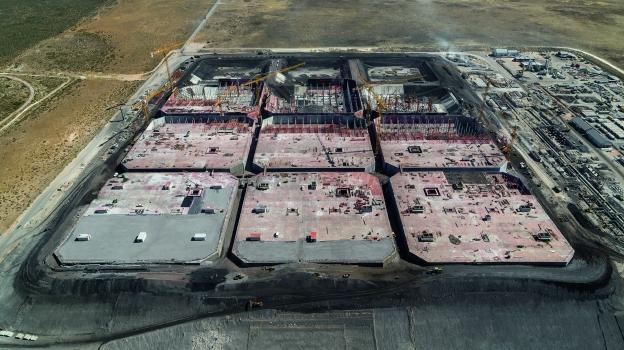
“South Africa has approximately 6.9 million barrels of strategic oil reserves, equivalent to about 30 days of crude-oil processing at the country’s current capacity of 200,000 barrels per day, according to Mineral and Petroleum Resources Minister Gwede Mantashe. The government is developing a draft Strategic Stocks Policy intended to strengthen national fuel security by maintaining stocks of both crude oil and refined petroleum products and potentially requiring oil companies to hold strategic reserves.”
South Africa’s Strategic Oil Reserves Raise Questions About Fuel Security and Government Policy
South Africa’s strategic petroleum reserves have returned to the centre of national policy discussions following the disclosure that the country holds approximately 6.9 million barrels of oil in its strategic fuel stocks. Mineral and Petroleum Resources Minister Gwede Mantashe provided the figures in response to a parliamentary question concerning the adequacy of national petroleum supplies amid international instability and declining domestic refining capacity. The disclosure, reported on 10 October 2026, highlights the relationship between energy security, economic resilience and government responsibility.
According to the reported figures, the available strategic crude-oil stocks represent approximately 30 days of processing at a rate of 200,000 barrels per day. However, this calculation should not be interpreted as meaning that South Africa could supply all its fuel needs for 30 days from these reserves. Refining capacity, the availability of imported petroleum products, the distribution network and the composition of national fuel demand all influence how long available stocks could support the country.
The government has acknowledged the importance of strengthening petroleum reserves. Its draft Strategic Stocks Policy proposes maintaining both crude oil and refined petroleum products, while also considering requirements for oil companies to hold strategic stocks. These proposals could influence how South Africa prepares for international supply disruptions and manages the risks associated with its dependence on petroleum imports.
Declining reserves create a national policy challenge
Strategic petroleum reserves are intended to provide a buffer when ordinary commercial supplies are interrupted. Such interruptions can result from geopolitical conflicts, shipping disruptions, international sanctions, production problems or sudden changes in global energy markets. For a country that depends on international petroleum supply chains, emergency stocks can help reduce the immediate effects of a disruption.
South Africa’s current reserve position raises questions about whether the existing arrangements provide sufficient protection against a prolonged crisis. The reported 6.9 million barrels are substantially below the historical peak of approximately 158.5 million barrels recorded during the 1970s, according to the original report.
The decline illustrates the importance of distinguishing between the existence of a strategic reserve and its practical capacity to protect the economy. Reserves must be available in sufficient quantities, stored appropriately, maintained securely and released through a clear procedure when an emergency occurs.
Nevertheless, historical comparisons alone do not determine the appropriate reserve level today. South Africa’s energy system, refining infrastructure, import arrangements and consumption patterns have changed considerably. Policymakers therefore need to assess current risks, realistic supply requirements and the cost of maintaining different reserve levels.
The central question is whether the country has a sufficiently clear, adequately funded and operationally reliable framework for responding to serious petroleum supply disruptions.
Why international instability matters
South Africa’s petroleum policy is influenced by events beyond its borders. Oil prices and availability can change rapidly when conflict threatens producing regions, shipping routes or international trade. Even when physical supplies remain available, uncertainty can increase procurement costs and place pressure on businesses and consumers.
Mantashe reportedly indicated that the country’s petroleum sector remained resilient amid instability associated with the war in Iran, while warning that declining refining capacity increased vulnerability to geopolitical developments.
This distinction matters. A country may continue receiving fuel under normal market conditions but still face significant exposure if several suppliers experience disruptions simultaneously. Strategic stocks can reduce that exposure, although they cannot eliminate it.
Higher petroleum costs can also affect transport operators, agricultural producers, manufacturers and businesses that rely on fuel-powered equipment. If these costs increase, companies may pass some of the additional expense to consumers. The eventual effects depend on international prices, exchange rates, taxes, domestic competition and the ability of businesses to absorb higher operating costs.
For government, the policy challenge is therefore broader than storing more crude oil. It involves ensuring that the country can obtain, process and distribute petroleum products when ordinary supply arrangements become unreliable.
The proposed Strategic Stocks Policy
The draft Strategic Stocks Policy represents an attempt to address weaknesses in the country’s petroleum security arrangements. According to the published report, the proposal seeks to strengthen strategic stocks by maintaining reserves of both crude oil and refined petroleum products.
This distinction is important because crude oil must generally undergo refining before it becomes usable petrol, diesel or other petroleum products. Where domestic refining capacity is limited, a reserve consisting exclusively of crude oil may not provide the same immediate flexibility as a combination of crude and finished products.
A mixed-reserve system could allow the country to respond to different kinds of disruption. For example, crude reserves could support refining operations where facilities remain available, while stocks of finished products could help meet immediate demand if crude processing or imports are interrupted.
The policy also proposes that oil companies maintain specified levels of strategic stock. Such requirements could distribute part of the responsibility for supply security across the petroleum industry rather than relying exclusively on state-controlled reserves.
However, the effectiveness of this approach would depend on the final rules. Authorities would need to define minimum stock levels, eligible storage facilities, reporting requirements, inspection procedures and the circumstances under which reserves could be released.
The policy would also need to establish how compliance is monitored and what happens when companies fail to meet their obligations. Without transparent implementation arrangements, stockholding requirements could become difficult to verify or enforce.
Refining capacity remains a critical factor
Strategic reserves cannot be considered separately from South Africa’s refining infrastructure. The minister’s reported assessment identified declining refining capacity as a source of vulnerability.
Refineries convert crude oil into products that households and businesses use. When domestic processing capacity falls, the country may become more dependent on importing finished fuels. This can change the type of emergency stocks that are most useful and increase exposure to disruptions affecting international product markets.
South Africa’s Secunda coal-to-liquids facility, operated by Sasol, is another part of the country’s fuel supply system. Mantashe reportedly described the facility as a stabilising factor because it supplements petroleum supplies through a different production route.
Nevertheless, alternative production facilities do not remove every supply risk. Their contribution depends on operating conditions, maintenance, feedstock availability, production capacity and the types of fuels they can provide.
Consequently, a comprehensive policy should consider strategic reserves alongside domestic production, refining infrastructure, import terminals, pipelines, transport systems and distribution networks. Increasing stocks without addressing the systems required to deliver them could limit the benefits of additional investment.
Governance and accountability over petroleum stocks
The management of strategic petroleum reserves also raises questions about public accountability. The original report recounts the controversial sale of approximately 10 million barrels of strategic oil reserves between December 2015 and January 2016.
According to that report, the Western Cape High Court overturned the transactions in November 2020, declaring them unlawful and invalid. The case demonstrates why decisions involving strategic national assets require clear authorisation, transparent procedures and effective oversight.
Strategic reserves are not simply commercial inventories. They are part of a country’s emergency preparedness arrangements. Decisions about selling, replacing or releasing them can have implications for national resilience and public finances.
A stronger policy framework could therefore include regular public reporting on reserve volumes, independent audits, clear procurement rules and parliamentary oversight. Some operational details may require appropriate protection, but that should not prevent meaningful accountability for public resources.
The government must also communicate clearly about the difference between commercial inventories held by companies and emergency stocks maintained under strategic requirements. Transparent reporting would help parliamentarians, industry participants and the public understand whether the country’s reserves are meeting the intended objectives.
Economic implications for households and businesses
Fuel security has direct implications for the broader economy. Transport companies require diesel to move goods, farmers depend on fuel for machinery and logistics, and many businesses rely on petroleum products to maintain daily operations.
A severe supply disruption could affect the movement of food, industrial materials and consumer goods. Businesses might face higher procurement costs, while households could experience pressure from increased transport expenses and changes in the prices of goods and services.
However, maintaining large reserves also involves costs. Petroleum must be purchased, stored, inspected and managed, while storage facilities require maintenance and appropriate security. If companies are required to hold additional stocks, they may face higher financing and storage expenses.
Policymakers must therefore balance the economic value of emergency preparedness against its financial cost. The appropriate reserve level should reflect credible supply risks, expected disruption periods, import dependence and the capacity of the wider energy system to respond.
A transparent assessment of these factors would help explain why particular stockholding targets are necessary and how the costs will be distributed.
What implementation should prioritise
The draft policy provides an opportunity to establish measurable objectives for petroleum security. First, authorities should assess the country’s current exposure to supply interruptions, including its reliance on imported crude oil and refined products.
Second, the government should determine how much crude oil and how many days’ worth of refined products are required under different emergency scenarios. These calculations should distinguish processing capacity from actual national consumption and should account for the availability of alternative supplies.
Third, the authorities should establish practical stockholding and reporting requirements for the state and participating companies. Clear responsibilities would make it easier to identify gaps and measure progress.
Fourth, contingency planning should cover the release and replenishment of emergency stocks. A reserve is useful only when the country can deploy it promptly under appropriate conditions.
Finally, implementation should be supported by regular reporting, independent verification and periodic policy reviews. These measures would help the government adapt its approach as fuel demand, infrastructure and international supply conditions change.
Conclusion
South Africa’s reported strategic oil reserves of 6.9 million barrels have placed petroleum security back on the national policy agenda. The figures, combined with concerns about declining refining capacity and international instability, underline the need for a clear and workable approach to emergency fuel preparedness.
The draft Strategic Stocks Policy could provide a framework for maintaining both crude oil and refined products while assigning defined stockholding responsibilities to industry participants. Its practical value, however, will depend on the final requirements, funding arrangements, monitoring systems and ability to deliver fuel during a disruption.
The issue is ultimately one of public policy and governance. South Africa must balance the cost of maintaining reserves against the economic consequences of being unprepared for a major supply interruption. Transparent decision-making, accountable management and realistic planning will be essential to ensuring that strategic petroleum stocks fulfil their intended national purpose.



