




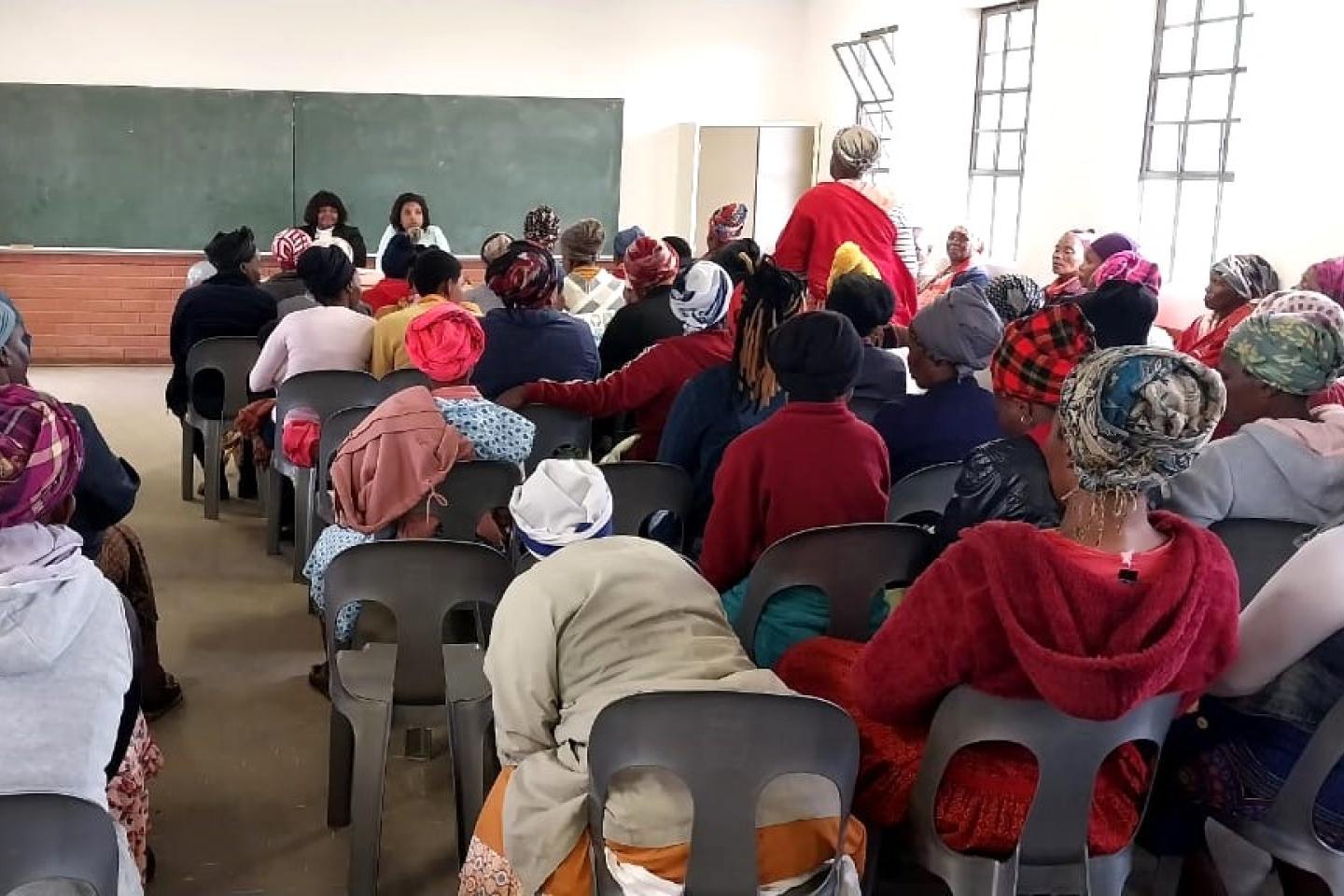
“South Africa’s Multi-Party Women’s Caucus has called for urgent, coordinated government action to address women’s mental health, following a briefing from the Department of Health that highlighted anxiety, depression, gender-based violence, poverty and unequal caregiving responsibilities as important concerns. Parliament has emphasised the need to strengthen primary healthcare services, expand mental health screening, increase public awareness and improve cooperation between health, education, social development, justice and other sectors.”
South Africa Faces Renewed Calls for Urgent Action on Women’s Mental Health
Introduction: Mental health becomes a national policy priority
South Africa’s approach to mental health has received renewed political attention following a call from Parliament’s Multi-Party Women’s Caucus for stronger, coordinated action to protect the psychological well-being of women and girls.
In a statement issued on 16 October 2026, the caucus chairperson, Lindelwa Dunjwa, highlighted the importance of treating mental health as a fundamental public health and human rights priority. The statement followed a briefing by the National Department of Health on the mental health challenges affecting women across the country.
The intervention places mental health firmly within the broader national discussion about healthcare delivery, gender equality, economic insecurity and social protection. It also raises an important question for policymakers: how can South Africa ensure that people experiencing psychological distress receive timely, affordable and appropriate support?
Although mental health conditions require professional healthcare responses, their causes and consequences often extend beyond the health sector. Experiences of violence, financial hardship, unemployment, family responsibilities and unequal access to services can contribute to emotional distress and make recovery more difficult.
The parliamentary statement therefore calls for cooperation between government departments, civil society organisations and communities. Its significance lies not only in recognising the scale of the challenge, but also in highlighting the need to translate awareness and policy commitments into accessible services.
The scale of South Africa’s mental health challenge
According to the parliamentary statement, the caucus was informed that approximately 30% of South African adults experience mental disorders during their lifetime. The statement also highlighted differences in the challenges commonly experienced by women and men, noting that women are disproportionately affected by anxiety and depression, while men experience a greater burden of substance-use disorders.
These figures underline why mental health should not be treated as a marginal issue within national healthcare planning. Psychological difficulties can affect education, employment, relationships, parenting, physical health and participation in community life.
However, the lifetime figure should not be interpreted as meaning that 30% of adults currently have a mental disorder. Lifetime prevalence measures whether someone has experienced a condition at some point in their life, rather than whether they are experiencing symptoms at present.
Anxiety and depression can vary considerably in severity. Some people experience temporary symptoms during difficult periods, while others develop persistent conditions that require professional assessment, psychological treatment, medication or a combination of interventions.
Access to appropriate care is therefore essential. Without early support, some people may experience worsening symptoms, difficulties maintaining employment, strained relationships or reduced capacity to manage everyday responsibilities.
The challenge for policymakers is to ensure that mental health services are available across different communities, rather than concentrated in specialist facilities that may be difficult for people to reach.
Why women face particular mental health pressures
The parliamentary briefing identified several factors that can increase women’s vulnerability to psychological distress, including biological changes, chronic physical illnesses, traditional gender roles, economic inequality and gender-based violence.
These pressures can overlap. A woman experiencing financial insecurity, for example, may also be responsible for caring for children or older relatives. If she experiences violence or has limited access to supportive services, the combined burden may become especially difficult to manage.
Gender-based violence is particularly important because its consequences can continue long after an immediate incident has ended. Survivors may experience fear, anxiety, depression, trauma-related symptoms, sleep difficulties or reduced trust in other people.
Not every survivor develops a mental health condition, and people respond differently to traumatic experiences. Nevertheless, confidential, sensitive and timely support can help survivors understand their experiences and access appropriate care.
Economic inequality also influences mental well-being. Unemployment, unstable income, food insecurity and housing difficulties can create persistent uncertainty. For parents and caregivers, these pressures may be intensified by the responsibility of meeting the needs of dependants while managing their own emotional health.
These factors demonstrate why mental health policy must consider the circumstances in which people live. Counselling and clinical treatment remain important, but healthcare interventions alone cannot resolve violence, poverty or unequal access to economic opportunities.
The role of government and political accountability
The Multi-Party Women’s Caucus has called for accelerated cooperation across government departments, civil society and communities. Dunjwa emphasised that many of the underlying drivers of psychological distress fall outside the direct responsibilities of the health sector.
This observation has significant implications for public policy.
The Department of Health can provide screening, diagnosis, treatment and referrals. However, reducing the wider pressures that affect mental health also requires action from institutions responsible for education, social welfare, employment, policing and justice.
For example, effective responses to gender-based violence require survivors to be able to report abuse safely, obtain protection where appropriate and access medical, psychological and legal assistance.
Social development programmes can help connect vulnerable households with available support. Schools can identify learners who are struggling emotionally and facilitate appropriate referrals. Employers can help by addressing workplace harassment, excessive pressure and barriers to seeking assistance.
These responsibilities are interconnected, but cooperation must be practical rather than merely aspirational.
Government departments need clear responsibilities, measurable objectives, sufficient funding and reliable mechanisms for monitoring progress. Public reporting should help establish whether promised services are reaching communities and whether identified gaps are being addressed.
Parliament also has an oversight role. Its committees and caucuses can question departments about implementation, examine resource allocation and encourage accountability when policies fail to produce meaningful improvements.
The October statement signals political recognition of the problem. The next test is whether this recognition leads to measurable improvements in the availability and quality of care.
Strengthening mental health services in primary healthcare
One of the principal priorities highlighted in the parliamentary statement is strengthening mental health services at district and primary healthcare levels.
Primary healthcare facilities are important because they provide an initial point of contact for people who may be experiencing emotional distress but have not yet received specialist treatment.
Some patients may initially approach a clinic for headaches, sleep difficulties, persistent fatigue or other physical symptoms. During an appropriate clinical assessment, healthcare professionals may identify psychological concerns that require further attention.
Integrating mental health into routine healthcare can help reduce the separation between physical and psychological treatment. It may also create opportunities for earlier identification and referral.
However, screening must be accompanied by a credible response. Identifying a potential mental health problem without providing access to assessment, treatment or follow-up risks leaving patients without meaningful assistance.
Effective services require trained staff, appropriate referral pathways, confidential consultations and sufficient capacity to support people with different needs.
District-level planning can help identify gaps between communities and specialist services. Where specialist mental healthcare is scarce, primary healthcare teams need clear guidance on which conditions they can manage, when to seek additional expertise and how to respond to emergencies.
The success of this approach will depend on practical implementation, including staff training, sustainable funding and coordination between clinics, hospitals and community-based organisations.
Integrating screening into maternal and school health programmes
The caucus also highlighted the importance of integrating mental health screening into maternal, neonatal and school health programmes.
Maternal healthcare offers an important opportunity to recognise psychological difficulties during pregnancy and after childbirth. Some mothers experience significant emotional distress during these periods, particularly when physical recovery, financial concerns, relationship difficulties or limited support create additional pressures.
Healthcare workers can help by asking appropriate questions, recognising concerning symptoms and connecting patients with professional assistance when needed.
Such screening must be conducted sensitively and confidentially. Women should be able to discuss their concerns without fear of humiliation, blame or unnecessary disclosure of private information.
Schools provide another opportunity to identify young people who may need assistance. Anxiety, depression, bullying, family conflict and other challenges can affect concentration, attendance, relationships and academic performance.
Nevertheless, teachers should not be expected to diagnose mental health conditions. Their role is better understood as recognising possible warning signs, creating supportive environments and referring learners to suitably qualified professionals or established support services.
Successful school-based programmes require cooperation between education departments, families, school support teams and healthcare providers.
Screening should also avoid labelling ordinary emotional responses as disorders. Professional assessment is essential when symptoms are persistent, severe or significantly interfere with everyday life.
The connection between mental health, poverty and inequality
The parliamentary statement reinforces the relationship between mental health and socioeconomic conditions.
Financial hardship can affect psychological well-being through uncertainty about food, accommodation, transport, education and healthcare. Individuals facing unemployment may also experience social isolation, reduced confidence or pressure to support their families without a stable income.
These pressures are not evidence of personal weakness. They reflect circumstances that can affect people’s emotional health and their ability to obtain assistance.
Public policy should therefore consider how mental health services interact with social protection, employment support and community development.
For example, a person receiving psychological treatment may struggle to attend appointments if transport costs are unaffordable. Someone experiencing severe stress because of housing insecurity may require both clinical assistance and access to appropriate social services.
Integrated support does not mean that every social problem can be solved by a healthcare professional. Instead, it recognises that recovery may depend on connecting people with different forms of assistance.
Reducing stigma is equally important. People may delay seeking help because they fear discrimination, judgment or consequences for their employment and family relationships.
Public education can encourage earlier help-seeking by explaining that mental health conditions are legitimate health concerns and that professional support is available.
Campaigns should also recognise cultural and linguistic diversity, ensuring that information is understandable and relevant to the communities it is intended to reach.
Gender-based violence and the need for survivor-centred support
Gender-based violence remains an important consideration in discussions about women’s mental health because violence can create immediate danger as well as lasting psychological consequences.
Survivors may need different forms of support depending on their circumstances. These can include medical care, trauma-informed counselling, practical assistance, safe accommodation and access to legal protections.
A survivor-centred approach gives priority to safety, dignity, confidentiality and informed choice.
Services should avoid blaming survivors or suggesting that they are responsible for preventing another person’s violence. Instead, institutions must focus on preventing abuse, responding appropriately to reports and ensuring that affected individuals can access support.
Cooperation between health services, social workers, law enforcement and justice institutions can help reduce the burden on survivors who otherwise have to navigate several disconnected systems.
However, coordination needs adequate resources and trained personnel. A referral system is only effective when the receiving service has the capacity to respond.
Political leaders can contribute by demanding evidence of service availability, identifying institutional weaknesses and monitoring whether support reaches people who need it.
Funding, implementation and public awareness
The parliamentary caucus has called for stronger awareness and outreach programmes and continued monitoring of mental health strategies. It has also emphasised the importance of allocating resources to accessible care that is free from stigma.
Funding decisions will influence whether these objectives can be achieved.
Mental health programmes require more than public announcements. They depend on appropriately trained professionals, suitable facilities, reliable medication supplies where prescribed, referral networks and ongoing community engagement.
Policymakers should also consider how services reach rural communities and underserved urban neighbourhoods. Distance, transport costs, shortages of professionals and long waiting periods can make it difficult for people to receive timely treatment.
Public awareness campaigns are most effective when they direct people towards real support options. Information about symptoms and stigma should be accompanied by clear guidance on where to seek assessment and what services are available.
Evaluation is equally important. Relevant indicators could include access to screening, waiting times, successful referrals, continuity of treatment and patient experiences.
These measures would help policymakers assess whether expanded awareness is translating into improved access to care.
The available parliamentary statement does not establish that new funding has already been approved or that every proposed service has been implemented. These developments should therefore be monitored rather than assumed.
Conclusion: Turning political commitments into practical support
South Africa’s parliamentary call for urgent action on women’s mental health highlights an issue that reaches beyond clinical treatment into the wider social and economic conditions affecting people’s lives.
The Department of Health and the Multi-Party Women’s Caucus have identified priorities that include stronger primary healthcare services, mental health screening, public awareness and cooperation across government departments.
These priorities provide a basis for further action, but their effectiveness will depend on implementation. Services need sufficient resources, trained professionals, reliable referrals and mechanisms that allow Parliament and the public to assess progress.
Women experiencing anxiety, depression or trauma should not have to navigate fragmented services without support. Nor should responsibility for addressing mental health fall exclusively on individuals when violence, economic insecurity and unequal access to services contribute to their difficulties.
Government institutions, healthcare professionals, community organisations and families all have roles in creating environments where people can seek help without shame.
The central policy challenge is now to move from recognition to measurable results. By strengthening accessible services and addressing the wider conditions that contribute to psychological distress, South Africa can make progress towards a healthcare system that treats mental health as an essential component of public health and human dignity.



