




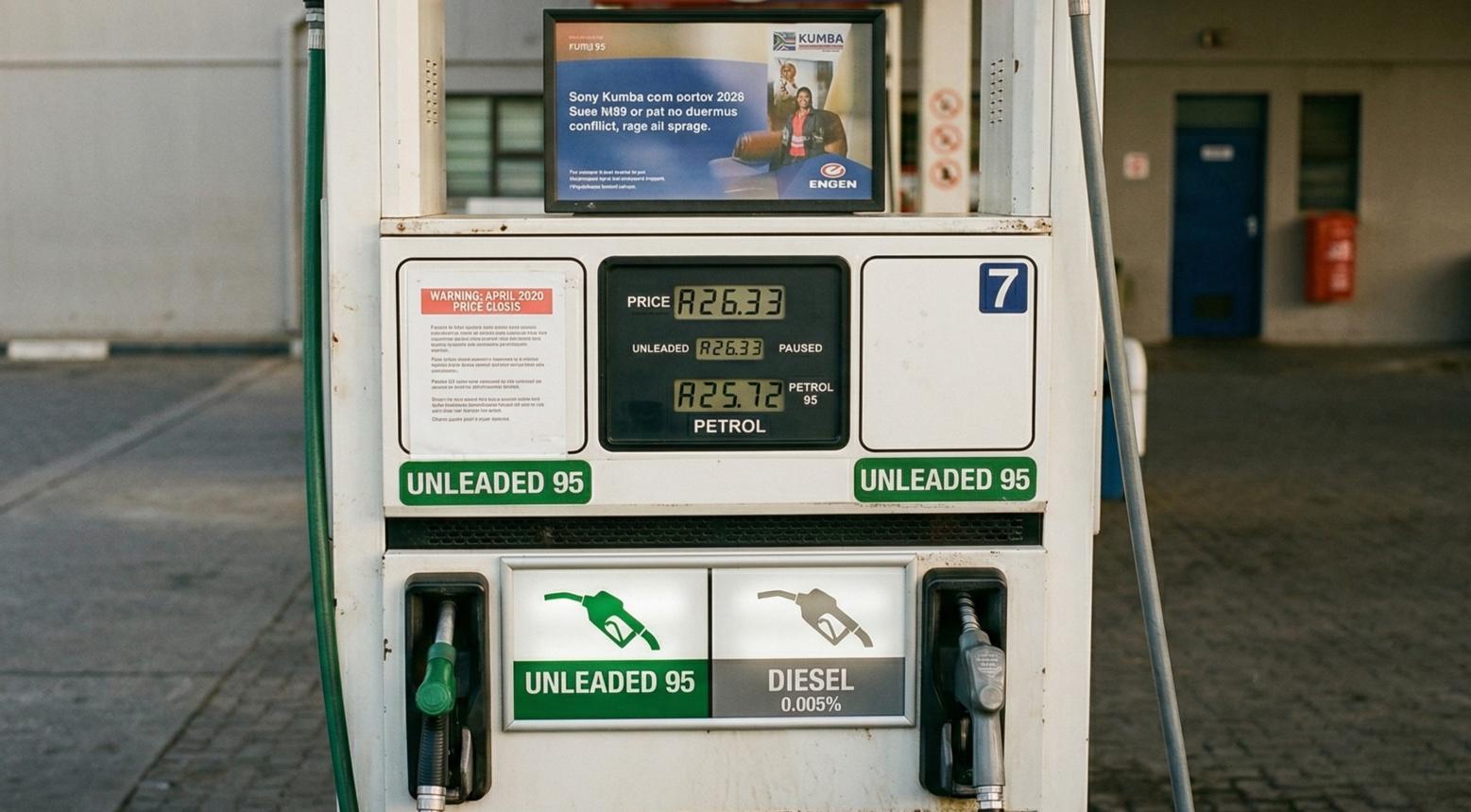
“South Africans are facing an unprecedented fuel-price shock, with Gauteng’s 95-octane petrol price rising by R3.33 to about R30.25 per litre from 7 October as international oil prices approached $100 a barrel. The impact extends beyond motorists because a weaker rand, higher fuel levies, reduced domestic refining capacity and limited strategic reserves are increasing the cost of transporting goods and putting additional pressure on household budgets, businesses and inflation.”
South Africa is entering a difficult period for households, businesses and financial markets as an international oil shock combines with domestic vulnerabilities to drive fuel prices to record levels. The latest increase has pushed Gauteng’s 95-octane petrol price to approximately R30.25 a litre, following an increase of R3.33 effective from 7 October 2026. Diesel prices have also risen sharply, creating a broader economic challenge because diesel is essential to freight, agriculture, construction, mining and electricity generation.
The immediate cause is the surge in international oil prices. Brent crude has moved above $100 a barrel amid disruptions linked to conflict and supply risks around the Middle East. However, the effect on South Africa is amplified by the rand exchange rate, the country’s dependence on imported petroleum products and the structure of domestic fuel taxes and levies. As a result, the current shock is not simply a story about petrol stations. It is increasingly a story about inflation, household purchasing power, business costs and the country’s financial resilience.
Moneyweb reported on 8 October that the latest oil shock is particularly painful because several structural factors have changed since previous periods when crude oil traded around similar levels. South Africa has less domestic refining capacity than it once had, while strategic fuel reserves are significantly lower than historical levels. At the same time, fuel-related levies have grown substantially over the years, increasing the amount of every litre that is already committed to government charges.
The increase therefore arrives at an especially difficult time for consumers. A driver filling a 50-litre tank at approximately R30.25 a litre would spend more than R1,500 before considering any discounts or alternative pricing. For households that rely heavily on private vehicles for commuting, school transport and family responsibilities, the additional cost can quickly absorb money that would otherwise be spent on food, education, healthcare or debt repayments.
The pressure is even greater for businesses.
Transport companies face higher diesel costs, while retailers must pay more to move goods between distribution centres and shops. Agricultural producers face higher costs for tractors, irrigation equipment, transport and other fuel-dependent activities. Construction companies, mining operations and manufacturers can also face rising operating expenses when fuel becomes more expensive.
These costs can eventually reach consumers through higher prices.
This creates a major concern for the South African Reserve Bank because fuel is closely connected to inflation. A sustained increase in energy and transportation costs can feed into the prices of food and other goods. The effect can be particularly significant when higher fuel prices occur alongside currency weakness and elevated global uncertainty.
The rand has already been under pressure. Reuters reported on 7 October that the currency extended earlier losses as the US dollar strengthened and oil prices climbed. A weaker rand makes imported oil and petroleum products more expensive in local currency, meaning international price increases can have an even larger effect on South African consumers.
This creates a difficult financial chain reaction.
Higher oil prices increase South Africa’s import bill. A larger import bill can increase demand for foreign currency. If the rand is weak at the same time, the local-currency cost of those imports becomes even higher. Fuel companies then face higher costs, while consumers eventually pay more at the pump.
The country’s trade position is already showing the impact. Moneyweb reported on 7 October that crude oil, diesel and petrol accounted for 24.5% of South Africa’s total imports in the three months to June, up from 15.9% in the preceding quarter. According to the report, this was the highest proportion recorded since 1994.
That figure demonstrates why the fuel crisis matters to finance and not only energy policy. When almost one-quarter of import spending is connected to petroleum products, international energy shocks can materially affect the country’s balance of payments and overall economic performance.
There is also a structural question about domestic refining capacity. South Africa previously had several major fuel-refining facilities, but some of that capacity has disappeared. Greater reliance on imported refined products leaves the country more exposed to international supply disruptions and shipping costs.
Moneyweb’s analysis argues that restoring refining capacity could eventually provide some protection against imported fuel costs, although new refinery investment would require substantial capital and careful feasibility analysis.
Strategic reserves are another concern. Moneyweb reported that the Strategic Fuel Fund holds about 6.9 million barrels of oil, substantially below the country’s historical peak of more than 158 million barrels. Smaller reserves reduce the amount of protection available when international supplies are disrupted.
For policymakers, however, reducing fuel prices is not straightforward.
Fuel levies provide important government revenue. Moneyweb estimates that the general fuel levy contributes tens of billions of rand annually to the fiscus. Removing or substantially reducing the levy could immediately lower prices at petrol stations, but it would leave government with a significant revenue gap that would have to be addressed through spending cuts, alternative taxes or increased borrowing.
That means the debate is ultimately about how South Africa balances short-term consumer relief against long-term fiscal stability.
There is also a monetary-policy dimension. The Reserve Bank has already been operating in an uncertain environment. BusinessTech reported on 7 October that the central bank is increasingly using direct feedback from businesses to improve its assessment of economic activity and pricing pressures between formal data releases. The approach is intended to give policymakers more timely information during periods of uncertainty.
The latest fuel shock provides exactly the kind of environment in which such information becomes important. Official economic data may show what happened previously, while direct business feedback can provide clues about what companies are experiencing now.
For ordinary South Africans, the consequences are likely to extend beyond the fuel station.
Higher transport costs can raise food prices because agricultural products need to be moved from farms to markets. Retailers may face higher distribution costs. Small businesses that depend on vehicles may have to increase prices or accept lower profit margins. Employees who commute long distances may demand higher wages, while employers may face pressure to compensate workers for rising living costs.
The impact could therefore become broader if high oil prices persist.
Nevertheless, the situation also highlights areas where South Africa could improve its long-term financial resilience. Greater domestic energy production, investment in refining infrastructure, diversified fuel supplies, improved public transport and stronger strategic reserves could reduce vulnerability to future international oil shocks.
The country’s financial response will therefore need to extend beyond the immediate question of what motorists pay at the pump.
The current crisis shows how closely international commodity markets, exchange rates, government revenue, monetary policy and household finances are connected. A conflict thousands of kilometres away can raise the price of petrol in Johannesburg; a weaker rand can magnify that increase; higher transport costs can push up food prices; and persistent inflation can influence interest-rate decisions.
That chain makes the latest fuel increase one of South Africa’s most important finance stories.
For consumers, the immediate priority is managing higher household costs. For businesses, it is protecting cash flow and controlling transport expenses. For government, the challenge is balancing revenue needs with pressure for relief. And for financial policymakers, the central question is whether the oil shock remains temporary or becomes a sustained inflationary force.
The record fuel price is therefore more than a number displayed on a petrol-pump sign. It is a warning about South Africa’s exposure to global energy markets and a test of the economy’s ability to absorb another major external shock.
If international oil prices remain elevated and the rand stays under pressure, the financial consequences could become increasingly visible across household budgets, business margins, import costs and inflation. Conversely, if geopolitical tensions ease and oil prices fall, some of the pressure could eventually reverse.
For now, however, South Africans are paying the price of a combination of higher global oil costs and domestic vulnerabilities. The record at the pump has become a powerful reminder that energy security and financial stability are deeply interconnected.



