




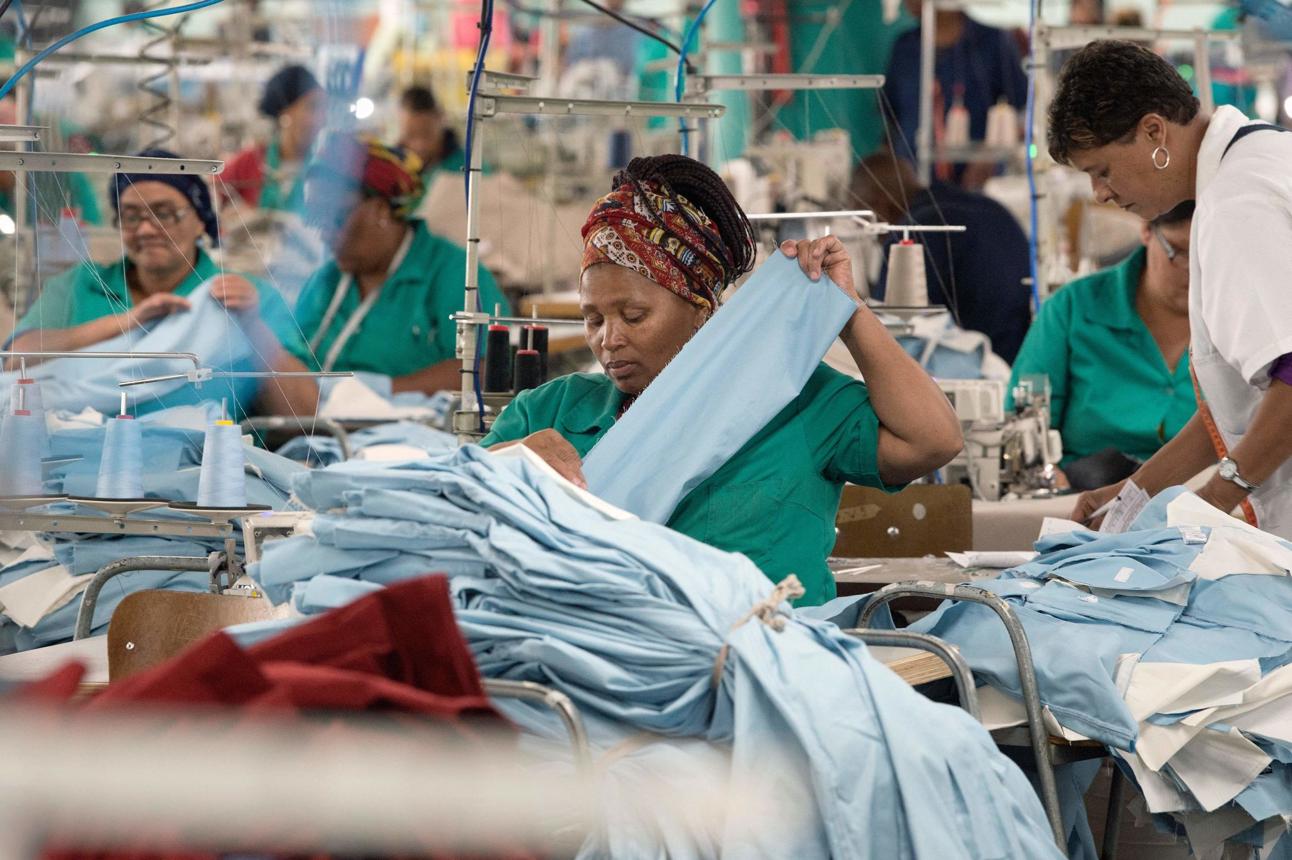
“South Africa’s imports of textiles and textile articles fell by 5.5% year on year during January–August 2026, according to preliminary trade data from the South African Revenue Service, highlighting changing conditions in one of the country’s important consumer and manufacturing-related trade sectors. The decline comes against a wider trade environment in which South Africa recorded a R20.5 billion trade surplus in August, with year-to-date exports exceeding imports by R149.5 billion through August.”
South Africa’s Textile and Apparel Imports Fall 5.5% as Trade Patterns Shift in 2026
South Africa’s textile and apparel trade is showing signs of changing as imports of textiles and textile articles declined by 5.5% during the first eight months of 2026 compared with the corresponding period a year earlier. The latest figures, based on preliminary data from the South African Revenue Service (SARS), provide a snapshot of changing import demand in a sector that connects international trade, local manufacturing, retail, employment and consumer spending.
The development is significant because textiles and clothing occupy an important position in South Africa’s merchandise trade. The sector includes raw materials, fabrics, finished garments and other textile products moving across the country’s borders. Consequently, changes in import volumes and values can reflect developments in consumer demand, exchange rates, production costs, international competition and efforts to strengthen domestic manufacturing.
The latest figures also need to be viewed within the broader South African trade picture. SARS data showed that the country recorded a preliminary trade surplus of R20.5 billion in August 2026, with exports of R181.8 billion and imports of R161.3 billion. For the January-to-August period, the preliminary trade surplus reached R149.5 billion, compared with R96.1 billion during the comparable period in 2025.
Textile imports decline during January–August
According to the latest textile trade report, South Africa’s imports of textiles and textile articles decreased by 5.5% during January–August 2026 compared with the same period in 2025. The data include trade with Botswana, Eswatini, Lesotho and Namibia, meaning the figures provide a regional view of merchandise movements involving the Southern African Customs Union environment.
A decline in imports does not, by itself, mean that domestic textile production has increased by the same amount. Imports can fall for several different reasons, including weaker consumer demand, changes in inventories, currency movements, lower international prices, substitution toward locally produced products or changes in sourcing strategies by retailers and manufacturers.
Nevertheless, the movement is important for South Africa’s clothing and textile industry because imported products have long formed an important part of the domestic market. Local producers compete with international suppliers on price, quality, delivery times, product variety and production scale.
For South African manufacturers, a reduction in imported textile products could potentially create additional room in certain market segments. However, the effect will depend on whether domestic companies have sufficient production capacity, competitive pricing, skilled workers and access to locally available raw materials.
Broader trade data provides important context
The textile figures arrive shortly after SARS reported South Africa’s August merchandise trade results. In August, exports declined 5.8% month on month to R181.8 billion, while imports fell 7.8% to R161.3 billion. Despite both sides of the trade account contracting during the month, exports remained higher than imports, producing a preliminary surplus of R20.5 billion.
On a year-on-year basis, August exports were 6.4% higher than the R170.8 billion recorded in August 2025, while imports were 4.2% lower than the R168.5 billion recorded a year earlier. This means the stronger year-to-date trade position has not been driven simply by a surge in monthly exports. Instead, lower import values have also contributed materially to the overall surplus.
The figures demonstrate why individual sectors such as textiles need to be considered alongside the overall trade balance. A country can record a growing trade surplus while particular manufacturing or consumer categories experience weaker import demand.
South Africa’s trade performance is also influenced by commodity exports, manufactured products, machinery, vehicles, agricultural products and mineral products. Consequently, movements in one sector do not necessarily determine the direction of the entire trade account.
Implications for local clothing manufacturers
The fall in textile imports could become relevant to local clothing manufacturers if it coincides with stronger demand for South African-made products. Localisation has been an ongoing objective for parts of the clothing and textile industry, particularly because domestic manufacturing supports employment and creates links between factories, suppliers, retailers and logistics businesses.
However, local producers still face several structural challenges. South African manufacturers must compete against large international production centres that can benefit from economies of scale, integrated supply chains and lower production costs.
Electricity, labour, financing, transport and raw-material costs can all affect the competitiveness of local factories. Therefore, a reduction in imports does not automatically translate into higher local production. Domestic businesses must still be capable of meeting the quantity, price, quality and delivery requirements of retailers and other buyers.
The availability of fabric, yarn and other upstream materials is particularly important. If finished-product imports decline but manufacturers remain dependent on imported inputs, the impact on domestic value addition can be more limited.
Retail demand remains a key factor
Another important consideration is consumer demand. South African households remain sensitive to the cost of clothing and other consumer goods. When household budgets are under pressure, consumers may alter purchasing patterns, delay purchases or seek lower-cost alternatives.
Retailers therefore continuously adjust their sourcing decisions. A change in the value of textile imports can reflect not only supply-side developments but also decisions by retailers regarding stock levels and expected demand.
If retailers anticipate weaker sales, they may reduce orders from overseas suppliers. Conversely, stronger domestic demand could encourage increased imports even when local manufacturing capacity is available.
The 5.5% decline should therefore be interpreted as a trade indicator rather than a standalone measure of the health of the clothing industry.
South Africa’s changing international trade environment
South African companies are also operating in an increasingly complex international trade environment. Tariffs, trade agreements, customs requirements, shipping costs and geopolitical developments can influence the price and availability of imported products.
At the same time, South Africa is seeking to diversify its export markets and increase the value of goods produced domestically. The government recently highlighted expanded access for South African cherries to China after the signing of a market-access protocol. China imported approximately 586,900 tonnes of cherries valued at about US$3.3 billion in 2025, according to the South African government.
That development illustrates the broader importance of market access. While textiles are different from agricultural products, the underlying trade principle is similar: access to markets can determine whether South African businesses can expand production and attract investment.
The country’s trade relationships are therefore being shaped by both import competition and opportunities for exporters.
Trade surplus offers mixed signals
South Africa’s R149.5 billion preliminary trade surplus for the first eight months of 2026 is substantially above the R96.1 billion recorded during the comparable period in 2025. Exports during the period reached about R1.45 trillion, while imports were approximately R1.30 trillion.
This is a positive development from the perspective of the merchandise trade balance, but the composition of that surplus remains important. A sustainable improvement in external trade depends not only on reducing imports but also on expanding competitive exports and increasing domestic production capacity.
The South African Reserve Bank has also noted that the trade environment has faced significant changes during 2026. Its September 2026 Quarterly Bulletin reported that the trade surplus narrowed substantially during the second quarter as merchandise imports increased more strongly than merchandise and net gold exports. Higher international prices for crude oil and refined petroleum products contributed significantly to the increase in import values.
This highlights another issue facing businesses: international commodity prices can rapidly change the value of imports even when physical volumes do not change proportionally.
What the latest textile figures could mean
The 5.5% reduction in textile and apparel imports is therefore best understood as one part of a broader transformation in South Africa’s trade environment. For local manufacturers, the figures could create opportunities if retailers increasingly source from domestic producers.
For consumers, however, the outcome will depend on competition. If local companies can expand production while maintaining competitive prices and quality, reduced reliance on imports could strengthen domestic manufacturing. If domestic supply remains constrained or production costs remain high, import reductions could have a different effect.
For policymakers, the challenge is to encourage local industrial development without undermining consumer access to affordable products. Effective trade policy therefore requires attention to tariffs, customs enforcement, manufacturing incentives, skills development, infrastructure and competition.
For businesses, the latest data reinforce the importance of monitoring both domestic and international market conditions. Companies that rely heavily on imported inputs may need to examine supply-chain risks, while manufacturers may see opportunities to expand where local demand can support additional capacity.
Looking ahead
South Africa’s textile trade will remain closely connected to broader economic conditions. Retail sales, household income, inflation, the rand exchange rate, international shipping costs and sourcing decisions by major retailers will all influence the direction of imports.
The preliminary January–August figures provide an early indication that textile imports are lower than they were a year earlier. However, additional monthly data will be required to determine whether the decline represents a sustained shift or a temporary change in purchasing and inventory patterns.
The wider trade statistics provide an encouraging but complex backdrop. South Africa entered the final part of 2026 with a sizeable year-to-date merchandise trade surplus, while both imports and exports experienced notable monthly movements.
Ultimately, the significance of the textile import decline will depend on what happens next. If lower imports are accompanied by stronger local manufacturing, investment and employment, the change could become part of a broader industrial-development story. If they are instead primarily the result of weaker demand, inventory adjustments or other temporary factors, the implications for local production could be more limited.
For now, the latest SARS-linked figures show a clear movement in the textile trade balance: South Africa imported fewer textiles and textile articles during January–August 2026 than during the same period of 2025. That development, combined with the country’s wider trade surplus, makes the textile sector an important area to monitor as South Africa continues to navigate changing domestic demand, international competition and evolving global trade conditions.



