




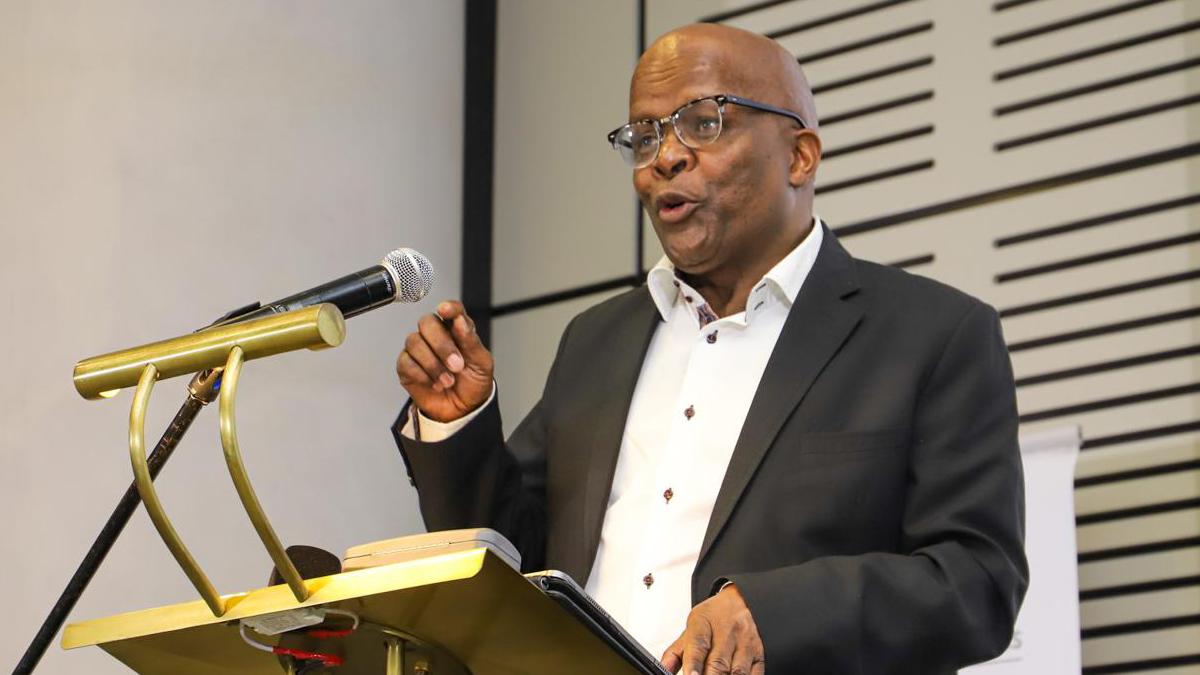
“South Africa is preparing a revised national artificial-intelligence policy after the government withdrew an earlier draft that contained AI-generated material and hallucinated citations. Deputy Communications and Digital Technologies Minister Mondli Gungubele said the new draft is expected to undergo ministerial consideration before being taken to Cabinet, as government seeks a framework that supports AI development while establishing standards for its use.”
South Africa’s AI Policy Gets a Second Chance as Government Prepares Revised Draft
South Africa is preparing to give its national artificial-intelligence policy another opportunity after the government withdrew an earlier draft following concerns about its preparation, including the use of artificial-intelligence-generated material and hallucinated citations. The development has placed the country’s approach to artificial intelligence back at the centre of discussions about technology regulation, economic development, business competitiveness and public-sector governance.
The latest development was reported on 3 October 2026, when Business Times reported that the Department of Communications and Digital Technologies is working on a new version of the policy. Deputy Communications and Digital Technologies Minister Mondli Gungubele said the revised document was at an advanced stage and was expected to go through ministerial processes before being presented to Cabinet.
The renewed policy process comes after Cabinet approved the withdrawal of the previous draft in June. According to the government, the withdrawal was intended to allow the policy to be reworked so that it could achieve its objectives and establish national standards for the ethical use of artificial intelligence.
The policy question is becoming increasingly important for South African businesses because artificial intelligence is already being incorporated into areas such as financial services, telecommunications, marketing, customer support, software development, media, education and public administration. A national policy could therefore influence how organisations approach AI governance, data, accountability, innovation and risk management.
Government prepares a revised framework
Gungubele said the new draft was expected to receive ministerial input before the end of November, after which it would move through relevant Cabinet structures. His comments indicate that the government is treating the policy as an important part of its broader digital transformation agenda.
The earlier withdrawal was formally confirmed by Cabinet in June. The government said the revised process would focus on ensuring that the policy establishes national standards for ethical AI use.
The original draft had been published for public comment in March 2026. A subsequent government gazette showed that the proposed policy sought to address several areas, including ethical governance, fairness, bias mitigation, data sovereignty, human rights, capacity development and inclusive growth. It also proposed structures including an AI Ethics Board and AI ombudsperson arrangements.
Those areas demonstrate that the policy is intended to cover considerably more than technological development. It is also expected to address how AI affects people, companies and public institutions.
Why AI policy matters to business
For South African businesses, the absence of a comprehensive national AI policy does not mean that companies are operating outside all existing rules. Businesses remain subject to existing legislation and regulatory requirements relating to areas such as data protection, consumer protection, employment, intellectual property and sector-specific regulation.
However, a dedicated national AI policy could provide additional direction about how those existing principles should apply as artificial intelligence becomes more sophisticated.
Companies increasingly use AI to analyse information, automate routine tasks, communicate with customers, generate content, detect fraud and support decision-making. As adoption grows, businesses face questions about accuracy, accountability, privacy, intellectual property and human oversight.
For example, an organisation using an automated system to assist with recruitment may need to consider whether the technology produces discriminatory outcomes. A financial institution using AI for risk assessment may need to consider how decisions can be explained and reviewed. A media organisation using generative AI may need procedures for verifying information before publication.
A national policy could therefore influence internal governance practices across a wide range of industries.
The credibility issue
The revised policy process follows a significant credibility problem surrounding the previous document.
Reports earlier in 2026 identified fabricated or hallucinated academic references in the draft. The controversy was particularly notable because the document was intended to establish principles for managing artificial intelligence itself.
The government subsequently withdrew the draft, while officials worked on a new process. Cabinet’s formal explanation was that the policy needed to be reworked to ensure it achieved its intended goals and established appropriate national standards for ethical AI use.
The experience highlights a broader issue for governments and businesses using generative AI: AI-generated material requires human verification.
Generative AI systems can produce convincing text while simultaneously generating inaccurate statements, incorrect references or sources that do not exist. Consequently, organisations using such systems for policy development, research or professional work need mechanisms for fact-checking and human review.
For South Africa’s revised AI policy, transparency about the drafting process may therefore become an important element of public confidence.
Balancing innovation and regulation
The government faces a policy challenge in trying to support technological innovation while establishing appropriate safeguards.
Gungubele said AI is already operating in South Africa and that government needs a policy to ensure that its development and use takes place within an appropriate framework. He also described AI capacity as important to economic modernisation and national sovereignty.
That approach reflects a wider policy question confronting governments around the world. Artificial intelligence can potentially improve productivity and create new commercial opportunities, but poorly governed systems can also introduce risks involving privacy, discrimination, misinformation, cybersecurity and accountability.
For businesses, uncertainty can create its own challenges. Companies need to know what standards regulators are likely to expect, particularly when investing in new technology or developing AI-based products.
A clear policy framework could help companies understand the government’s priorities while allowing regulators to develop more specific rules where necessary.
AI and economic development
The policy discussion is also linked to South Africa’s ambitions to strengthen its digital economy.
Africa’s digital transformation requires investment in connectivity, computing infrastructure, data centres, software, technical skills and research. Business Times reported that African Continental Free Trade Area Secretary-General Wamkele Mene highlighted the scale of the continent’s digital infrastructure requirements and the potential for digital technologies to support jobs and economic development.
AI is likely to become an important component of that digital economy.
For South African businesses, opportunities may emerge in software development, financial technology, healthcare technology, agriculture, logistics, manufacturing, education, cybersecurity and professional services. However, access to skills and infrastructure will influence how widely those opportunities can be realised.
The government therefore has to consider both regulation and development. A policy that focuses only on restrictions could affect innovation, while a framework without sufficient safeguards could leave businesses and citizens exposed to significant risks.
Questions around foreign technology
The AI policy debate is also unfolding alongside wider discussions about foreign technology companies operating in South Africa.
During a recent Bloomberg Africa Business Media Innovators event in Hermanus, Gungubele was asked about SpaceX’s Starlink service and whether it could enter the South African market. He said the government wanted more investment and connectivity but also expected multinational companies to comply with South African laws and policies.
The Starlink discussion illustrates a broader business-policy question: how should South Africa balance attracting international investment with domestic economic-policy objectives?
Gungubele has linked these questions to economic transformation, local skills development and technological sovereignty. His position, as reported by Business Times, is that foreign investment can contribute to South Africa’s development while also supporting the development of domestic capabilities.
These debates are relevant to AI as well. Much of the world’s leading AI infrastructure and technology is controlled by multinational companies. South Africa will therefore have to consider how foreign AI platforms, cloud providers and technology vendors interact with domestic businesses, regulators and public institutions.
Implications for small businesses
Small and medium-sized enterprises could be particularly affected by the eventual policy framework.
Large corporations often have dedicated legal, compliance, cybersecurity and technology teams. Smaller companies may have fewer resources to evaluate AI systems or interpret complex regulatory requirements.
A workable policy framework could therefore need to provide practical guidance that businesses of different sizes can understand.
This could include clearer expectations around responsible AI use, data management, transparency, human oversight and accountability.
For entrepreneurs, greater policy certainty could also make it easier to assess investment opportunities. Start-ups developing AI products need to understand the regulatory environment in which their businesses will operate.
At the same time, policymakers will need to consider whether compliance requirements create unnecessary barriers for smaller innovators.
What happens next
The immediate focus is on completing the revised policy and taking it through the government approval process.
According to Gungubele, the document is expected to receive ministerial input before moving through Cabinet structures, with Cabinet consideration anticipated by the end of November.
The eventual policy will then need to be considered alongside existing laws and regulatory frameworks.
The government’s June decision to withdraw the previous draft means that the new document will attract particular attention from technology companies, businesses, civil-society organisations, researchers and other stakeholders.
The process also provides an opportunity for policymakers to incorporate lessons from the earlier drafting controversy.
A significant policy moment for South Africa
South Africa’s renewed AI policy process comes at a time when artificial intelligence is moving rapidly from experimentation into everyday commercial and public-sector applications.
The country’s challenge is therefore not simply whether to develop an AI policy, but how to create a framework that is credible, practical and capable of responding to technological change.
The government has already indicated that ethical use, national standards and responsible development are central objectives.
For businesses, the next stages of the process will be important because the eventual framework could shape how AI is governed across the economy.
The revised policy will also be an opportunity for government to demonstrate stronger verification and consultation processes following the problems associated with the previous draft.
As South Africa continues to expand its digital economy, artificial intelligence is likely to remain a significant business-policy issue. The next draft will consequently be watched not only by government departments and technology companies, but also by businesses that are increasingly incorporating AI into their operations.



