




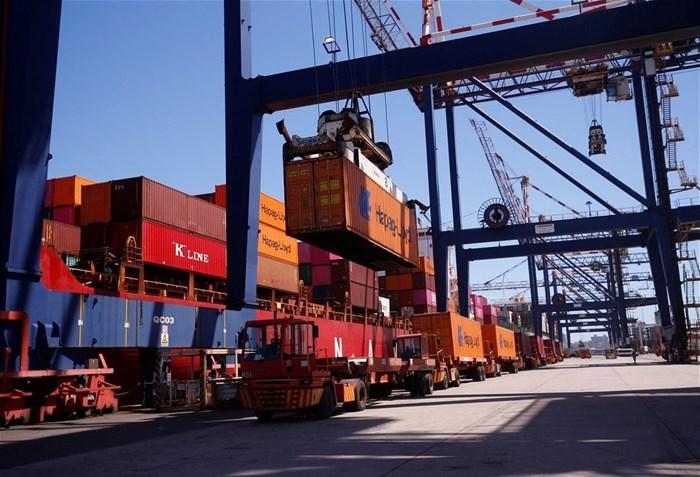
“South Africa recorded a preliminary merchandise trade surplus of R20.5 billion in August 2026, with exports valued at R181.8 billion and imports at R161.3 billion, according to the South African Revenue Service. Although the surplus increased from July, both exports and imports declined month on month, with weaker mineral exports contributing to the fall in shipments while lower petroleum and other imports helped reduce the import bill.”
South Africa’s merchandise trade balance strengthened in August 2026, with the country recording a preliminary R20.5 billion trade surplus, according to the latest figures from the South African Revenue Service (SARS). The result provides an important snapshot of the country’s external trade position at a time when exporters and importers continue to operate against changing commodity prices, global demand conditions, energy costs and shifting international trade relationships.
The August surplus was generated by exports worth approximately R181.8 billion, compared with imports of about R161.3 billion. Although exports declined by 5.8% from July, imports fell more sharply, dropping 7.8%. The difference between the two movements resulted in the wider monthly surplus.
The latest numbers are significant because South Africa remains heavily integrated into international commodity and manufacturing supply chains. Export performance is influenced by demand for minerals, agricultural products, manufactured goods and machinery, while imports reflect domestic requirements for fuel, equipment, intermediate goods, technology and consumer products.
Exports decline in August
SARS data shows that South African exports decreased from the previous month. The decline was particularly associated with lower exports of platinum group metals, gold, and zinc ores and concentrates. Mineral products and precious metals remain important components of South Africa’s export basket, meaning movements in international commodity markets can have a considerable impact on the country’s trade balance.
Exports of vegetable products also decreased by 9% between July and August, while machinery and electronics exports declined by 3%, according to reporting on the SARS figures.
The reduction in exports therefore does not necessarily indicate that every part of the export economy weakened simultaneously. Rather, the monthly figures reflect movements across different categories and trading partners. Commodity prices, production volumes, shipment schedules and international demand can all affect the value recorded in a particular month.
The August data also demonstrates why monthly trade figures need to be interpreted carefully. A decline in exports during one month does not automatically represent a long-term deterioration in South Africa’s export capacity. Similarly, a larger trade surplus does not necessarily mean that export activity has strengthened.
Imports fall more sharply
The other major factor behind the August surplus was the decline in imports.
SARS recorded imports of approximately R161.3 billion, representing a 7.8% monthly decrease. Reporting based on the SARS data indicated that lower purchases of petroleum oils excluding crude, original equipment components and automatic data-processing machines contributed to the decline.
Because imports fell faster than exports, the trade balance improved even though the value of exports declined.
This distinction is important when interpreting the headline figure. A trade surplus can arise because exports increase, because imports decrease, or because both occur simultaneously. In August, the principal movement was a sharper reduction in imports relative to exports.
For businesses, the import figures can provide information about domestic demand and production requirements. Imports of machinery, components and other intermediate goods can support local manufacturing and investment. Consequently, a monthly fall in imports does not necessarily have one straightforward interpretation for economic activity.
July figures revised
The latest trade numbers also include revisions to the previous month.
South Africa’s July trade surplus was revised downward from R20.1 billion to R18 billion following corrections to trade declarations.
Such revisions are an ordinary feature of trade statistics. SARS notes that some of its trade reports are subject to revisions as additional information and corrections become available. Its trade-statistics system provides updated merchandise trade information covering imports, exports, countries and commodity categories.
The revision reinforces the importance of using the latest available data when comparing monthly trade performance.
Trade with the Americas changes direction
One of the notable regional developments in the August figures was South Africa’s trade relationship with the Americas.
According to preliminary SARS figures reported by eNCA, South Africa moved from a trade deficit with the Americas in July to a surplus of approximately R2.3 billion in August. Exports to the region increased by about 12% to nearly R18 billion, while imports fell by roughly a quarter to approximately R15.6 billion.
However, the monthly improvement does not eliminate the accumulated deficit. During the first eight months of 2026, South Africa remained in deficit with the Americas by approximately R16 billion, according to the same report.
This illustrates how monthly trade balances can shift considerably without necessarily changing the broader year-to-date position.
Europe moves in the opposite direction
Trade with Europe produced a different result in August. According to the preliminary data reported by eNCA, South Africa’s trade balance with Europe moved from a surplus into a small deficit during the month.
South Africa has extensive commercial relationships with European economies, including Germany and other major markets. SARS data shows that Germany accounted for 8.4% of South Africa’s exports in August and 6.9% of imports, making it one of the country’s most significant individual trading partners.
The European figures therefore form part of a broader pattern in which South Africa’s trade position varies considerably between regions and individual countries.
China remains a major trading partner
China continued to occupy a central position in South Africa’s merchandise trade during August.
SARS lists China as South Africa’s largest export destination, accounting for 11.4% of exports during the month. China was also the largest source of South African imports, representing 23.3% of total imports.
The figures underline the importance of the China-South Africa commercial relationship. South African exporters have access to a large Chinese market, particularly for commodities and agricultural products, while South African businesses import substantial quantities of manufactured products, machinery, components and other goods from China.
The imbalance between China’s share of South African imports and exports also illustrates the different composition of the bilateral trading relationship.
Other important trading partners
SARS’s August data identifies the United States, Japan and Zimbabwe among South Africa’s top five export destinations. The United States accounted for 8% of exports, Japan 4.9% and Zimbabwe 4%.
On the import side, India accounted for 9.7% of imports, Germany 6.9%, the United States 5.7% and Thailand 3%.
These figures demonstrate the geographic diversity of South Africa’s trading relationships. The country’s trade flows extend across Africa, Asia, Europe and the Americas, exposing exporters and importers to different economic conditions, currencies, tariff arrangements and consumer markets.
What the surplus means for South Africa
The R20.5 billion surplus represents a positive monthly trade balance, but the composition of that surplus matters.
A stronger trade position can support the country’s external accounts by indicating that the value of merchandise exports exceeds the value of merchandise imports. However, the August result was achieved partly because imports contracted more sharply than exports. At the same time, some important export categories experienced declines.
Therefore, the latest figures should be viewed alongside production, commodity prices, investment, domestic consumption and future export demand.
The country’s manufacturing sector is another important factor. Recent data showed that South African manufacturing sentiment improved in September after three months of contraction, with new orders rebounding.
If improved manufacturing activity translates into stronger production and exports, it could influence future trade figures. However, that would depend on actual production, international demand and the competitiveness of South African producers.
Commodity dependence remains important
South Africa’s trade statistics continue to demonstrate the importance of mineral commodities.
The August decline in exports was partly driven by platinum group metals, gold and zinc ores and concentrates.
This means international commodity prices and production conditions remain important variables for the trade balance. When commodity prices rise or export volumes increase, export receipts can strengthen. Conversely, weaker prices or lower production can reduce export earnings.
This has broader implications for economic diversification. Expanding exports of manufactured products, processed minerals, agricultural products and services can potentially broaden the sources of foreign-exchange earnings, although achieving such diversification depends on investment, infrastructure, skills, market access and competitiveness.
Outlook for South African trade
The August numbers provide a mixed picture. On one hand, South Africa recorded a substantial trade surplus and imports fell significantly. On the other hand, exports declined during the month, particularly in some major mineral categories.
Future trade performance will therefore depend on several factors, including international commodity prices, global economic growth, domestic production, energy costs, transport infrastructure, port efficiency and international trade policy.
The country’s trading relationships will also remain important. China, Germany, the United States, Japan, India and regional African economies all contribute substantially to South Africa’s merchandise trade.
The latest figures also highlight the importance of examining trade data beyond the headline surplus. The geographic composition of trade, individual commodity categories and changes in imports and exports can provide a more detailed picture of the economy’s external position.
For now, the central message from the August data is clear: South Africa’s trade surplus widened to R20.5 billion because imports fell faster than exports. The result provides some support to the country’s external trade position, while the decline in exports shows that challenges remain for exporters and commodity producers.
As revised data becomes available and September trade figures are released, attention will turn to whether the August surplus represents a temporary monthly movement or part of a broader pattern in South Africa’s trade performance.



