




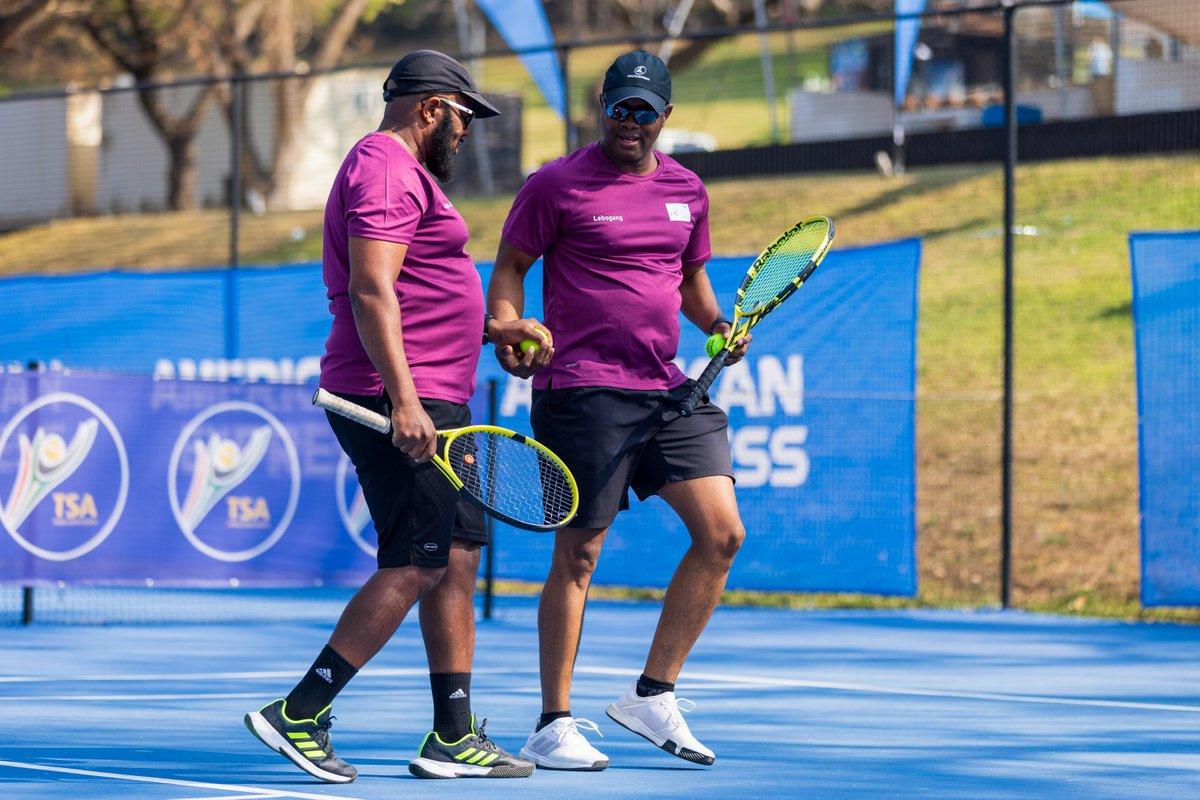
“The Ugu Tennis Association’s Tiebreaker Tee-Off brought competitive doubles tennis to Uvongo and Douglas Mitchell tennis clubs, where players overcame wet weather and interruptions to complete the tournament. Cathy Kirton and Renee Purtell won the women’s A-section, Richard Short and Martyn Nagtegaal claimed the men’s A-section, and attention is now turning to upcoming masters tennis events and international competition.”
Tense Tennis at Tiebreaker Tee-Off: South Coast Doubles Champions Shine Despite Rain Delays
The Ugu Tennis Association’s Tiebreaker Tee-Off delivered a reminder of the energy and resilience that sustain community tennis in South Africa. Played across Uvongo and Douglas Mitchell tennis clubs on the KwaZulu-Natal South Coast, the doubles competition brought players together for a day shaped by close matches, changing weather and the determination to finish the programme. Although rain initially disrupted play, the tournament continued after the courts were cleared, allowing competitors to contest their finals and celebrate the winners.
The event took place on 4 October, while the report appeared on 13 October. Its format placed a premium on quick thinking and composure. In a tiebreak-focused competition, players have fewer opportunities to recover from a poor start than in a conventional extended set. Each serve, return and decision can have an immediate effect on the score, making communication and tactical discipline especially important in doubles.
At Douglas Mitchell, the women’s A-section title went to Cathy Kirton and Renee Purtell. They overcame Zelda Smook and Max Mackay-Coghill in the final, completing a successful campaign against a challenging field. The B-section was won by Jenny Browne and her daughter Andrea, while Sheri Curle and Lizelle Wilkins finished as runners-up. The results showed the range of partnerships that make club doubles distinctive, from experienced combinations to family pairings competing together.
The men’s A-section at Uvongo produced another closely contested final. Richard Short and Martyn Nagtegaal emerged as champions after facing Bjorn Wikstrom and Ian Ackerman. The B-section title went to Alan Collocott and his son-in-law Hennie Volschenk, who was visiting from Rotterdam. Marcus Lucarne and Bernard Pillay, from Umdoni, were runners-up. Across both venues, the competition offered players an opportunity to test their skills, strengthen club connections and enjoy a format that rewards teamwork as much as individual shot-making.
Weather briefly threatened the schedule. Play was delayed by wet conditions, and after one match had begun, rain returned. The interruption could have undermined the event, but the conditions improved and play resumed. Uvongo club stalwart Johan van Niekerk helped clear the courts with a squeegee and towel, working to remove surface water so matches could continue safely. The report described his efforts with humour, capturing the practical, volunteer-driven spirit often found in local sport.
The tournament’s winners also reflected the social character of club tennis. Doubles asks partners to coordinate movement, cover different areas of the court and communicate clearly under pressure. A strong partnership may involve complementary styles: one player may build points from the baseline while the other looks for chances to approach the net. In a short-format event, teams must settle quickly, identify opponents’ weaknesses and avoid allowing a small run of points to decide the match before they have found their rhythm.
For community clubs, competitions such as the Tiebreaker Tee-Off serve purposes beyond awarding trophies. They give regular players a reason to train, introduce members to new opponents and create occasions for spectators and families to gather. The participation of a father-and-daughter team in the women’s B-section and a son-in-law pairing in the men’s B-section also underlined how tennis can connect generations and relationships. These personal links can help make club sport welcoming and keep participation alive beyond formal league fixtures.
The report also looked ahead to an international challenge for Van Niekerk. He is preparing to represent South Africa at the Masters World Team Championships in the men’s over-65 category, scheduled to begin on 8 November in Manavgat, Turkey. He is expected to compete alongside Ahmed Bhikoo, Richard Laing and Llewellyn Booth. The selection places a local club figure on an international stage and offers a reminder that competitive tennis continues well beyond the professional tour and younger age groups.
Masters tennis provides experienced players with opportunities to maintain fitness, test themselves against international opposition and represent their country. Competing at this level requires more than reliable strokes. Players must manage travel, recovery, match preparation and the physical demands of a multi-day event. Doubles teamwork is particularly important because teammates need a shared plan and the confidence to make decisions together when momentum shifts. The South African group will be aiming to perform strongly while gaining the experience that comes from competing against players from other tennis nations.
There is also another date for local players to note. Uvongo Tennis Club is due to host the Howard Osborne Masters Tournament on 31 October and 1 November. The planned team event will feature eight players per team, comprising four men and four women. That format promises a broad mix of match-ups and gives participants a chance to contribute to a collective result rather than competing only for individual honours. The organisers listed Martyn Nagtegaal and Johan van Niekerk as contacts for further information.
The timing of the upcoming masters tournament means the South Coast tennis calendar will remain active as Van Niekerk and his teammates prepare for their trip to Turkey. Events at club level can help sustain momentum by keeping players involved, giving volunteers practical experience and creating pathways for people who want to continue competing. They also provide a platform for players to meet, share knowledge and encourage others to join. The value of a tournament is therefore measured not only by its final scores but also by the relationships and participation it builds.
For tennis organisers, the event offers several practical lessons. Clear communication about weather delays helps players understand schedule changes. Having equipment and volunteers ready to dry courts can reduce downtime, provided play resumes only when conditions are safe. Short-format competitions can make a tournament accessible within a limited day, but they still require thoughtful scheduling and enough time for recovery between matches. The success of a local event depends on the players, organisers, club staff and volunteers working together.
For players, the results underline the importance of adapting to circumstances. A doubles team may arrive with a preferred strategy, but a tiebreak format rewards teams that stay alert and adjust quickly. Serving with purpose, returning consistently and choosing when to attack can matter as much as hitting outright winners. Partners must also avoid letting frustration after a lost point spill into the next one. In a close contest, emotional control and clear communication can be decisive.
The Tiebreaker Tee-Off was a local tournament rather than a major international headline, but it captures an important part of South African tennis. Across clubs, players keep the sport moving through regular competition, shared effort and a willingness to play in changing conditions. The winners at Uvongo and Douglas Mitchell earned their titles through their performances, while the tournament’s continuation after rain reflected the commitment of those working behind the scenes.
With the Howard Osborne Masters Tournament approaching and a South African team preparing for the World Team Championships, the South Coast has more tennis to look forward to. The report celebrates the achievements of the Tiebreaker Tee-Off while pointing to the broader community that supports the game. From family partnerships in local doubles to veteran players representing the country abroad, tennis remains a sport in which competition and community can reinforce one another. The coming weeks will provide further opportunities for players to compete, spectators to support them and clubs to keep the game thriving.



