




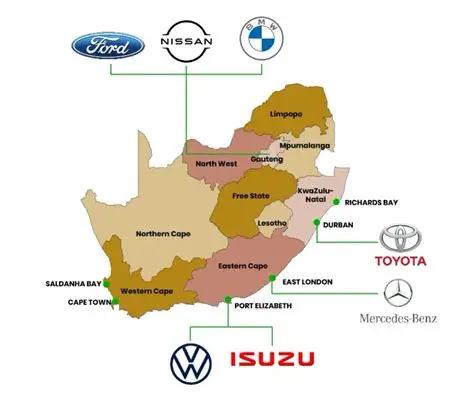
“New U.S. tariffs on South African exports, announced on July 24, 2026, are expected to hurt the country’s agriculture and manufacturing sectors, reducing competitiveness and export volumes. Economists caution that weaker export earnings could pressure South Africa’s trade balance, GDP growth, and the rand.”
South Africa’s trade relations with the United States have entered a turbulent phase following Washington’s decision to impose 12.5% tariffs on selected South African exports under Section 301. The move, announced on July 24, 2026, comes amid deteriorating bilateral relations linked to Pretoria’s case against Israel at the International Court of Justice and broader disagreements on foreign policy. Economists warn that the tariffs could have far-reaching consequences for South Africa’s economy, which is already grappling with modest growth and structural challenges.
Background of Tariffs
The latest tariffs follow a 30% tariff hike imposed in August 2025, which disrupted supply chains and hurt export-oriented businesses. The new measures specifically target agriculture and manufacturing, sectors that form the backbone of South Africa’s export economy. Products such as citrus, wine, nuts, and automotive components are expected to be hardest hit.
Impact on Agriculture
Agriculture is particularly vulnerable. South Africa is a leading exporter of citrus fruits, with the U.S. being a key market. The tariffs will reduce price competitiveness, forcing exporters to either absorb costs or pass them on to buyers. This risks loss of market share to competitors from countries not facing similar tariffs. Wine and nut producers face similar challenges, with margins already thin due to rising input costs and climate variability.
Impact on Manufacturing
The automotive industry, a cornerstone of South Africa’s manufacturing sector, faces significant risks. Automotive components exported to the U.S. will now be subject to higher duties, potentially reducing demand. This could lead to lower production volumes, delayed expansion plans, and job losses in a sector that employs thousands.
Macroeconomic Consequences
Economist Simphiwe Madikizela of the University of South Africa warns that weaker export earnings could pressure the trade balance and the rand, especially if export volumes decline materially. Lower exports would weigh on manufacturing output and GDP growth, exacerbating South Africa’s already modest economic trajectory.
Business Responses
Companies are expected to adopt varied strategies. Some may absorb tariff costs, reducing profit margins, while others may pass costs to buyers, risking reduced demand. Exporters operating on thin margins face the greatest risk, with potential closures or downsizing if tariffs persist.
Bilateral Trade Relations
The tariffs raise questions about the predictability of U.S.–South Africa trade relations. Despite extensive engagement between Pretoria and Washington, South Africa continues to face trade barriers. This unpredictability undermines business confidence and complicates long-term planning for exporters.
Global Context
South Africa’s trade challenges are compounded by global uncertainties. Rising protectionism, geopolitical tensions, and climate-related disruptions are reshaping global trade flows. For South Africa, which relies heavily on exports, these dynamics pose significant risks to economic stability and growth.
Policy Options for South Africa
To mitigate the impact, South Africa could:
- Diversify export markets by strengthening ties with China, the EU, and African partners.
- Invest in value-added industries to reduce reliance on raw commodity exports.
- Enhance trade diplomacy to negotiate tariff relief or alternative trade agreements.
- Support affected industries through targeted subsidies, tax relief, or innovation funding.
Long-Term Outlook
The long-term impact will depend on how long the tariffs remain in place. If sustained, they could reshape South Africa’s export landscape, forcing businesses to pivot to new markets or restructure operations. If lifted, recovery could be swift, but the episode underscores the fragility of global trade relations.



