




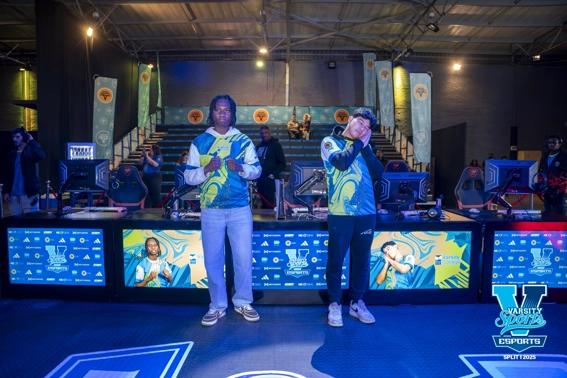
“Varsity Esports’ Split 2 Finals brought South Africa’s leading university gamers together at UP-Tuks in Pretoria on 2 and 3 October 2026, highlighting the rapid development of organised student esports in the country. With almost 500 players involved in the qualification process, significant prize money and a pathway towards the Grand Finals, the competition is increasingly positioning esports as a serious part of South Africa’s university sports ecosystem.”
Varsity Esports Split 2 Finals Highlight South Africa’s Rapidly Growing University Gaming Scene
South African university esports has reached another important milestone as Varsity Esports’ Split 2 Finals brought leading student competitors together at the University of Pretoria’s Rembrandt Hall on 2 and 3 October 2026. The event is the latest sign that competitive gaming is moving deeper into the country’s organised sporting environment, with universities, sponsors and tournament organisers building a more structured pathway from campus competition towards professional esports.
The tournament featured EA Sports FC 26, Rocket League and Valorant, three titles central to the Varsity Esports format. The competition followed months of registrations, group stages and playoffs involving universities around the country. Before the finals, organisers said almost 500 players were competing through qualification, underlining the scale of participation and the growing appetite for organised university gaming.
For South African esports, the importance of the Split 2 Finals extends beyond individual match results. The event demonstrates how competitive gaming can combine university identity, entertainment, sponsorship and career development in a single sporting platform. Varsity Esports was created by Mettlestate and ASEM, working together under Nextgen, to give students a structured environment in which they can represent their institutions and compete nationally.
A Growing University Pathway
University competition creates an accessible entry point for young players who may not yet have professional organisations, managers or international connections. Instead of relying only on open online tournaments, students can compete through a recognisable campus structure, gain experience in team environments and attract attention from the wider esports ecosystem.
The 2026 season is the second year of Varsity Esports following its inaugural campaign in 2025. Organisers have expanded the competition through two separate splits, giving universities more than one opportunity to qualify for the season-ending Grand Finals. The strongest teams and players from the splits progress towards the final stage, creating a season-long pathway rather than a single isolated tournament.
Three Games, Three Different Tests
The inclusion of EA Sports FC 26, Rocket League and Valorant gives the competition a broad character. EA Sports FC 26 focuses heavily on individual decision-making, tactical awareness and control. Rocket League combines football concepts with vehicle mechanics, demanding communication, timing and rapid reactions. Valorant is a tactical shooter in which coordination, strategic planning and precise execution can decide a round.
The finals venue at UP-Tuks added another dimension. Bringing competition into a physical university setting allows esports to function as a live spectator experience rather than simply an online broadcast. Organisers promoted gaming action alongside sponsor activations, entertainment, food and other activities, helping position the tournament as a campus event. The official event listing described the Pretoria finals as a gathering of the country’s top university esports talent after months of regular-season competition.
Prize Money Raises the Stakes
The financial structure of Varsity Esports is another reason the tournament matters. For 2026, the competition announced prize money aligned with major Varsity Sports competitions. The top university receives R200,000, second place R100,000 and third place R50,000. A further R90,000 prize pool is allocated to top players and teams across the three titles.
Money alone, however, does not create a sustainable esports industry. Long-term growth depends on reliable competitions, professional administration, broadcast quality, player development and opportunities beyond winning a single event. Varsity Esports’ two-split model is therefore important because it provides repeated competitive opportunities throughout the academic year.
Sponsorship and Commercial Confidence
The tournament also reflects increasing commercial interest in South African gaming. Varsity Esports is backed by brands including FNB, Citroën, Nivea Men, Roman’s Pizza and Red Bull, according to organisers. Their involvement indicates that esports is becoming attractive not only as a gaming product but also as a youth-focused marketing and community platform.
This commercial dimension is visible elsewhere in South African gaming. Nedbank recently became headline sponsor of rAge Nation, scheduled for November in Johannesburg, describing gaming as a cultural and economic force and emphasising opportunities to play, compete, create, connect and build careers. That development complements the university pathway being built through Varsity Esports.
The Road to the Grand Finals
The Split 2 Finals are not the end of the 2026 Varsity Esports season. The official competition website says the season’s top teams now turn their attention towards the Grand Finals, with playoffs determining the final field. The Grand Finals provide the opportunity for leading teams from the season to compete for the ultimate university esports title.
It also creates a stronger incentive for teams to remain competitive across the season. A university that misses out in one split can return in another, while players have multiple opportunities to demonstrate their ability. Over time, this can help identify talent that might otherwise remain outside formal esports structures.
Why the Pretoria Finals Matter
The Pretoria event is significant because it shows that South African esports is increasingly being organised around institutions rather than only individual online communities. Universities can provide venues, student networks, technology, communications platforms and established sporting structures. When those resources connect with specialist esports organisers, they create an environment where competitive gaming can grow more systematically.
The almost 500-player qualification figure reported before the finals is especially important. Participation at that level suggests that interest is not confined to a small group of elite players. Instead, there is a broad student base willing to enter competitive gaming when a clear pathway is available.
That does not mean South African esports has solved every challenge. Internet access, equipment costs, training resources, tournament consistency and opportunities outside major institutions remain important issues. However, structured university leagues can help address some barriers by concentrating resources and creating recurring competitions.
A Broader Future for South African Esports
The longer-term opportunity is to connect university esports with the wider professional ecosystem. Players who perform strongly in Varsity Esports could progress into professional teams, national competitions, content creation, coaching, broadcasting, event management or other gaming careers. The ecosystem can therefore generate opportunities beyond players who ultimately win trophies.
What Comes Next
The next phase will test whether the momentum generated on university campuses can translate into a stronger national competitive scene. The Grand Finals should bring together the leading performers from the season, giving players another opportunity to compete under pressure and giving organisers a platform to demonstrate the value of the league to audiences and sponsors.
There is also an important development opportunity for universities themselves. As esports participation grows, institutions can consider dedicated gaming clubs, coaching support, production training and academic links to technology, media and business programmes. Such investment would broaden the value of esports beyond competition and help students develop practical skills that can be used in the wider digital economy.
For South Africa, that could be one of the most lasting outcomes of Varsity Esports: creating a bridge between gaming passion, sporting participation, education and employment.
The Split 2 Finals therefore represent more than two days of gaming in Pretoria. They are part of a continuing effort to establish esports as a credible component of South Africa’s university sports environment. With structured competition, significant prizes, major sponsors and a pathway towards a Grand Final, Varsity Esports is helping create a framework in which student gaming can be treated with the seriousness traditionally given to other competitive disciplines.
As the 2026 season moves towards its Grand Finals, attention will shift from qualification to which university can ultimately claim the championship. Whatever the final results, the bigger story is the continued expansion of organised esports in South Africa. The combination of student participation, institutional support, commercial investment and competitive structure suggests that university esports is becoming an established part of the country’s evolving sports and entertainment landscape.



