




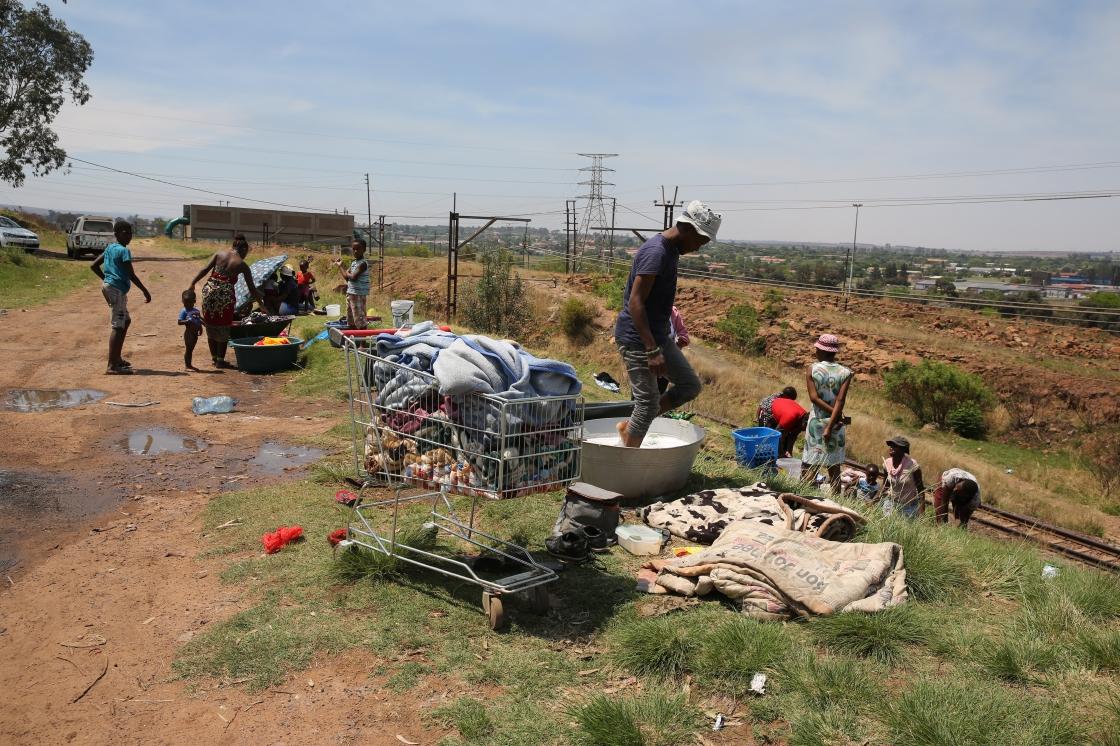
“Hundreds of people in communities around Bronkhorstspruit have reportedly suffered gastrointestinal illness amid concerns about contaminated water supplied by the local water treatment system. Authorities have advised residents in affected areas not to drink the water while investigations continue and alternative supplies are provided.”
Contaminated Water Outbreak Leaves 408 People Ill in South Africa as Authorities Face Questions Over Public Health Protection
A public health emergency raises concerns over drinking water safety
South Africa is confronting a serious public health incident after 408 cases of gastrointestinal illness were reported in communities around Bronkhorstspruit, east of Pretoria, between 7 and 18 October 2026. The outbreak has been linked by government investigations to exposure to contaminated water supplied by the City of Tshwane’s Bronkhorstspruit Water Treatment Works. The incident has prompted urgent intervention by national and provincial authorities and renewed scrutiny of water treatment infrastructure, municipal oversight and public health protection.
According to a joint statement issued by the national departments responsible for health and water and sanitation, the affected communities include Zithobeni, Bronkhorstspruit, Dark City, Rethabiseng and Sokhulumi. Many patients sought medical treatment for stomach cramps and diarrhoea, with children younger than four years accounting for most reported cases. Authorities reported that no deaths had been recorded by the time of their 19 October update.
The incident demonstrates how failures in essential public services can quickly become a public health crisis. Safe drinking water is fundamental to disease prevention, household hygiene and community wellbeing. When water supplies become unsafe, the consequences can extend beyond individual illnesses to affect healthcare facilities, childcare arrangements, household finances and public confidence in local government.
Laboratory findings point to contaminated water
Investigations by the Department of Water and Sanitation and the National Institute for Communicable Diseases have provided important evidence about the outbreak. Government reported that laboratory testing identified Norovirus, Campylobacter and Shigella in three of four stool specimens analysed. These organisms can cause gastrointestinal illness, including diarrhoea and abdominal cramps.
Water testing conducted on 14 October also identified extremely high levels of E. coli and total coliforms in water from the treatment works and the Ekandustria and Zithobeni reservoirs. Taken together, the findings indicate that contaminated water was the likely common source of the illnesses.
Officials said that cholera bacteria had not been detected in the sampled stool specimens. Nevertheless, the absence of detected cholera does not make the situation safe or eliminate the need for urgent intervention. Other waterborne pathogens can cause significant illness, particularly among young children and people vulnerable to dehydration.
The government has continued collecting additional specimens to strengthen the epidemiological evidence and determine whether a formal outbreak declaration is necessary. The Water Research Commission has also been appointed to conduct independent water quality testing and investigate the causes of contamination. Its findings were expected to help clarify the situation in the days following the government announcement.
These investigations are essential because identifying the organisms involved is only part of the response. Authorities must also establish how contamination entered the supply, why treatment safeguards failed and what measures are required to prevent a recurrence.
Chlorination problems and infrastructure weaknesses
The government’s preliminary investigation identified serious operational problems at the Bronkhorstspruit Water Treatment Works. According to the joint statement, difficulties involving the municipality’s chlorine supplier resulted in water from the facility not being chlorinated between 24 September and 14 October.
Chlorination is a key part of drinking water treatment because it helps disinfect water and control harmful microorganisms. When this process is interrupted, water quality can deteriorate, especially where the source water is already affected by pollution.
The investigation also identified malfunctioning equipment, including pumps, sand filters and other mechanical components. In addition, officials reported that the Bronkhorstspruit River receives sewage pollution from dysfunctional wastewater treatment works upstream and malfunctioning sewage pump stations.
These findings point to a wider infrastructure challenge rather than a problem that can necessarily be resolved through a single technical adjustment. Water treatment depends on reliable equipment, effective disinfection, routine maintenance, trained personnel and consistent monitoring of the entire supply system.
The City of Tshwane had reportedly allocated R21 million during the current financial year towards refurbishment and upgrading of the treatment works. Across three years, expenditure and planned investment exceeded R107 million, according to the government’s statement. Despite these commitments, substantial work remains necessary to restore reliable operations.
The central question is whether infrastructure investment, maintenance arrangements and operational controls have been sufficient to protect residents. Independent findings and transparent reporting will be important in determining what went wrong and which corrective measures are required.
Public communication and municipal accountability
One of the most concerning findings in the government’s statement was that residents had not been adequately warned that the water supplied to affected communities had not been chlorinated and should not be consumed or used for household purposes.
In a public health emergency, timely communication can reduce exposure and prevent additional illness. Residents need clear information about which areas are affected, whether tap water is safe, where alternative supplies are available and what to do if they have already consumed potentially contaminated water.
The government’s investigation indicated that the municipality had failed to issue the necessary warning despite the interruption in chlorination. Officials stated that accountability measures had been initiated in relation to water pollution and compliance with water and sanitation standards.
The incident illustrates why public communication must be treated as a core public health responsibility rather than an administrative afterthought. Even when a technical failure occurs, prompt notification can help households take protective action while repairs and testing proceed.
Authorities subsequently agreed that the municipality must improve its communications with residents and provide regular updates about clean drinking water distribution. Health promoters were also tasked with raising awareness through loud-hailing and household visits.
For these efforts to be effective, communication needs to be accessible, consistent and available to people who may not have reliable internet access. Clear announcements at community facilities, local clinics and water collection points can complement digital notices and reduce confusion.
Emergency medical response and protection of children
The outbreak has placed additional demands on local healthcare services. Government reported that Bronkhorstspruit Hospital established an isolation area and overflow beds to accommodate affected patients. Most patients were rehydrated and discharged within a day, according to the official update.
A four-level surge plan was also established to increase bed capacity, deploy additional staff and arrange referrals to Mamelodi Regional Hospital, Tshwane District Hospital or Pretoria West District Hospital when necessary.
These arrangements are important because gastrointestinal illness can become dangerous when patients lose substantial amounts of fluid and electrolytes. Young children are particularly vulnerable to dehydration, which may develop rapidly when diarrhoea and vomiting are severe.
Parents and caregivers should seek medical attention promptly if children become unusually sleepy, struggle to drink, urinate substantially less than usual or show other signs of dehydration. Anyone experiencing severe or persistent symptoms should also seek professional assessment rather than relying exclusively on home treatment.
The authorities have urged affected residents to report suspected cases to nearby healthcare facilities or local health officials. Early reporting helps clinicians provide treatment while allowing surveillance teams to monitor whether new cases are continuing.
Healthcare services will need to maintain adequate supplies, staffing and referral arrangements for as long as residents remain exposed or new patients continue to present. Clear coordination between hospitals, clinics and public health teams is therefore central to controlling the consequences of the outbreak.
Safe water distribution and household precautions
The City of Tshwane closed the treatment works on 14 October, restored the chlorine supply by 15 October and reopened the facility to supply the distribution system on 16 October. However, the government stated that the water was not yet suitable for drinking.
Since 14 October, the municipality has distributed drinking water by tanker, sourcing supplies from the Cullinan Water Treatment Works. Authorities reported that laboratory tests indicated this alternative supply was safe to drink and that plans were under way to increase distribution using 36 tankers.
Residents in areas supplied by the affected treatment works were instructed not to drink tap water or use it for cooking, bathing, brushing teeth, washing food or washing clothes. The official advisory stated that the water should be used only for flushing toilets until further notice.
Previously stored water should be discarded, and containers should be disinfected using household bleach according to appropriate safety instructions. Safe drinking water should be stored in clean containers with lids to reduce the risk of contamination during handling.
Residents should follow the latest official guidance because the restrictions may change only when authorities confirm that the supply is safe. Boiling should not be assumed to make this particular supply suitable for household use when officials have explicitly prohibited it, including for bathing and cooking.
These precautions are especially important for families with infants, young children, older people and individuals whose health makes them more susceptible to infection.
What happens next?
The immediate priorities are to maintain safe alternative water supplies, treat affected residents, prevent further exposure and complete independent investigations. Authorities also need to establish a reliable timeline for restoring the treatment works and communicate that information without promising a reopening date before the necessary safety requirements have been met.
The Water Research Commission’s independent testing and investigation will be important in establishing the causes of contamination. Results should help determine whether pollution entering the river, failures within the treatment works, equipment breakdowns or several connected problems contributed to the incident.
Accountability must also extend beyond identifying immediate operational failures. Sustainable prevention requires functioning wastewater treatment facilities, effective pollution controls, regular water testing, reliable chlorine supplies, equipment maintenance and contingency plans for interruptions in treatment.
The incident is particularly significant because residents depend on municipal infrastructure for a basic necessity. Communities should not have to discover that their water is unsafe only after people begin arriving at hospitals with preventable illnesses.
Conclusion: Safe drinking water must remain a public health priority
The Bronkhorstspruit outbreak is a serious warning about the relationship between infrastructure management, government accountability and public health. With 408 reported cases, many involving children younger than four, the incident demonstrates the potential consequences of unsafe water and delayed risk communication.
The response now depends on sustained coordination between health authorities, water officials, provincial government and the City of Tshwane. Emergency treatment and tanker deliveries are essential, but long-term protection requires reliable infrastructure, transparent investigations and stronger systems for warning communities before exposure leads to illness.
Residents should continue following official water restrictions and seek medical attention if symptoms develop. For government, the priority must be to restore a safe supply, explain the failures openly and demonstrate that corrective measures are working.
Ultimately, access to clean drinking water is not merely an infrastructure objective. It is a fundamental requirement for protecting life, preventing disease and maintaining public confidence in essential services.



