




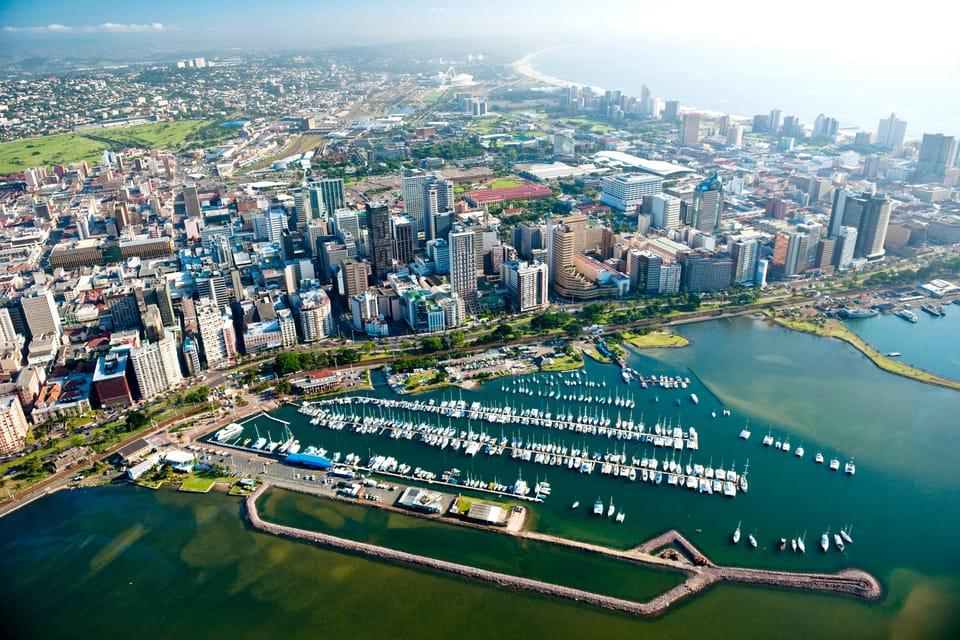
“Durban is pursuing an ambitious maritime tourism development that could strengthen its international reputation, attract high-spending visitors and create new employment opportunities across KwaZulu-Natal. The proposed KwaZulu-Natal Superyacht Marina, which forms part of an estimated R1.9 billion investment pipeline, represents an effort to position the city as a major destination for luxury yachts travelling between the Mediterranean and Africa’s eastern coastline. The project could also expand the economic benefits of tourism beyond conventional beach holidays and into marine engineering, vessel maintenance, hospitality and specialised maritime services.”
Durban aims to become a leading maritime destination
Durban has long been associated with its warm coastal climate, beaches, harbour and cultural diversity. Its latest tourism ambitions focus on another asset: its potential to serve as an important stopping point for superyachts travelling through the Indian Ocean.
According to SAnews, the municipality is advancing plans for a proposed superyacht precinct on a 24-hectare site within the Port of Durban. The development forms part of the wider Durban Bay Waterfront initiative and is intended to establish the city as a gateway to an emerging African superyacht route.
This strategy would broaden Durban’s destination profile. Rather than relying exclusively on leisure travellers visiting beaches, restaurants and established attractions, the city would seek to attract yacht owners, captains, specialist technicians, marine businesses and international visitors who require premium services.
For a coastal destination, the potential advantage is that maritime visitors may need much more than a place to sleep. Their vessels require fuel, maintenance, repairs, supplies and safe berthing facilities. Crew members may also need accommodation, restaurants, transport and opportunities to explore the surrounding region.
Consequently, a successful marina could generate economic activity across several connected industries.
However, the proposed development should not be confused with a completed facility. The reported investment pipeline and employment projections describe an initiative under development, not proof that the marina is already operating or that its anticipated benefits have been realised.
A R1.9 billion investment pipeline
The proposed marina is associated with an estimated R1.9 billion private-sector investment pipeline being advanced by eThekwini Municipality in collaboration with Italy-based maritime organisation Navigo.
The city’s plans extend beyond providing berths for luxury vessels. They include opportunities to expand industrial activity, develop specialist maritime capabilities and transfer skills to local workers.
City Manager Musa Mbhele has emphasised that the initiative is intended to create economic opportunities for residents, including young people entering maritime careers.
This broader approach matters because tourism infrastructure can have limited local impact when spending remains concentrated among a small number of businesses. By connecting yacht visits with local suppliers, technicians, accommodation providers and transport operators, Durban could encourage more of the visitor economy to circulate within the city.
Nevertheless, the proposed investment will need to translate into identifiable projects, operating businesses and sustained demand. Investors will assess construction costs, infrastructure readiness, port arrangements, access to skilled workers and the long-term commercial viability of the destination.
The city’s ability to coordinate these elements will be important to the project’s eventual success.
More than 2,500 direct jobs targeted
One of the most significant claims associated with the marina is its employment potential. The municipality expects the project to create more than 2,500 direct jobs by 2030.
These are projected employment opportunities, rather than positions already created. The eventual number of jobs will depend on the development’s implementation, the scale of investment and the volume of vessels using Durban as a service destination.
Potential employment areas include marine engineering, vessel repairs, technical maintenance, port services, hospitality, logistics, administration and specialised support services.
Additional opportunities could emerge for businesses providing food, cleaning, laundry, accommodation, transport and supplies to yacht crews. Local entrepreneurs may also be able to develop excursions and visitor experiences for crew members spending time in the city.
Skills development will be particularly important. Superyachts require highly specialised maintenance, and businesses entering this market may need workers with technical training, safety qualifications and experience with sophisticated marine systems.
Partnerships between training institutions, employers and maritime organisations could help local residents access these opportunities.
The municipality also links the initiative to the Transnet National Ports Authority’s wider ship repair strategy, which is projected to support more than 25,000 employment opportunities across the sector. That broader figure relates to the wider industry strategy and should not be interpreted as jobs created by the proposed Durban marina alone.
Superyacht visitors could boost local spending
The commercial argument for the development rests partly on the spending associated with individual superyacht visits.
Large yachts can require substantial quantities of fuel, along with maintenance, repairs, provisions and other services. Their owners and crews may also use hotels, restaurants, transport providers and tourism attractions while vessels are in port.
SAnews reports that a superyacht visiting Cape Town has reportedly spent approximately R10 million on diesel alone. Navigo has committed to bringing at least 10 superyacht visits to Durban annually from 2028, potentially generating about R100 million a year in fuel sales before additional expenditure is considered.
These figures illustrate the potential value of attracting high-spending maritime visitors. However, the R100 million figure is a projected opportunity based on the reported fuel-spending example and anticipated visits, not a guarantee of future annual revenue.
Actual spending will vary according to vessel size, fuel requirements, time in port and the services purchased locally.
For Durban businesses, the opportunity would be to ensure that visiting yachts can obtain the services they need efficiently. A vessel that can refuel, receive maintenance and replenish supplies locally may have stronger reasons to return.
Reliable infrastructure, skilled technicians, transparent pricing and effective coordination between service providers would therefore be essential to turning projected demand into a viable business sector.
International partnerships put Durban on the map
The marina initiative has progressed through several partnership and industry-engagement milestones during 2026.
According to SAnews, eThekwini signed a letter of intent with Navigo in Viareggio, Italy, in March. In July, the municipal council approved a three-year partnership and authorised the development of a KwaZulu-Natal Superyacht Implementation Plan.
The city subsequently engaged international industry leaders at the Monaco Yacht Show in September and participated in discussions on the blue economy at the African Boating Conference in Cape Town in October.
These activities form part of the effort to introduce Durban to the international superyacht industry and establish relationships with potential partners.
The next important milestone is the Yachting Aftersales and Refit Experience, or YARE, On Tour Symposium, scheduled to take place at Moses Mabhida Stadium in November 2026.
The event is expected to bring together captains, shipyards, refit specialists, marine companies, port representatives, institutions and other international stakeholders.
For Durban, hosting the symposium provides an opportunity to explain its ambitions directly to businesses that understand the requirements of the superyacht market. It could also help identify practical obstacles that must be addressed before the city can compete effectively with established maritime destinations.
The event itself will not guarantee investment. Its value will depend on whether discussions lead to partnerships, commercial commitments, technical cooperation and concrete progress on the implementation plan.
Connecting luxury travel with Durban’s wider attractions
A superyacht marina would be only one part of the visitor experience. Durban’s broader tourism offer would remain important in determining whether yacht owners and crew members choose to spend time in the city.
The destination combines a coastal setting with restaurants, cultural experiences, shopping, sporting attractions and access to KwaZulu-Natal’s wider tourism region. Visitors with additional time could potentially explore nearby natural attractions and other regional destinations.
Tour operators and hospitality businesses could develop experiences suited to the schedules of yacht crews, who may have limited time ashore. These could include guided city tours, local food experiences, cultural visits and excursions along the coast.
Such services would provide opportunities for smaller businesses to participate without having to operate directly within the marina.
The wider destination strategy should also consider the experience of ordinary leisure travellers. Improvements to waterfront areas, public spaces, transport connections and visitor services could strengthen Durban’s appeal across different market segments if they are designed to benefit the city as a whole.
The challenge will be to ensure that a premium tourism project complements the existing destination rather than becoming an isolated development with limited links to surrounding communities.
The wider ocean economy opportunity
The project is aligned with South Africa’s broader ambitions to expand the economic use of its maritime resources.
SAnews reports that the initiative complements national and provincial ocean economy priorities, including Operation Phakisa: Unlocking the Economic Potential of South Africa’s Oceans, the Oceans Economy Master Plan 2035 and the Transnet National Ports Authority’s ship repair and manufacturing strategy.
The ocean economy encompasses activities such as shipping, port services, marine manufacturing, vessel maintenance and tourism. Developing stronger capabilities in these areas could help Durban diversify its economic base while making use of its existing port infrastructure and coastal location.
The superyacht market offers a specialised opportunity within this wider economy. It requires dependable services, technical expertise and international commercial relationships, meaning that the benefits will depend on more than attracting luxury vessels to the harbour.
Durban will need to establish a competitive service environment that meets the expectations of yacht operators while allowing local businesses and workers to participate.
This includes ensuring that relevant infrastructure, safety standards, environmental management and workforce development keep pace with the project’s ambitions.
Infrastructure and implementation remain crucial
The proposed marina’s long-term prospects will depend on practical delivery. A compelling destination strategy must be supported by suitable facilities, reliable services and clear arrangements for businesses operating in and around the port.
Investors will need greater clarity on development timelines, financing, operating responsibilities and the services that will be available to visiting vessels.
Environmental considerations will also require attention. Harbour developments and increased maritime activity must be managed carefully to protect coastal ecosystems, water quality and the surrounding urban environment.
Furthermore, the city will need to demonstrate that projected employment benefits are accessible to local residents. Training opportunities, partnerships with small businesses and transparent reporting on job creation could help strengthen public confidence.
Progress should therefore be assessed against measurable milestones, including investment commitments, infrastructure delivery, confirmed yacht visits, local procurement and employment outcomes.
The November symposium could help clarify some of these requirements by connecting municipal planners with international operators and technical specialists.
What the project means for South Africa’s travel industry
Durban’s superyacht marina proposal reflects an effort to diversify South Africa’s tourism offering and attract visitors whose expenditure extends beyond conventional sightseeing.
If implemented successfully, the project could establish new commercial opportunities in KwaZulu-Natal while strengthening the city’s position within international maritime networks.
It could also demonstrate how tourism infrastructure can connect with manufacturing, technical services, skills development and logistics. This approach would give the destination a broader economic role than simply accommodating holidaymakers.
For travellers, the immediate development remains a proposal rather than a completed attraction. For businesses and investors, however, the initiative signals an intention to build a more specialised maritime tourism sector.
The coming months will be important in determining how quickly the plans progress from international engagement and investment discussions to practical implementation.
Conclusion: Durban’s proposed superyacht marina could become a significant addition to South Africa’s destination portfolio, with a projected R1.9 billion investment pipeline and a target of more than 2,500 direct jobs by 2030. Its success will ultimately depend on turning those ambitions into functioning infrastructure, sustainable yacht traffic, genuine local employment and lasting economic benefits for the people and businesses of eThekwini.



