




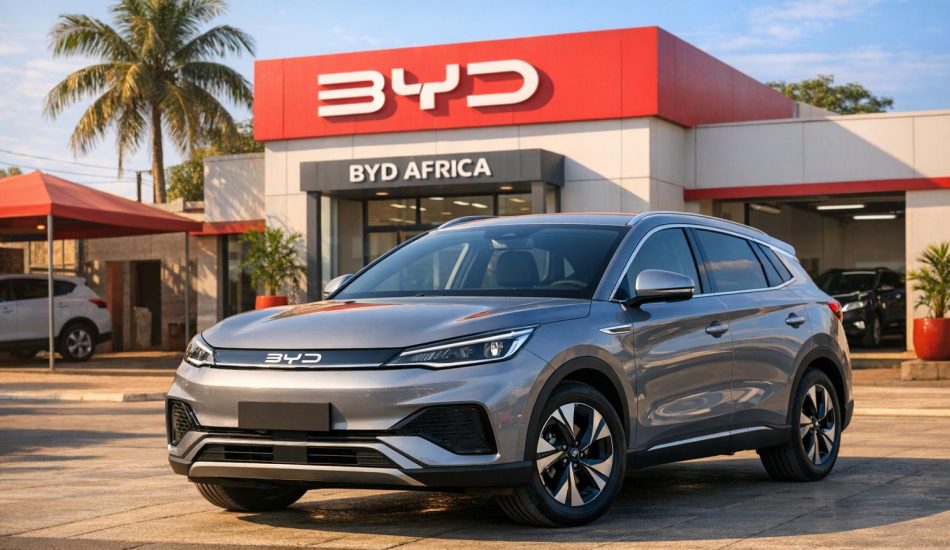
“South Africa’s electric vehicle market is booming, with Absa and BYD strengthening their partnership to provide financing, insurance, and dealership support as NEV adoption surges. The collaboration aims to expand BYD’s retail footprint from 52 to 80 dealerships by the end of 2026, while positioning Absa as a key enabler of the country’s transition to clean mobility.”
South Africa’s energy landscape is undergoing a profound transformation, driven not only by renewable power projects but also by the rapid adoption of new energy vehicles (NEVs). On July 10, 2026, Absa Bank announced the expansion of its strategic alliance with BYD Auto South Africa, a partnership that underscores the growing momentum behind electric mobility. This development is more than a corporate agreement—it represents a pivotal moment in the country’s energy transition, linking finance, consumer demand, and sustainable technology.
Market Growth and Consumer Trends
Between January and May 2026, NEV sales in South Africa grew by 78.8% year-on-year. Plug-in hybrid electric vehicles (PHEVs) recorded an extraordinary 681% increase, while battery electric vehicles (BEVs) surged 193%. BYD, a Chinese automotive giant, has quickly risen to become the second-best-selling NEV brand in South Africa, with over 2,000 vehicles sold in the first five months of 2026.
This growth reflects shifting consumer attitudes. While affordability and charging infrastructure remain challenges, South Africans are increasingly embracing electric mobility as a viable alternative to traditional combustion engines. Rising fuel costs, environmental awareness, and government incentives have all contributed to this trend.
Absa’s Role in Financing the Transition
Absa’s expanded partnership with BYD is designed to address one of the biggest barriers to EV adoption: financing. The bank will provide:
- Wholesale finance for dealerships
- Vehicle finance for customers
- Insurance products tailored to EV ownership
- Value-added services to support long-term adoption
By offering these solutions, Absa is not only facilitating vehicle purchases but also building confidence among consumers who may be hesitant about the upfront costs of EVs.
BYD’s Expansion Strategy
BYD currently operates through 52 dealerships across South Africa, but plans to expand to 80 by the end of 2026. This expansion is critical for accessibility, ensuring that consumers in more regions can access vehicles, servicing, and charging infrastructure. The company’s Managing Director, Steve Chang, emphasized that the partnership is about “building the ecosystem” for electric mobility, not just selling cars.
Regional and Pan-African Implications
Absa’s footprint extends across 14 African countries, with banking licenses in 11 markets. This positions the bank to replicate its EV financing model in other African nations where BYD operates or plans to expand. The partnership could therefore serve as a blueprint for accelerating EV adoption across the continent, aligning with broader Pan-African sustainability goals.
Challenges Ahead
Despite the impressive growth, NEVs still represent a relatively small share of South Africa’s automotive market. Key challenges include:
- Charging infrastructure gaps: Limited public charging stations restrict long-distance travel.
- Affordability concerns: EVs remain more expensive than traditional vehicles, even with financing.
- Policy uncertainty: While government incentives exist, long-term regulatory clarity is needed.
Addressing these issues will be essential for sustaining momentum.
Broader Energy Context
South Africa’s energy sector is under pressure from rising electricity tariffs and the need to diversify away from coal. The surge in EV adoption intersects with these challenges, as more vehicles on the grid will require reliable electricity supply. At the same time, EVs present opportunities for integrating renewable energy, particularly solar, into household and business energy systems.
Conclusion
The expanded Absa-BYD alliance marks a turning point in South Africa’s energy transition. By combining financial innovation with technological advancement, the partnership is helping to make electric mobility more accessible to ordinary South Africans. If current growth trends continue, NEVs could become a mainstream choice within the next decade, reshaping not only the automotive industry but also the country’s broader energy ecosystem.



