




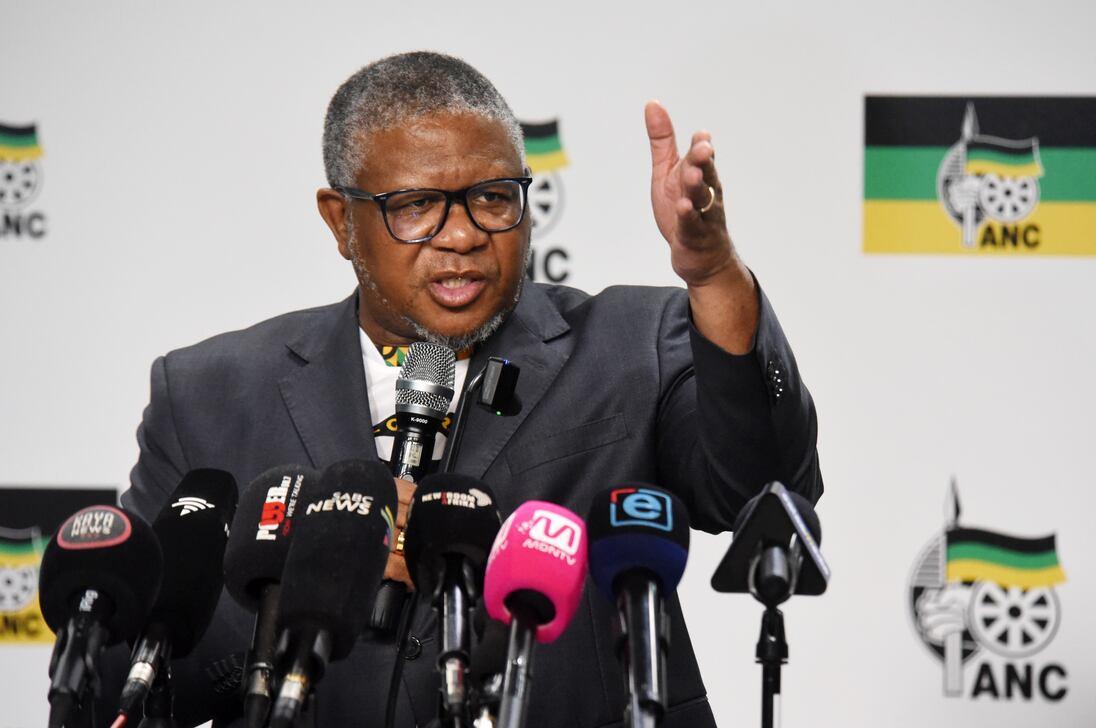
”The ANC and ActionSA are moving closer to a possible coalition arrangement in Gauteng following the 2026 local government elections, potentially changing the balance of political power in Johannesburg and other major metropolitan municipalities. The negotiations highlight the growing influence of smaller parties in hung councils and the challenges facing the DA as political parties seek the numbers needed to govern.”
ANC and ActionSA coalition negotiations could reshape Gauteng’s political landscape
South Africa’s political landscape is entering another important period of change following the 2026 Local Government Elections, with coalition negotiations emerging as one of the most significant developments in the country’s democratic process. The African National Congress (ANC) and ActionSA are increasingly moving towards a possible political partnership in Gauteng, a development that could influence the future leadership of Johannesburg, Tshwane and Ekurhuleni.
The negotiations are particularly important because the elections have weakened the traditional dominance of South Africa’s largest political parties. Instead of one party obtaining sufficient support to govern independently in several major municipalities, the results have created hung councils in which political parties must negotiate with one another to secure governing majorities.
According to reporting published on 19 November, ActionSA is increasingly considering an arrangement with the ANC, potentially opening the way for a new political configuration in Gauteng. The Financial Times has also reported that the ANC is nearing a coalition agreement with ActionSA in Johannesburg, although important questions, including the allocation of mayoral positions, remain unresolved.
The election results create a new political reality
The 2026 local government elections have demonstrated that South African voters are increasingly distributing their support among different political parties.
The ANC remains the country’s largest political party in terms of its national local-election vote, but its support has declined considerably compared with previous election cycles. The Democratic Alliance (DA) has strengthened its national position, while parties such as ActionSA and the uMkhonto weSizwe Party (MKP) have become increasingly important in municipal political negotiations.
The Electoral Commission of South Africa (IEC) declared the elections free and fair on 8 November. Its published results showed that the ANC received approximately 30.76% of the national vote, while the DA secured approximately 24.64%.
The results also produced a substantial number of councils without outright majorities, making coalition negotiations essential for establishing functioning municipal administrations.
This outcome represents an important change in the country’s democratic development. Political parties must now demonstrate their ability to negotiate, cooperate and establish practical governing arrangements rather than relying exclusively on their electoral strength.
Why Gauteng matters politically
Gauteng is one of South Africa’s most politically and economically important provinces. It contains Johannesburg, Tshwane and Ekurhuleni, three metropolitan municipalities that play major roles in the country’s economic activity, employment, infrastructure development and public administration.
Johannesburg is particularly significant because it is South Africa’s largest city and an important financial and commercial centre. Its municipal government is responsible for essential services, including water distribution, electricity infrastructure, waste management, roads, public transport and local economic development.
Consequently, the political arrangements established in Johannesburg will have implications extending beyond party politics.
A coalition government that successfully manages the municipality could improve public confidence in collaborative governance. However, disagreements between coalition partners could create instability and complicate the implementation of municipal programmes.
The same considerations apply to Tshwane and Ekurhuleni, where coalition negotiations could determine which parties control municipal leadership positions and influence administrative priorities.
ActionSA’s growing influence
ActionSA’s position in the negotiations illustrates how smaller political parties can become influential when election results produce hung councils.
Although ActionSA does not command the same national electoral support as the ANC or DA, its representation can become strategically important when larger parties require additional council seats to establish governing majorities.
The party, led by Herman Mashaba, has positioned itself as an alternative political movement focused on governance, accountability, public safety and improved service delivery.
Its willingness to consider negotiations with the ANC represents an important political development, particularly because political differences between the parties have previously shaped their public positioning.
For ActionSA, entering a coalition could provide an opportunity to influence municipal decision-making and demonstrate its ability to participate in government.
However, the decision also presents political risks. The party must consider whether cooperating with the ANC could strengthen its influence or undermine its identity as an alternative to established political movements.
Its supporters will expect any agreement to deliver meaningful improvements rather than simply providing political office to party representatives.
The ANC’s coalition strategy
For the ANC, the negotiations represent an opportunity to maintain or regain influence in municipalities where it no longer enjoys the electoral support required to govern independently.
The party has historically dominated South African politics, but declining electoral support has forced it to reconsider its approach to political partnerships.
Coalition negotiations therefore provide an important mechanism through which the ANC can remain involved in municipal government despite losing its previous electoral dominance.
An agreement with ActionSA could help the party establish a governing arrangement in Johannesburg and potentially other Gauteng municipalities.
Nevertheless, the ANC must recognise that coalition government requires compromise. Its negotiating partners are likely to demand specific policy commitments, leadership responsibilities and mechanisms for monitoring municipal performance.
The success of any partnership will depend on whether the ANC can accommodate these expectations while maintaining sufficient agreement within its own political structures.
The DA faces a difficult political challenge
The negotiations also create a challenge for the Democratic Alliance.
The DA performed strongly in the 2026 local government elections and emerged as an important political force in Gauteng’s metropolitan municipalities.
However, winning the largest share of votes does not automatically guarantee control of a municipal council. A party must secure the necessary number of council votes to elect a mayor and establish an administration.
The Financial Times reported that the DA received approximately 35% of the vote in Johannesburg, compared with approximately 20% for the ANC and 16% for ActionSA.
These figures demonstrate why coalition negotiations are so important. Even where the DA has the largest electoral share, an agreement between other parties could create an alternative governing majority.
First, it must negotiate with potential coalition partners to protect its electoral gains. Second, it must convince voters that its approach to coalition government can deliver stable administrations and effective municipal services.
The party could also face difficult decisions about whether to enter arrangements with parties whose policy positions differ significantly from its own.
Mayoral positions remain a major negotiating issue
One of the most complicated aspects of coalition negotiations is the distribution of political leadership positions.
According to the Financial Times report, the proposed Gauteng arrangement could give ActionSA the mayoralty of Tshwane and the ANC the mayoralty of Ekurhuleni. The mayoral position in Johannesburg remained unresolved in the reported negotiations.
This illustrates the difficulty of converting political agreements into practical governing arrangements.
Mayoral positions provide substantial influence over municipal administration, political priorities and the implementation of council decisions.
Consequently, parties may be reluctant to surrender these positions without receiving meaningful guarantees concerning policy, administrative appointments and coalition management.
The negotiations must also address the appointment of deputy mayors, speakers and members of mayoral committees.
A coalition agreement that focuses exclusively on political positions without establishing clear responsibilities could struggle to survive disagreements.
Service delivery must remain the central priority
While political negotiations attract considerable public attention, the most important question for residents is whether coalition governments will improve service delivery.
Municipalities across South Africa face challenges involving water infrastructure, electricity distribution, road maintenance, waste collection, financial management and housing.
Johannesburg, Tshwane and Ekurhuleni are particularly important because their infrastructure and administrative performance influence millions of residents.
Coalition partners must therefore ensure that their negotiations include measurable commitments to improving municipal performance.
These should include transparent infrastructure spending, stronger financial controls, reliable maintenance programmes and improved communication with communities.
Political leaders must also ensure that municipal appointments are based on competence and relevant experience.
Residents are unlikely to judge coalition governments according to the number of political agreements signed. They will judge them according to whether their communities receive dependable services.
Implications for the 2029 national elections
The Gauteng negotiations could also influence the political environment ahead of South Africa’s next national elections.
Political parties will carefully consider how their municipal coalition arrangements affect their public image and electoral prospects.
For ActionSA, cooperation with the ANC could demonstrate political maturity and an ability to participate in practical governance. However, it could also raise questions about whether the party is abandoning some of the positions that helped distinguish it from established political parties.
For the ANC, a successful arrangement could demonstrate that it remains capable of building political partnerships despite losing considerable electoral support.
The DA, meanwhile, will be watching closely to determine whether agreements between the ANC and smaller parties reduce its opportunities to govern municipalities where it performed strongly.
These developments could influence campaign strategies, voter perceptions and political alliances over the coming years.
Coalition stability will determine the outcome
One of the greatest challenges facing South African municipal coalitions is maintaining stability after agreements have been concluded.
Previous municipal coalition arrangements have sometimes experienced leadership changes, disagreements over appointments and disputes concerning policy implementation.
The 2026 negotiations must therefore go beyond short-term political calculations.
Parties should establish written agreements outlining decision-making procedures, dispute-resolution mechanisms, budget priorities and the circumstances under which a coalition partner may withdraw.
Regular consultation between coalition leaders will also be necessary.
Without these arrangements, even a coalition with sufficient council votes could become vulnerable to political disagreements.
The parties must remember that their responsibilities extend beyond their individual electoral interests.
Conclusion
The growing possibility of an ANC and ActionSA coalition partnership represents one of the most important political developments following South Africa’s 2026 Local Government Elections.
The negotiations could reshape political leadership in Johannesburg, Tshwane and Ekurhuleni while demonstrating the growing importance of smaller political parties in South African municipal governance.
Although the ANC and ActionSA appear increasingly open to cooperation, the final arrangements remain subject to negotiations over leadership positions, political responsibilities and governing priorities.
The DA also faces an important challenge in protecting its electoral gains and responding to possible governing arrangements between competing parties.
Ultimately, the success of these negotiations should not be measured simply by which political party secures the mayoralty. Their real importance lies in whether the resulting administrations can provide stable leadership, strengthen accountability and improve municipal services.
South Africa’s democratic system is entering a period in which cooperation between political parties is becoming increasingly important. The Gauteng coalition negotiations will provide an important test of whether that cooperation can translate into effective government and meaningful improvements in residents’ everyday lives.



