




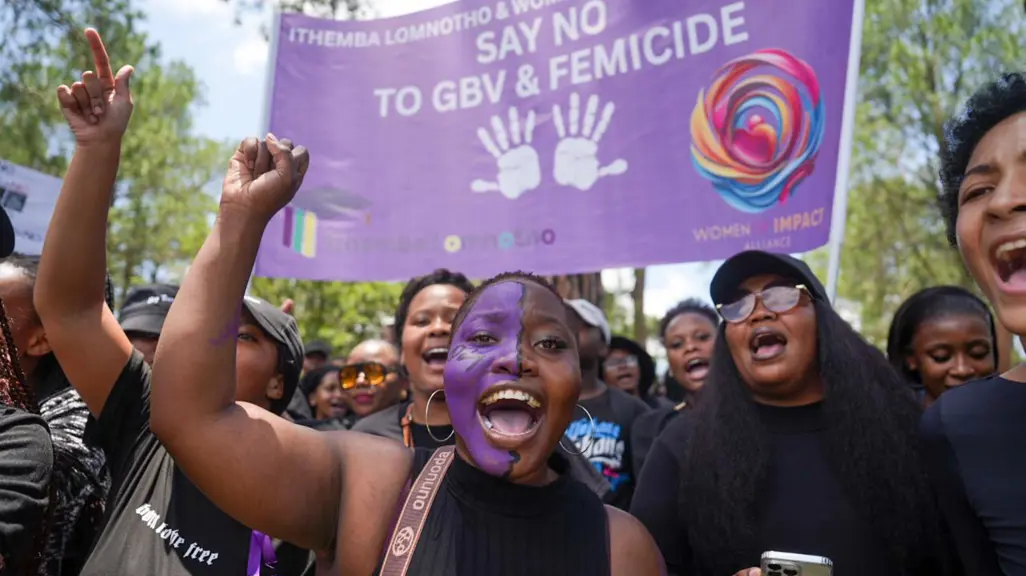
“Oyintanda Msimanga, a student leader in Johannesburg, urges South African youth to embrace activism beyond marches and speeches, drawing inspiration from the courage of the 1976 Soweto Uprising. She emphasizes that small acts of humanity—such as mentoring, teaching, and community outreach—can be as revolutionary as large-scale protests.”
On June 23, 2026, South Africa once again turned its gaze toward the legacy of the Soweto Uprising, as young activist Oyintanda Msimanga published a powerful reflection in Daily Maverick. Her message, “Activism is not always loud,” resonates deeply in a nation where the memory of June 16, 1976, continues to shape the identity of its youth. Msimanga, a student at St Andrew’s School for Girls and chief whip of the Johannesburg Junior Council Executive Committee, argues that activism is not confined to marches, speeches, or headlines—it can be found in the quiet, consistent acts of humanity that transform communities.
The Soweto Uprising was a watershed moment in South African history. Teenagers, many younger than 20, stood against the apartheid government’s imposition of Afrikaans as the medium of instruction in schools. Their courage sparked a nationwide movement that ultimately contributed to dismantling apartheid. Msimanga reminds today’s youth that the bravery of those students was not born out of privilege but necessity. They understood that education was not just about individual advancement but about reshaping families, communities, and ultimately the nation.
Fifty years later, South Africa’s youth face different challenges—high unemployment, inequality, and social fragmentation. Yet, Msimanga insists that the spirit of activism remains relevant. She points out that activism does not always require risking one’s life or standing behind a microphone. Instead, it can be expressed through mentorship, reading to children, organizing sports activities, or simply offering joy to underprivileged communities. These acts, though small, carry revolutionary potential because they affirm dignity and humanity.
The Johannesburg Junior Council, where Msimanga serves, embodies this philosophy. Comprising 17-year-olds with a vision for a better South Africa, the council engages in outreach programs that provide underprivileged children with opportunities to learn, play, and dream. Whether through books, sports, or cultural activities, these initiatives demonstrate that activism can be woven into everyday life. Msimanga’s reflection challenges the perception that activism must be loud, confrontational, or headline-grabbing. Instead, she argues for a broader understanding that includes compassion, service, and solidarity.
Her words also raise critical questions: How can today’s youth be revolutionary like those of 1976? What does activism look like in an era dominated by social media, digital expression, and economic uncertainty? Msimanga suggests that activism must adapt to contemporary realities while remaining rooted in the values of courage and humanity. For her, the act of wearing her school’s full-colours academic blazer is itself a testament to the sacrifices of those who fought for education rights decades earlier. It symbolizes continuity between past struggles and present opportunities.
Importantly, Msimanga’s reflection is not just about nostalgia. It is a call to action. She urges her peers to recognize that activism is not a one-size-fits-all concept. While marches and protests remain vital, they are not the only avenues for change. By embracing diverse forms of activism, young South Africans can ensure that the legacy of June 16 is not romanticized but lived out in practical, transformative ways.
In conclusion, the activism story of June 23, 2026, underscores a profound truth: revolutions are not only fought in the streets but also nurtured in classrooms, playgrounds, and communities. Msimanga’s call to honour the courage of June 16 by embracing everyday activism is a reminder that change begins with recognizing humanity in others. As South Africa continues to grapple with inequality and social challenges, her message offers a blueprint for a new generation of activists—one that is quieter, more compassionate, but no less revolutionary.



