




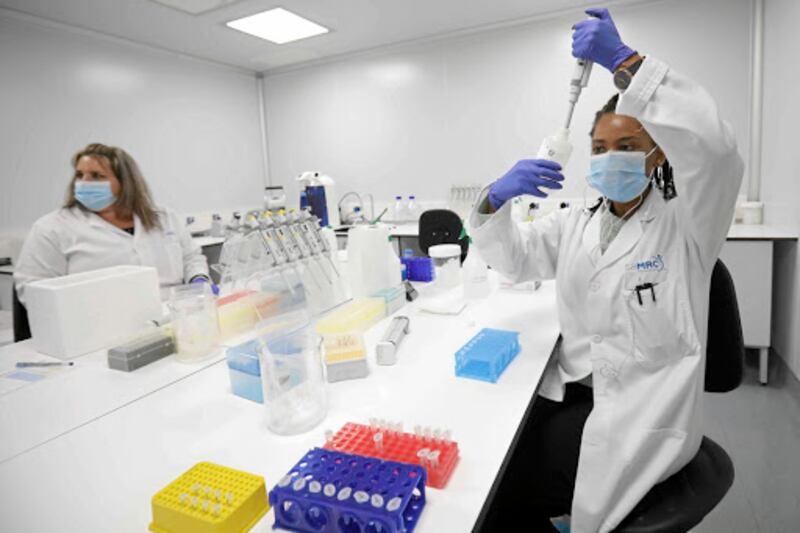
“African genomics leaders have advanced plans to strengthen African-led biotechnology research, with a focus on using the continent’s extensive human genetic diversity to improve diagnostics, treatments and public health. A meeting convened by ICGEB, South Africa’s Council for Scientific and Industrial Research (CSIR) and the Department of Science, Technology and Innovation identified priorities for research infrastructure, local expertise, ethical data governance and the development of African-led medical technologies.”
South Africa Pushes for African-Led Genomics to Transform Biotechnology and Healthcare
PRETORIA, South Africa — 16 October 2026
South Africa is strengthening efforts to position African scientists at the centre of biotechnology research, as regional scientific leaders work towards turning the continent’s extraordinary human genetic diversity into practical healthcare solutions. A high-level meeting in Pretoria has placed genomics, research infrastructure, scientific collaboration and African ownership of biological data at the centre of discussions about the future of public health.
The meeting, held from 7 to 9 October 2026 at the Council for Scientific and Industrial Research’s International Convention Centre, brought together scientists, government representatives, research funders, international organisations and technology partners. The International Centre for Genetic Engineering and Biotechnology (ICGEB) and CSIR convened the gathering in partnership with South Africa’s Department of Science, Technology and Innovation.
The meeting’s outcomes were reported by ICGEB on 15 October, making the initiative one of the latest verified biotechnology-related developments emerging from South Africa’s research community. Its central objective is to establish a roadmap for African-led genomics research, scientific capacity and healthcare applications.
Why African genetic diversity matters
Genomics is the study of an organism’s complete genetic material. In human healthcare, it helps researchers understand how genetic differences influence disease susceptibility, how illnesses develop and how individuals respond to particular medicines.
These insights can contribute to more accurate diagnoses, improved treatment selection and the development of therapies designed around the biological characteristics of different populations. However, these benefits depend on access to representative genetic data, appropriate research tools and scientists who understand the populations being studied.
Africa presents a particularly important opportunity. The continent contains the greatest human genetic diversity in the world, yet African populations remain substantially underrepresented in global genomic databases, according to ICGEB.
This imbalance creates a scientific challenge. If research datasets primarily represent populations from other regions, the resulting discoveries may not fully account for genetic variations found among African communities.
Consequently, medicines, diagnostic tests and genetic risk assessments developed using incomplete population representation may not perform equally well for everyone. Researchers must investigate these differences carefully rather than assume that findings from one population automatically apply to another.
The Pretoria meeting sought to address this gap by identifying ways to expand African participation in genomic research and ensure that its findings benefit communities across the continent.
A roadmap for African biotechnology
The gathering built on work undertaken during South Africa’s G20 Presidency, which included efforts to strengthen African scientific capacity and improve understanding of human genetic diversity for public-health purposes.
ICGEB and CSIR served as knowledge partners to the South African government on this agenda. The Pretoria meeting moved the discussion towards practical priorities, including infrastructure, funding, research expertise and the development of locally relevant medical technologies.
South Africa’s Minister of Science, Technology and Innovation, Professor Blade Nzimande, delivered the keynote address. Other contributors included CSIR chief executive Dr Thulani Dlamini, ICGEB director-general Dr Lawrence Banks and South African Medical Research Council president and chief executive Professor Ntobeko Ntusi.
The programme also included specialists working in human genetics, pharmacogenomics, rare diseases, cancer genomics, sickle cell disease and gene therapy.
These fields demonstrate the broad relevance of biotechnology. Genomics can contribute to understanding inherited conditions, while pharmacogenomics investigates how genetic differences affect responses to medicines. Gene therapy research explores approaches that modify or introduce genetic material to treat disease.
Although these technologies have different applications, they depend on reliable scientific evidence, appropriate laboratory facilities and carefully managed research systems.
The next step identified by the meeting is the development of a roadmap for African-led genomics research, capacity and healthcare applications. ICGEB said this roadmap would be presented to Minister Nzimande and the Department of Science, Technology and Innovation for further strategic discussions.
From genetic data to better medical treatment
One of the most promising applications of genomics is precision medicine, an approach that uses relevant biological information to help guide healthcare decisions.
Traditional treatment guidelines often rely on evidence drawn from large groups of patients. While these guidelines remain essential, individuals can respond differently to the same medicine because of genetic, environmental and other biological factors.
Pharmacogenomics examines how inherited genetic variations affect the way the body processes medications. In some cases, these differences can influence whether a medicine works as expected, whether a standard dose is appropriate or whether a patient faces an increased risk of adverse effects.
African-led research could help improve the evidence available to clinicians treating patients across the continent.
A related development was announced by the University of Cape Town on 15 October. The university received US$1.6 million from Google.org to accelerate AfriPGx-AI, a platform designed to investigate genetic variation across more than 50 drug-metabolising genes in African populations.
The project plans to combine computational predictions with laboratory testing and mathematical modelling. Its initial focus includes medicines used to treat tuberculosis, HIV and malaria.
The UCT initiative is distinct from the Pretoria meeting, but both illustrate a shared scientific priority: producing better evidence about African genetic diversity and translating that knowledge into practical healthcare improvements.
For biotechnology researchers, these efforts demonstrate how genomics can connect laboratory science with clinical decision-making. Over time, sufficiently validated findings could help inform more appropriate diagnostic approaches and medication guidelines for different patient populations.
Nevertheless, genetic information alone cannot determine every treatment outcome. Age, other illnesses, nutrition, interactions between medicines and access to healthcare also influence how patients respond to treatment.
Researchers and clinicians will therefore need to integrate genomic evidence with established medical practice rather than treat genetic predictions as definitive answers.
Building stronger research infrastructure
Turning genomic discoveries into accessible healthcare requires more than scientific talent. Researchers need reliable sequencing equipment, secure data systems, computing capacity, specialised laboratories, trained technicians and sustainable funding.
The Pretoria meeting highlighted infrastructure and capacity as important priorities for African scientific development.
Genomic sequencing produces extensive datasets that require sophisticated computational analysis. Bioinformatics specialists help organise and interpret these datasets, identify patterns and develop findings that can be tested through further scientific investigation.
Without sufficient computing resources and trained personnel, valuable research may remain difficult to analyse or translate into new technologies.
Biobanks are another important component. These facilities manage biological samples and associated information for approved research purposes. Their operation requires rigorous procedures covering sample quality, consent, confidentiality, access and responsible long-term storage.
Investment in these capabilities could strengthen collaboration between universities, hospitals, research institutes and biotechnology companies.
It could also help researchers conduct more studies within Africa, reducing dependence on institutions elsewhere for essential analytical services and specialised expertise.
However, infrastructure investment must be accompanied by long-term maintenance budgets, reliable electricity and connectivity, technical training and clear institutional responsibilities. Purchasing sophisticated equipment is not enough if researchers cannot maintain it or use it consistently.
A sustainable genomics ecosystem must therefore connect infrastructure spending with workforce development, research priorities and reliable funding.
African ownership of genomic information
The ownership and governance of genomic data are central questions for biotechnology development.
Genetic information can reveal sensitive details about individuals and, in some circumstances, relatives or wider communities. Responsible research requires safeguards that protect privacy while enabling legitimate scientific collaboration.
At the Pretoria meeting, participants discussed the conditions needed for African ownership and use of genomic data and resources.
The objective is not simply to increase the volume of information collected from African populations. It is also to ensure that African researchers and institutions participate meaningfully in setting research agendas, interpreting findings and developing resulting technologies.
This principle has implications for international partnerships. Collaborations can provide funding, equipment, specialised expertise and access to research networks. Yet their long-term value depends on arrangements that recognise local priorities and strengthen the capabilities of participating African institutions.
Ethical governance must also address informed consent, secure storage, controlled access, the sharing of benefits and the appropriate use of samples in future research.
Community engagement is particularly important when studies involve groups whose experiences with medical research have been shaped by historical inequality or limited access to healthcare.
Clear communication can help explain why samples are being collected, how information will be used and what participants can reasonably expect from a study.
Strong governance can therefore support both public trust and scientific progress. If communities understand and trust research arrangements, institutions may be better positioned to establish responsible, lasting partnerships.
Opportunities for diagnostics and disease research
African-led genomics could support progress across several areas of medicine.
In cancer research, genetic analysis can help scientists understand tumour biology and identify molecular characteristics that may inform diagnosis or treatment. Researchers must still establish the clinical value of individual findings through appropriate validation and trials.
For rare inherited disorders, genomic testing can sometimes help identify disease-causing variants that conventional investigations fail to detect. Earlier diagnosis may help patients and families obtain more appropriate clinical guidance and support.
Research into sickle cell disease also illustrates the importance of understanding genetic variation. The condition is inherited and affects haemoglobin, the protein responsible for carrying oxygen in red blood cells. Genomic research can help scientists investigate disease mechanisms and develop improved diagnostic and therapeutic approaches.
Gene therapy represents another area of potential advancement. These treatments seek to address disease by modifying, replacing or introducing genetic material, although their suitability, safety, cost and availability vary substantially between conditions and therapies.
In all these fields, researchers must distinguish early scientific findings from proven clinical benefits. A promising genetic association or experimental result does not automatically translate into a reliable diagnostic test or an effective treatment.
Successful development requires laboratory validation, appropriately designed clinical studies, regulatory review and monitoring after products enter healthcare systems.
The Pretoria initiative offers a framework for strengthening the research capabilities needed to undertake this work, but its ultimate impact will depend on implementation.
Funding, skills and industry partnerships
Biotechnology development also has economic implications. Stronger research institutions can create opportunities for skilled employment, scientific training, laboratory services and partnerships with pharmaceutical and diagnostic companies.
South Africa already has established universities, public research institutions and biotechnology organisations. Strengthening links between these institutions could help discoveries progress from academic research towards practical products and services.
The Pretoria meeting emphasised the need for investment in scientific expertise, infrastructure, computing capacity and regulatory systems. These priorities are relevant to the development of locally led diagnostics, therapeutics and precision-medicine tools.
Training will be especially important. Genomics requires interdisciplinary teams that bring together molecular biology, clinical medicine, statistics, computer science, ethics and regulatory knowledge.
Postgraduate programmes, fellowships and practical laboratory placements can help build these skills while supporting the next generation of African researchers.
Commercialisation, however, requires additional planning. Research teams must understand intellectual-property arrangements, manufacturing requirements, product quality, clinical needs and the costs of bringing technologies to market.
Partnerships with industry can help bridge this gap, provided that scientific integrity, public benefit and fair access remain central considerations.
Challenges that remain
Despite its promise, genomic biotechnology faces significant barriers.
Research programmes can be disrupted by inconsistent funding, expensive equipment, shortages of specialist personnel and fragmented data systems. Some communities also lack access to healthcare facilities capable of using advanced diagnostic technologies.
Affordability is another concern. Even when a genomic test becomes scientifically reliable, its benefits may remain limited if patients cannot access testing, specialist interpretation or appropriate follow-up treatment.
Researchers must also avoid treating African populations as a single biological group. The continent encompasses diverse communities and genetic histories, making representative sampling and careful interpretation essential.
Equally, genetic information should not be used to reinforce discrimination or unjustified assumptions about individuals and populations. Scientific findings need to be communicated accurately, with their limitations made clear.
Finally, a roadmap is only a starting point. Measurable progress will require clear responsibilities, sustainable funding, institutional cooperation and transparent evaluation of results.
What comes next for South African biotechnology?
The next significant milestone will be the development and consideration of the proposed roadmap for African-led genomics research and healthcare applications.
Its practical value will depend on whether the priorities identified in Pretoria lead to coordinated investments, stronger research networks, improved training and effective mechanisms for sharing scientific resources.
South Africa could contribute by connecting its established research institutions with partners elsewhere on the continent, while ensuring that individual countries and communities help determine their own scientific priorities.
International cooperation will remain valuable, especially where it brings expertise and resources that are difficult to develop independently. The challenge is to build partnerships that strengthen African research leadership rather than create lasting dependence.
For patients, the long-term promise is more relevant medical evidence, improved diagnostic capabilities and potentially better-informed treatment decisions. For researchers, it is an opportunity to investigate questions that have received insufficient attention in global science.
The central message is clear: Africa’s genetic diversity is an important scientific resource, but its value will depend on responsible research, local expertise, strong infrastructure and fair access to resulting innovations.



