




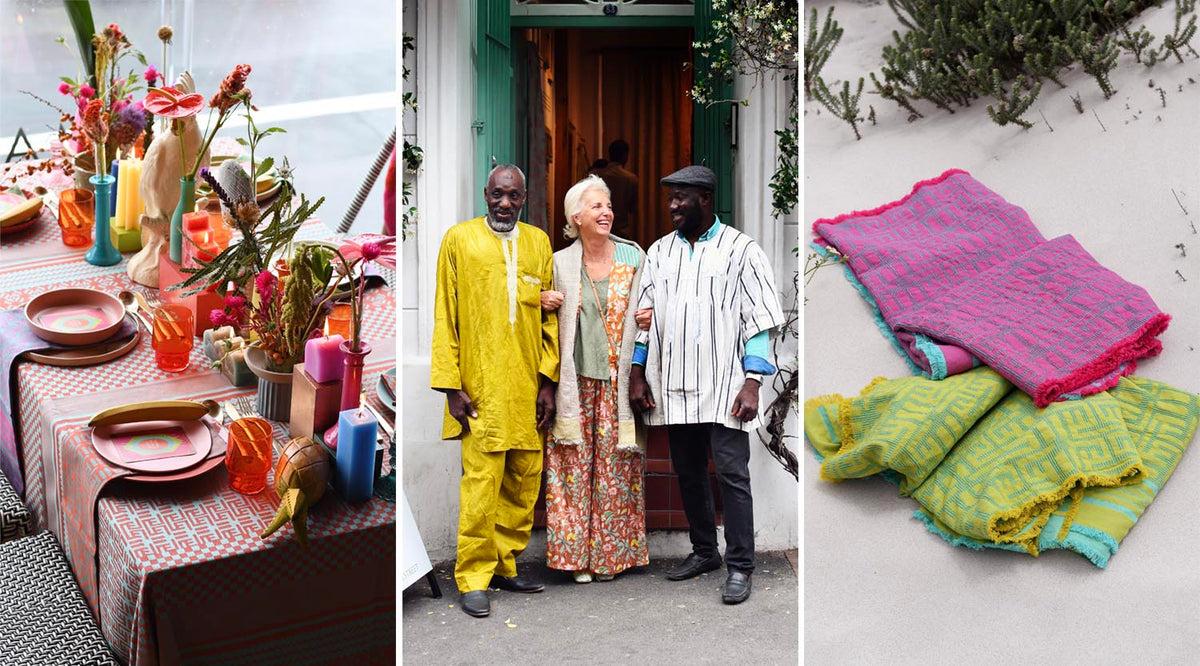
“Cape Town textile brand African Jacquard has marked its 12th anniversary with a refreshed visual identity and a renovated flagship showroom in Woodstock, reinforcing its position within South Africa’s contemporary design landscape. The company’s continued focus on jacquard weaving, locally rooted inspiration and carefully developed textiles highlights the growing importance of material innovation and African design narratives in the country’s creative industries.”
African Jacquard Marks 12 Years With New Identity and Renewed Cape Town Showroom
Cape Town textile brand African Jacquard is entering a new phase as it celebrates 12 years of design, weaving and material experimentation with a refreshed visual identity and a renovated flagship showroom in Woodstock. The development is significant for South Africa’s wider fashion and design landscape because it demonstrates how textile innovation can operate at the intersection of craft, interiors, fashion, architecture and contemporary African identity.
Founded in 2014, African Jacquard has built its reputation around the possibilities of jacquard weaving, a technique in which intricate patterns are constructed directly into fabric rather than simply printed onto its surface. This distinction is central to the brand’s philosophy. Instead of treating pattern as decoration added after a textile has been created, the company considers yarn, fibre, colour, scale and construction together from the beginning. As a result, the finished material becomes both a visual and tactile design object.
That approach has helped African Jacquard establish a distinctive position in the South African design sector. Its work demonstrates how traditional textile processes can be interpreted through a contemporary lens without becoming dependent on stereotypical representations of African culture. The company draws inspiration from elements such as landscapes, wildlife, architecture and historical textile traditions, but transforms those references through modern proportions, colours and weaving techniques.
A New Identity for a Growing Design Brand
The most visible part of African Jacquard’s latest development is its new visual identity. After more than a decade in operation, the company has replaced its original handwritten logo with a cleaner and more contemporary mark.
The change reflects the evolution of the business rather than a rejection of its history. When African Jacquard launched in 2014, its handwritten identity communicated the personal and expressive character of a young creative enterprise. Twelve years later, the company has developed a broader international profile, with its textiles appearing in homes, hotels, lodges and design projects beyond South Africa.
The new identity has therefore been designed to work alongside the textiles instead of competing with them. This is an important consideration for a design brand whose products can contain highly detailed patterns, complex textures and strong colour combinations. A restrained corporate identity allows the material itself to remain the visual focus.
For the South African design industry, this evolution also illustrates an important stage in the development of local creative businesses. Successful design brands often need to balance heritage and innovation while building identities capable of communicating with international customers. African Jacquard’s rebrand shows how a company can modernise its presentation while retaining the principles that established its reputation.
The Importance of the Woodstock Showroom
The refreshed identity coincides with the renovation of African Jacquard’s showroom at its Woodstock headquarters in Cape Town. Rather than functioning solely as a conventional retail space, the renewed showroom brings together elements of design development, production and client interaction.
This approach is particularly valuable for textile design because fabric is difficult to understand fully through photographs or digital catalogues. Colour, weight, surface, weave and texture can change significantly depending on lighting and scale. A physical showroom allows designers and clients to handle materials, compare colourways and examine how patterns behave across different applications.
For interior designers, decorators and hospitality professionals, the showroom can also become a space for experimentation. Textiles can be considered within the context of a larger design concept rather than viewed as isolated samples. This encourages clients to think about how a particular weave might interact with architecture, furniture, lighting or other materials.
Although African Jacquard’s work is strongly associated with interiors and hospitality, its significance extends into fashion because textiles form the foundation of clothing design. The development of distinctive locally produced fabrics gives designers additional opportunities to create garments with unique textures and visual identities.
African Inspiration Without Visual Stereotypes
One of the most interesting aspects of African Jacquard’s design philosophy is its relationship with place. The company’s work is clearly influenced by Africa, yet it does not rely exclusively on obvious or literal symbols.
Instead, inspiration can begin with natural landscapes, animals, buildings or historic textile traditions. Those references are then simplified and transformed through the design process. The result is work that can communicate a sense of place without being restricted to predictable ideas about what African design should look like.
This distinction matters as African designers increasingly participate in international markets. Global interest in African creativity has grown, but designers face the challenge of ensuring that their work is understood as innovative contemporary design rather than being reduced to cultural decoration.
African Jacquard’s approach offers one response to that challenge. The African influence remains visible through colour, pattern, material choices and conceptual references, but the final products are designed according to a broader contemporary design language.
Craft, Technology and Local Production
Jacquard weaving itself demonstrates how craft and technology can work together. The technique allows complex designs to become part of the structure of the textile, creating depth and dimensionality that cannot always be achieved through surface printing.
This makes the production process part of the design story. Every decision about yarn, fibre, colour and construction contributes to the final appearance and performance of the cloth.
The company’s history also reflects the importance of local production in South Africa’s creative economy. According to craft platform Homo Faber, African Jacquard is a Cape Town-based weaving atelier specialising in home and hospitality linen, producing its collections on jacquard looms primarily using cotton and linen. The atelier also employs women from different communities across Cape Town and produces exclusively on the African continent.
Such production models are important because design is not only about the final object. It also encompasses skills, employment, manufacturing knowledge and the preservation or development of specialist techniques.
A Wider Moment for South African Design
African Jacquard’s anniversary comes during an active period for South African design. Design Week South Africa is scheduled to take place in Johannesburg from 8 to 11 October 2026, bringing together architecture, furniture, interiors, fashion, graphic design and product design. The programme includes exhibitions, studio tours, installations, product launches, discussions and workshops.
The timing places African Jacquard’s renewed showroom within a wider national conversation about the role of design in South Africa. Designers are increasingly moving across traditional creative categories, with textiles, fashion, architecture, interiors and craft influencing one another.
South African Fashion Week has likewise announced its Autumn/Winter 2027 programme for 21 to 25 October, featuring established designers alongside emerging creative voices working across couture, tailoring, menswear, streetwear, heritage, craft and contemporary African design.
This broader environment creates opportunities for textile companies to play a more visible role in fashion and design. Designers need distinctive materials, while textile specialists need creative partners capable of demonstrating new applications for their work.
Why the Development Matters for Fashion
Although African Jacquard is primarily recognised as a textile brand, its latest development is relevant to fashion because the future of fashion increasingly depends on material innovation.
Designers are paying closer attention to where fabrics come from, how they are produced and what stories they communicate. Consumers are also becoming more interested in craftsmanship, authenticity and traceability.
In this context, a South African textile company with a clear design philosophy can contribute more than fabric. It can provide designers with a material language rooted in local knowledge and contemporary experimentation.
The company’s emphasis on weaving also highlights the value of slowing down the design process. Instead of producing patterns simply as surface graphics, jacquard techniques require designers to think structurally about the relationship between pattern and material.
That philosophy could influence future collaborations between textile producers, fashion designers, furniture makers, architects and hospitality brands.
Looking Ahead
African Jacquard’s 12th anniversary is therefore more than a corporate milestone. Its new identity and renovated Woodstock showroom represent a moment of transition for a South African design business that has spent more than a decade developing a distinctive approach to cloth.
The company now has an opportunity to build on its established reputation while reaching new audiences. Its international presence demonstrates that South African textile design can compete in global creative markets, while its continued connection to Cape Town provides a strong local foundation.
The renewed showroom may become particularly important because it brings the different stages of the design process closer together. Clients can experience the materials, understand their construction and consider how they might contribute to larger projects.
At a time when South African fashion and design are receiving increasing international attention, African Jacquard’s story demonstrates that global recognition does not necessarily require abandoning local identity. Instead, the strongest opportunity may lie in developing sophisticated contemporary work from distinctly South African foundations.
As the brand begins its next chapter, its greatest contribution may be its demonstration that cloth can be more than a covering or decorative surface. Through weaving, pattern, colour and material experimentation, textiles can become a form of design in their own right — carrying ideas about place, craftsmanship, technology and identity.
African Jacquard’s 12-year journey consequently reflects a broader evolution in South African creative industries. Local design is increasingly being presented not as a derivative of international trends, but as a source of original ideas capable of travelling beyond the country’s borders.
With its refreshed identity and renovated Woodstock headquarters, African Jacquard is positioning itself for that next stage — one in which South African textile design can continue to connect heritage with contemporary creativity, craftsmanship with innovation, and local production with an increasingly international audience.



