




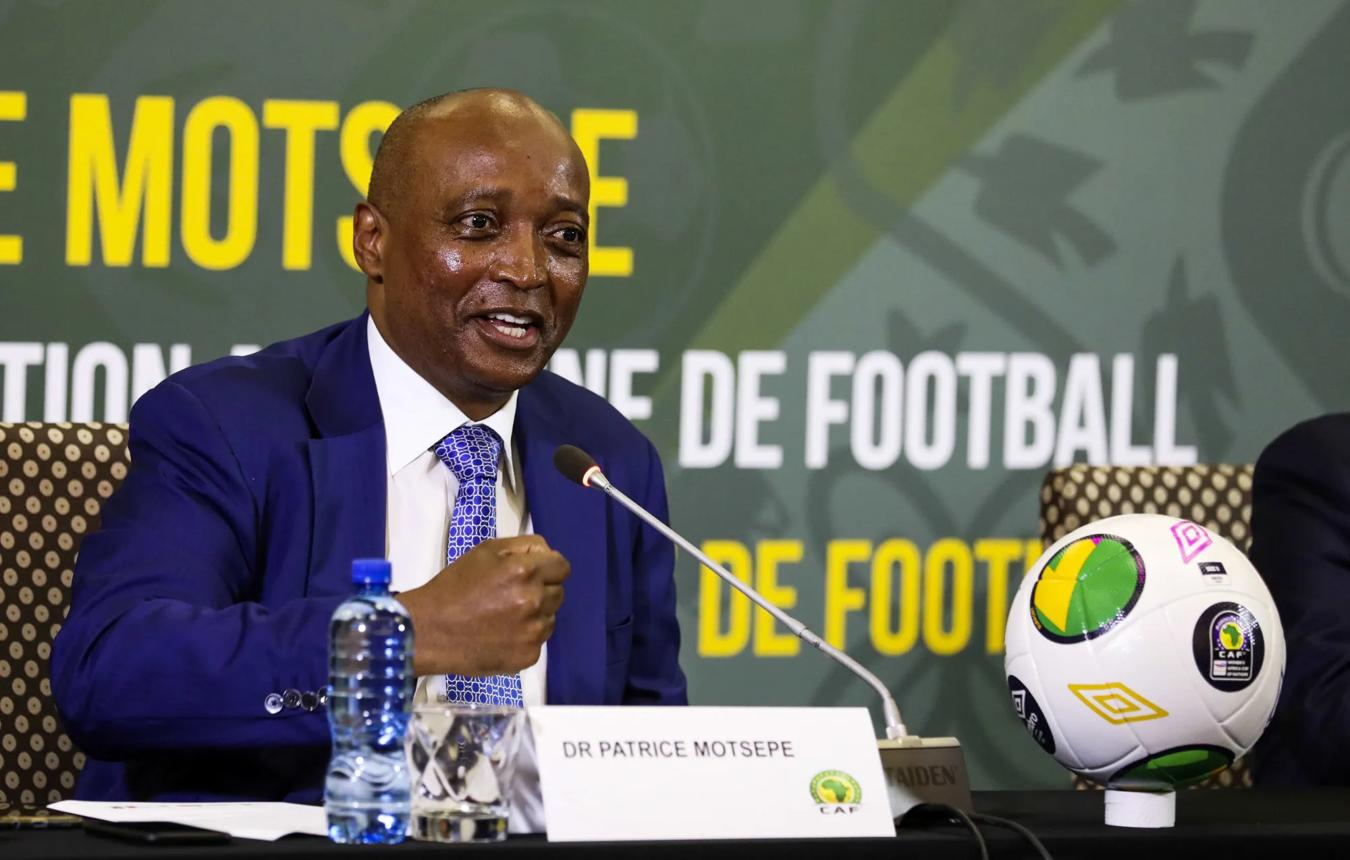
“A new News24/SABI opinion poll, highlighted in a 6 October Sunday Times analysis, points to growing public interest in political leadership outside traditional party structures, with businessman and CAF president Patrice Motsepe recording strong favourability. The findings come as South Africa prepares for the 4 November 2026 local government elections amid widespread concerns about political representation, institutional trust, voter participation and government performance.”
South Africa’s political debate has entered a revealing new phase as voters prepare for the 4 November 2026 local government elections. A new News24/SABI opinion poll, discussed in a 6 October analysis by Sunday Times columnist Tom Eaton, suggests that public sentiment is increasingly shaped not only by party loyalty but by a search for leadership outside the traditional political establishment. The poll’s findings, particularly the strong favourability recorded for businessman and CAF president Patrice Motsepe, offer a window into how South Africans are evaluating political leadership.
The significance of the poll goes beyond one individual. It points to a deeper question about the relationship between citizens and established political parties. If voters increasingly prefer successful figures outside party politics, the result may reflect dissatisfaction with conventional political leadership rather than a demand for one alternative candidate.
The News24/SABI poll was conducted among 5,001 registered voters between 25 August and 17 September 2026. It used mainly face-to-face computer-assisted interviews, with a national sample of 1,000 respondents and additional metropolitan samples in Johannesburg, Cape Town, eThekwini and Tshwane. The national margin of error is 3.2% at a 95% confidence level. The researchers stress that a poll is a snapshot of public sentiment rather than a prediction of an election result.
Public opinion is fluid. Voters are assessing parties against service delivery, employment, corruption, infrastructure, safety and the credibility of political promises. The local elections are therefore likely to be judged less by ideology than by whether parties can address everyday problems and produce practical results.
Motsepe’s strong standing is notable because his public profile has largely been built outside electoral politics. His business career and leadership in football have made him widely recognised, while his distance from the daily disputes of party politics may contribute to a more favourable public image. His position illustrates a wider phenomenon: political figures can carry the burden of association with government failures, while non-politicians can benefit from being perceived as independent of the system.
The polling picture becomes more significant when placed alongside broader evidence of political alienation. Ipsos reported earlier this year that 47% of South Africans said no political party represented their views, even though 64% said they wanted to vote in the coming local elections. Only 38% believed their local government was doing its job well. Those figures reveal an important contradiction: many citizens remain committed to participating in democracy while simultaneously feeling poorly represented by the political choices available to them.
That contradiction may define the 2026 election. Participation has not disappeared, but confidence in political institutions has weakened. Citizens may still want to vote while approaching the ballot with scepticism, frustration or a willingness to consider alternatives.
Research by the Human Sciences Research Council reinforces this concern. Its analysis of youth attitudes found declining support for democracy, satisfaction with democratic performance and institutional trust across generations. Among Born Free Millennials, satisfaction with democracy fell from 51% in 2003–2008 to 20% in 2024–2025. Among Gen Z, it fell to 21%. The research also found that the proportion of Millennials who believed their vote made a difference dropped from 58% to 27%, while the figure for Gen Z fell from 35% to 23%.
These findings suggest that public opinion cannot be understood simply as voter apathy. Many young South Africans value democracy but question whether elections produce meaningful change. A citizen who refuses to vote because politics does not matter differs from one who believes voting matters but doubts that available parties can improve life; the latter is political disillusionment.
That disillusionment creates opportunities for personalities who appear different from conventional politicians. A businessman, community leader, sports executive or public figure may benefit from appearing independent of government. Yet popularity outside politics does not automatically demonstrate political competence; governing a municipality or country involves different responsibilities.
The Motsepe finding therefore deserves careful consideration. A favourable rating may indicate demand for credible, successful and less confrontational leadership. It does not mean voters want Motsepe, or another non-politician, to become president. Political preferences can change as campaigns intensify and candidates face policy questions.
The wider News24/SABI findings show how unsettled politics has become. In Johannesburg, no party is close to an outright majority, while the DA leads the mayoral race with 36%. In Tshwane, the DA is ahead of the ANC, while in eThekwini the MK Party is a major force. These contests illustrate a fragmented electorate where coalition politics will remain important.
Public opinion is also being influenced by emotional campaign issues. Migration, service delivery, unemployment, crime and access to municipal resources are increasingly central to political messaging. On 6 October, The Star reported that undocumented migration had become a major campaign issue, with parties responding to pressure from anti-illegal-migration movements. Analysts warned that politicians may exploit public fears about migrants while voters simultaneously demand that government address real concerns about scarce resources and weak administration.
Political parties must therefore listen without simply amplifying anger or prejudice. Leadership requires translating public concerns into lawful, workable policies. When parties fail to do that, frustration can deepen distrust.
The Electoral Commission has been preparing for the election in a context of increased registration and concerns about participation. The voters’ roll surpassed 29 million after the August registration drive, with more than 754,000 new voters added during the two 2026 registration weekends. The growth demonstrates continued interest in electoral participation, even as opinion research shows significant dissatisfaction with political institutions.
The message is not that South Africans have abandoned politics. Many appear to be demanding different leadership: competence, credibility, responsiveness and evidence that government can improve daily life. They may also be more willing to look beyond established party structures.
For political parties, that should be a warning. Campaign slogans alone may not be enough to win over voters who believe promises have repeatedly failed to become results. Parties will have to demonstrate practical plans for municipalities, explain how they will fund those plans and show how leaders will be held accountable when commitments are missed.
For voters, outsider appeal also presents a challenge. A desire for fresh leadership is understandable, but democratic choice requires more than judging personalities. Citizens must examine records, policies, financial plans and candidates’ ability to work within institutions. Popularity can open the door to change, but governing requires sustained competence.
South Africa’s 2026 local elections will therefore be about more than which party wins which municipality. They will also test whether established political organisations can rebuild trust among citizens who feel increasingly disconnected from them. The public’s growing attraction to figures outside conventional politics should be understood as a signal: voters are not necessarily rejecting democracy, but they are questioning whether the current political class is delivering enough value from it.
The most important lesson from the polling is simple. South Africans still want leadership, but many are becoming less convinced that traditional politicians are the only people capable of providing it. As the November election approaches, parties that recognise this shift and respond with credible, measurable and accountable solutions may strengthen their position. Those that dismiss the mood risk discovering that public opinion can change faster than political institutions expect.



