




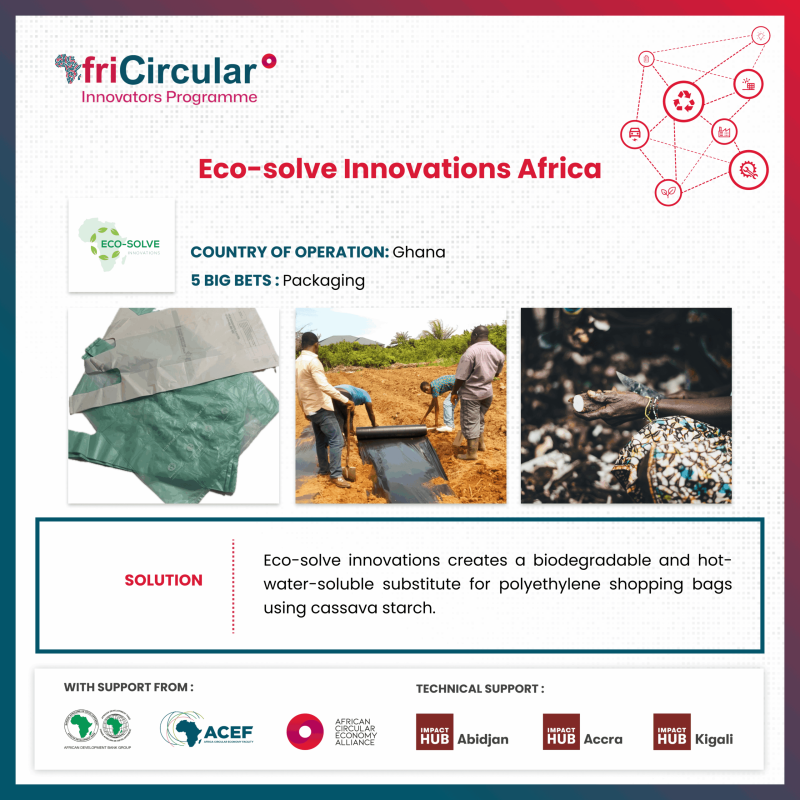
“The African Development Bank has launched the AfriCircular Growth Programme 2026 to support growth-stage circular economy enterprises in South Africa and across Africa. The initiative provides tailored investment readiness coaching, investor matchmaking, and transaction advisory services to help SMEs secure external financing and scale operations.”
Entrepreneurship in South Africa continues to evolve, with sustainability and innovation at the forefront. On July 2, 2026, the African Development Bank (AfDB), through its Africa Circular Economy Facility (ACEF), unveiled the AfriCircular Growth Programme 2026, a landmark initiative aimed at empowering circular economy SMEs to attract investment and achieve scalable growth. This programme represents a critical intervention in bridging the persistent gap between promising African enterprises and investors seeking sustainable opportunities.
Context: Why Circular Economy Matters
South Africa faces pressing challenges in waste management, resource efficiency, and sustainable industrial growth. The circular economy model—focused on recycling, reuse, and sustainable production—offers solutions that align with both environmental and economic priorities. SMEs in this sector have demonstrated innovation but often struggle to secure financing due to perceived risks and lack of structured investor readiness.
Programme Objectives
The AfriCircular Growth Programme 2026 is designed to:
- Provide investment readiness coaching to SMEs with at least two years of operations and annual revenues between USD 300,000 and USD 5 million.
- Develop investor materials such as pitch decks, financial models, and data rooms.
- Facilitate access to a network of 70+ investors, offering tailored introductions and curated matchmaking.
- Offer transaction advisory services, guiding enterprises through funding discussions to closure.
- Enhance visibility through deal books, case studies, and ecosystem events.
Eligibility Criteria
To qualify, enterprises must:
- Operate in an AfDB Regional Member Country.
- Embed circular economy principles in their core operations.
- Seek a minimum of USD 200,000 in external financing.
This ensures that selected businesses are not only innovative but also positioned for meaningful growth.
Impact on South African Entrepreneurs
For South African entrepreneurs, the programme is a game-changer. Many SMEs in recycling, renewable energy, and sustainable agriculture sectors have struggled to attract investors despite strong business models. By offering structured support, AfriCircular bridges the gap between innovation and capital, enabling ventures to scale regionally and globally.
Case Studies and Examples
- Recycling Enterprises: Companies transforming plastic waste into construction materials stand to benefit from improved investor readiness.
- Renewable Energy Startups: Solar and bioenergy SMEs can leverage the programme to secure financing for expansion into underserved rural areas.
- Agri-Tech Ventures: Enterprises using circular farming techniques will gain visibility and credibility among impact investors.
Broader Ecosystem Benefits
The programme also strengthens South Africa’s entrepreneurial ecosystem by:
- Encouraging sustainable business practices.
- Building investor confidence in African SMEs.
- Creating jobs through scalable ventures.
- Aligning with national and continental sustainability goals.
Challenges and Risks
While promising, the programme faces challenges:
- Investor skepticism about African markets.
- Limited awareness among SMEs about circular economy principles.
- Execution risks in scaling operations across diverse markets.
However, AfDB’s structured advisory and matchmaking approach mitigates these risks.
Expert Opinions
Industry experts highlight that the AfriCircular Growth Programme is timely. According to sustainability analysts, the initiative could catalyze a new wave of green entrepreneurship in South Africa, positioning the country as a leader in circular innovation across Africa.
Conclusion
The AfriCircular Growth Programme 2026 is more than just an accelerator—it is a strategic intervention to unlock Africa’s entrepreneurial potential in sustainability. For South African SMEs, it offers a rare opportunity to access capital, networks, and structured support, paving the way for scalable impact. As the deadline approaches on July 3, entrepreneurs are urged to seize this chance to transform their ventures and contribute to a greener, more resilient economy.



