




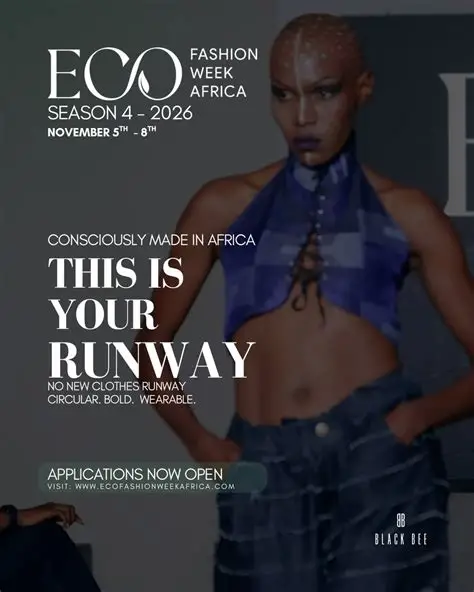
‘South African influencer Alfridah Kgabo Matsi is spearheading a new wave of sustainable fashion, blending cultural identity with eco-conscious innovation. Her work, alongside leading designers, is pushing South Africa into the global spotlight as a hub for ethical, stylish, and future-ready fashion.”
In 2026, South Africa’s fashion industry is undergoing a profound transformation, with sustainability no longer a niche but a mainstream demand. At the forefront of this shift is Alfridah Kgabo Matsi, one of the country’s youngest and most influential voices in eco-conscious fashion. Her rise reflects a broader cultural and economic movement where heritage, innovation, and responsibility converge to redefine what fashion means in the modern era.
The Sustainability Imperative
- Climate awareness and ethical production are reshaping consumer choices.
- The South African sustainable fashion market is projected to grow rapidly, reaching USD 680.66 million by 2033.
- Recycled materials, upcycling, and eco-friendly dyes are becoming dominant categories.
This growth is not just about economics—it reflects a generational demand for fashion that aligns with values of responsibility and cultural pride.
Alfridah Kgabo Matsi’s Role
- As a digital-native influencer, Alfridah uses social media to amplify sustainable brands.
- Her collaborations highlight eco-luxury, proving that sustainability can coexist with aspirational design.
- She educates audiences about the origins of clothing, encouraging mindful consumption.
Her credibility lies in her authenticity—she embodies the lifestyle she promotes, making her a trusted voice among Gen Z and millennial consumers.
Key Trends in South African Sustainable Fashion
- Eco-Luxury – Luxury houses adopting sustainable fabrics and ethical practices.
- Circular Fashion & Upcycling – Designers reimagining waste into high-value garments.
- Digital Fashion – AR try-ons, virtual shows, and AI-assisted design reducing waste.
- Afro-Futurism & Cultural Identity – Heritage prints and beadwork reinterpreted with eco-friendly dyes.
- Youth Influence & Inclusivity – Gen Z driving inclusivity and sustainability as non-negotiable values.
Designers Leading the Movement
- Rich Mnisi – Fuses bold aesthetics with sustainable methods.
- Thebe Magugu – Known for storytelling through eco-conscious design.
- Laduma Ngxokolo – Celebrates Xhosa heritage with sustainable textiles.
- Palesa Mokubung – Innovates with eco-friendly dyes and fabrics.
These designers are gaining international acclaim, proving that South Africa’s sustainable fashion is not only culturally rich but globally competitive.
Market Context
- The South African apparel market is valued at USD 5.8 billion (2023) and projected to reach USD 7.9 billion by 2030.
- Sustainable fashion is expected to grow at a CAGR of 25.27% from 2026, outpacing traditional segments.
- E-commerce is a major driver, with online sales reshaping consumer behavior.
Challenges and Opportunities
- Global competition from fast-fashion giants like Shein and Temu threatens local sustainability efforts.
- Local retailers must differentiate through cultural authenticity and eco-conscious innovation.
- The opportunity lies in destination stores and premiumization, offering sustainable yet aspirational experiences.
Cultural Impact
Sustainable fashion in South Africa is more than an industry trend—it is a cultural movement. By blending heritage prints, beadwork, and eco-friendly innovation, designers and influencers are redefining identity and pride. Fashion becomes a tool for storytelling, activism, and global recognition.
Conclusion
South Africa’s sustainable fashion revolution, led by voices like Alfridah Kgabo Matsi, is setting new standards for the global industry. By merging cultural heritage with eco-conscious innovation, the country is proving that fashion can be both responsible and aspirational. As sustainability becomes mainstream, South Africa is poised to lead not only Africa but the world in shaping the future of fashion.



