




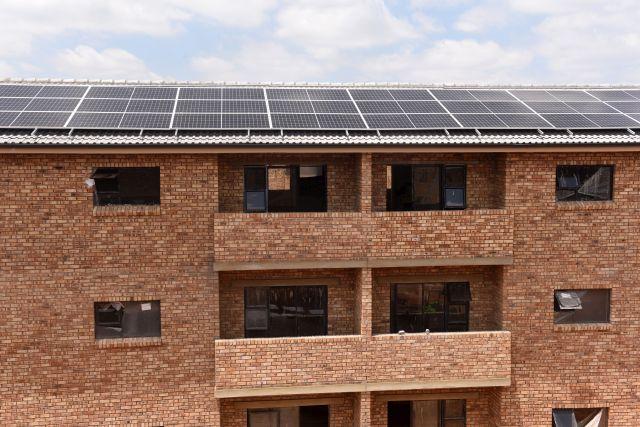
“South African affordable housing developer Alleyroads is facing financial distress, with several group companies entering business rescue or liquidation and unfinished rental developments being prepared for sale to creditors. The crisis highlights the growing difficulty of delivering affordable rental accommodation when construction and financing costs rise substantially faster than the incomes of lower-income households.”
Affordable Rental Housing Under Pressure as Alleyroads Financial Crisis Exposes Development Risks in South Africa
South Africa’s affordable rental housing sector is confronting renewed financial pressure following the collapse of parts of property developer Alleyroads, a development that highlights the difficult balance between housing affordability, construction costs and investment sustainability. The company’s financial difficulties, which have resulted in business rescue proceedings, liquidation and the planned sale of unfinished residential developments, have raised important questions about the future of affordable rental accommodation in the country.
The developments come at a time when South Africa continues to experience substantial demand for reasonably priced rental housing. Thousands of households require accommodation close to employment opportunities, educational institutions, transport networks and essential services. However, delivering housing at prices affordable to lower-income households has become increasingly complicated as construction and financing costs rise.
According to reporting published by The National on 4 November 2026, Alleyroads’ financial distress demonstrates how the economics of developing affordable housing can become increasingly difficult when construction expenses increase faster than the incomes of prospective tenants. The company’s difficulties also highlight the risks associated with large development pipelines that require substantial investment before generating rental income.
Alleyroads’ financial difficulties expose weaknesses in affordable housing development
Alleyroads established itself as an important participant in South Africa’s affordable rental housing market, pursuing residential developments aimed at households unable to access expensive conventional housing.
Its expansion reflected the growing investment interest in rental accommodation as urbanisation, population movements and employment opportunities increased demand for housing across major metropolitan areas and developing urban centres.
However, several companies associated with the group have entered business rescue or liquidation, while properties are being marketed or prepared for auction to recover money owed to creditors.
The situation has placed the financial sustainability of affordable housing development under greater scrutiny.
Unlike established residential buildings that generate monthly rental income, new housing projects require significant capital expenditure before tenants can move in. Developers must purchase land, arrange construction financing, obtain approvals, establish infrastructure and complete buildings before earning revenue.
When projects experience delays or construction costs increase unexpectedly, the financial consequences can become substantial.
The National reported that Galetti Corporate Real Estate has become involved in the disposal of Alleyroads assets, including unfinished residential developments.
Galetti chief executive John Jack indicated that the group’s development pipeline, rather than necessarily its acquisition of existing rental properties, was likely to have contributed significantly to its financial difficulties.
Existing income-generating properties can provide relatively predictable rental revenue. By contrast, unfinished developments consume capital without immediately producing the income needed to service financial obligations.
Consequently, developers with extensive construction programmes can experience serious cash-flow difficulties even when demand for housing remains strong.
Rising construction costs undermine affordable housing economics
One of the most important challenges highlighted by the Alleyroads situation is the growing difference between the cost of constructing residential properties and what prospective tenants can realistically afford.
According to John Jack, building prices increased by approximately 50% during the 2022 and 2023 period, placing considerable pressure on affordable housing developers.
The increase created a difficult financial environment for companies targeting lower-income households whose earnings had not increased at a comparable rate.
Affordable rental housing depends on a relatively delicate financial balance.
Developers must recover land acquisition expenses, construction costs, financing charges, maintenance expenses and operating costs through rental income.
Nevertheless, rental prices cannot increase indefinitely because tenants have limited disposable income.
When monthly rentals become too expensive, households may seek smaller accommodation, relocate to less expensive neighbourhoods or turn to informal housing arrangements.
This creates a fundamental challenge for developers.
Construction expenses may require higher rental income to sustain an investment, but affordability limits the amount tenants can pay.
The result is a market in which substantial demand for affordable housing does not automatically translate into profitable development opportunities.
The Alleyroads experience illustrates why developers must carefully assess construction budgets, financing arrangements and expected rental income before committing to large residential projects.
Institutional investment demonstrated the potential of affordable rentals
Alleyroads’ expansion was supported by institutional funding, reflecting investor interest in the affordable rental housing market.
In May 2020, Vantage Capital invested R82 million in the company’s Kaya Lane Estates development in Lebowakgomo, Limpopo.
The investment provided early-stage construction funding when conventional banks were reportedly reluctant to assume the risks associated with development financing.
Vantage subsequently exited its investment through refinancing in July 2022.
In another significant development, the International Finance Corporation announced a R325 million green loan in 2022 to support more than 1,000 rental apartments around Johannesburg.
These investments demonstrated that affordable rental accommodation could attract institutional capital and contribute to addressing housing shortages.
However, the subsequent financial difficulties associated with Alleyroads highlight the importance of ensuring that development structures remain sustainable throughout construction and operation.
Institutional investors increasingly need to evaluate not only the demand for accommodation but also the financial resilience of developers, the availability of construction funding and the affordability of the completed properties.
The experience also demonstrates that strong social demand does not eliminate commercial risk.
Unfinished residential developments create investment opportunities
The financial restructuring of Alleyroads has brought several unfinished residential developments into the investment market.
According to The National, properties scheduled for auction on 25 November include developments in Lebowakgomo, Katlehong South and Vosloorus.
The developments could attract investors interested in completing residential buildings and converting partially constructed projects into income-generating rental properties.
However, prospective purchasers face considerable responsibilities.
Before acquiring unfinished developments, investors must establish the amount of construction remaining, determine whether planning approvals and building compliance requirements remain valid, and assess whether existing infrastructure can support completed residential accommodation.
They must also consider the costs of completing buildings, financing the remaining construction and maintaining properties after tenants occupy them.
Galetti director Guy Dowding indicated that unfinished developments could provide opportunities because buyers might inherit land, approvals, bulk services and completed construction work.
Nevertheless, acquisition prices alone cannot determine whether such investments are profitable.
A development purchased at a substantial discount may still require significant additional expenditure before it can generate rental income.
Investors must therefore evaluate the complete financial position of each project rather than focusing exclusively on its advertised price.
Affordable rental housing remains essential for South African households
Despite the difficulties experienced by Alleyroads, affordable rental accommodation continues to play an important role in South Africa’s housing market.
Many households cannot immediately purchase residential properties because of deposit requirements, mortgage affordability constraints, employment uncertainty or insufficient access to housing finance.
Rental accommodation provides an alternative for people who need flexibility or cannot qualify for home loans.
Teachers, nurses, police officers, young professionals, students and workers frequently require accommodation near their places of employment or study.
Affordable rental developments can support these households by providing formal accommodation with predictable monthly rental arrangements.
Furthermore, well-located residential developments can reduce commuting expenses and improve access to employment opportunities.
However, the availability of affordable accommodation depends on developers delivering properties at rental levels appropriate for their intended markets.
When construction costs rise significantly, developers may struggle to maintain affordable rents without reducing investment returns.
This makes affordability planning an essential component of residential development rather than a consideration introduced only after construction has begun.
Developers must align housing supply with tenant affordability
The Alleyroads financial crisis also highlights the importance of matching residential development programmes with actual market demand.
According to John Jack, developers must ensure that supply closely matches demand and that completed accommodation remains affordable to prospective tenants.
Large development pipelines can create substantial financial exposure when projects require extensive investment simultaneously.
Developers must therefore consider construction schedules, financing availability, rental demand and the purchasing power of households before expanding their residential portfolios.
A sustainable development strategy requires careful coordination between property investment, construction management and rental operations.
It also requires realistic assessments of how quickly completed apartments can attract tenants and generate sufficient income.
For affordable housing developers, these considerations are particularly important because rental increases cannot always compensate for rising construction and financing costs.
The market therefore requires investment structures capable of supporting long development periods while maintaining financial discipline.
Property management and operating costs remain critical
Completing residential developments is only one part of creating sustainable affordable rental accommodation.
Property owners must subsequently manage buildings, maintain infrastructure, collect rentals, address tenant concerns and ensure that residential environments remain safe and functional.
Operating expenses can significantly influence the financial performance of rental properties.
Security, maintenance, insurance, utilities, cleaning and administration all contribute to the cost of managing residential developments.
Landlords must also account for vacancies, unpaid rentals and unexpected repairs.
Consequently, successful affordable rental housing investments require strong property management alongside effective development financing.
Buildings that are poorly maintained may experience declining tenant satisfaction, increased vacancies and reduced rental income.
Conversely, reliable maintenance and professional management can improve tenant retention and support long-term investment performance.
The Alleyroads situation reinforces the importance of understanding both construction economics and the operational requirements of residential rental properties.
South Africa needs financially sustainable affordable housing investment
South Africa’s housing challenge cannot be addressed exclusively through the construction of expensive residential developments.
The country also requires accommodation that lower-income households can realistically afford while remaining financially sustainable for developers, property owners and investors.
Achieving this balance will require careful planning, realistic construction budgets, appropriate financing structures and stronger coordination between housing demand and development activity.
The financial difficulties experienced by Alleyroads illustrate the consequences of failing to maintain that balance.
At the same time, the unfinished developments entering the market could create opportunities for investors capable of completing projects and managing them successfully.
Such opportunities, however, require detailed financial analysis, responsible investment decisions and realistic expectations about rental income.
The future of affordable rental housing will depend on whether developers can deliver accommodation at prices tenants can afford while generating sufficient returns to sustain investment.
Ultimately, South Africa’s affordable rental housing sector remains important to economic development, urban growth and household stability.
The Alleyroads financial crisis is therefore more than an individual property company’s difficulty. It is a warning about the financial pressures confronting affordable housing development and the importance of building sustainable rental accommodation that meets the needs of ordinary South African households.



