




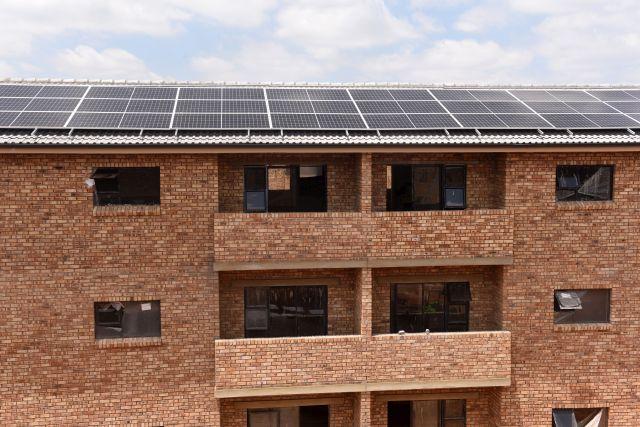
“South African affordable housing developer Alleyroads is experiencing financial distress, with several companies entering business rescue or liquidation and unfinished residential developments being prepared for sale to recover money owed to creditors. The situation highlights the growing difficulty of delivering affordable rental housing as construction costs and financing pressures rise faster than the incomes of lower-income households, raising important questions about land development, investment sustainability and the country’s housing supply.”
South Africa’s Affordable Housing Crisis Deepens as Alleyroads Financial Distress Exposes Development Challenges
South Africa’s affordable housing sector is facing renewed scrutiny following financial difficulties at property developer Alleyroads, whose business rescue and liquidation proceedings have placed several companies within its group under pressure. The situation highlights the complex economic conditions confronting developers seeking to deliver affordable rental accommodation in a country experiencing persistent housing shortages, rising construction expenses and significant affordability constraints.
The financial difficulties have also brought unfinished residential developments into the market, creating potential opportunities for investors while raising questions about the sustainability of affordable housing development across South Africa.
According to reporting published by The National on 4 November 2026, several Alleyroads companies have entered business rescue or liquidation, with properties being sold to recover outstanding obligations to creditors. Galetti Corporate Real Estate has become involved in managing the sale of assets and arranging auctions involving selected residential developments.
The developments offer an important perspective on the relationship between land acquisition, property investment, construction financing and the delivery of housing for lower-income households.
Financial distress exposes structural weaknesses
Alleyroads’ difficulties demonstrate how affordable housing developers can encounter financial pressure even when operating in a market characterised by substantial housing demand.
Unlike established residential buildings that generate rental income immediately, developments under construction require considerable upfront investment before becoming financially productive.
Developers must secure land, obtain approvals, arrange infrastructure, finance construction and complete buildings before tenants can occupy the properties.
Consequently, projects can consume substantial capital for extended periods without generating sufficient revenue to support their financial obligations.
John Jack, chief executive of Galetti Corporate Real Estate, indicated that the development pipeline rather than necessarily the acquisition of an existing property portfolio was likely to have contributed significantly to Alleyroads’ financial difficulties.
The acquisition of Pulse Property Group in late 2023 reportedly involved approximately R1.2 billion and included 46 buildings across South Africa, adding around 3,300 student beds and rental apartments to Alleyroads’ portfolio.
However, income-generating properties operate differently from unfinished developments.
Existing buildings produce rental revenue that can support operating expenses, interest payments and other financial commitments. Developments under construction, by contrast, require continuing capital expenditure before producing comparable income.
This distinction illustrates why property companies must carefully manage the relationship between completed assets and projects awaiting construction or occupation.
Construction costs create additional pressure
One of the most significant challenges facing affordable housing development is the rising cost of construction.
According to The National’s report, building prices increased by approximately 50% during the 2022–2023 period, placing additional pressure on developers attempting to maintain affordable rental prices.
Higher building costs affect virtually every stage of residential development, including materials, labour, infrastructure installation, contractor payments and project financing.
Developers targeting lower-income households face particularly difficult circumstances because their prospective tenants have limited capacity to absorb higher rental costs.
Consequently, developers cannot necessarily recover rising expenses through substantial rental increases without risking reduced demand or worsening affordability.
The mismatch between development costs and household incomes creates a difficult financial environment.
While South Africa needs more affordable housing, the economic viability of delivering that accommodation depends on ensuring that development expenses remain compatible with the rental income households can realistically afford.
This challenge is especially important in areas where residents experience unemployment, limited wage growth and increasing living expenses.
Unfinished developments create investment opportunities
The financial difficulties have resulted in several residential developments being prepared for sale through auctions.
Among the properties identified for auction on 25 November are developments at Kaya Lane Estate in Lebowakgomo, a residential development in Katlehong South and Umthala Mews in Vosloorus.
These properties could attract investors seeking opportunities to acquire development land and partially completed residential projects at potentially attractive prices.
However, purchasing unfinished developments requires careful financial and technical assessment.
Investors must determine the extent of construction already completed, outstanding building obligations, infrastructure requirements, planning approvals and the additional expenditure necessary to bring properties into operation.
A relatively inexpensive acquisition price does not automatically translate into a profitable investment.
The remaining construction costs could exceed the original purchase price, particularly where developments require substantial infrastructure improvements or extensive completion work.
Guy Dowding, director at Galetti Auction, indicated that unfinished developments could provide opportunities for investors prepared to assess their completion costs against potential rental income.
The properties could therefore become valuable assets if acquired by investors with sufficient financial resources, construction expertise and realistic assessments of local housing demand.
Nevertheless, their future success will depend on whether the necessary investment can be secured and whether completed apartments can generate sustainable rental income.
Affordable housing remains a critical national priority
South Africa continues to experience considerable pressure to expand affordable housing availability.
Rapid urbanisation, population growth and migration towards employment centres have increased demand for residential accommodation in metropolitan areas and surrounding communities.
Cape Town, Johannesburg, Pretoria, Durban and other major urban centres face challenges involving housing affordability, land availability and access to infrastructure.
Lower-income households frequently struggle to secure accommodation close to employment opportunities, public transport and essential services.
Affordable rental housing can provide an important alternative for households unable to purchase homes or qualify for conventional mortgage financing.
However, the Alleyroads situation demonstrates that increasing housing supply requires more than identifying available land or approving residential developments.
Successful projects need sustainable financing structures, efficient construction processes, reliable infrastructure and rental models compatible with household incomes.
Without these conditions, developments intended to address housing shortages may encounter financial difficulties before delivering their intended benefits.
Land acquisition and infrastructure determine development viability
Land is a fundamental component of residential development, but its economic value depends heavily on location, infrastructure and development permissions.
Developers must consider access to electricity, water, sanitation, roads and public transport when assessing whether land can support affordable residential projects.
Land situated far from employment centres may be less expensive to acquire but could impose additional transport costs on residents.
Conversely, well-located land near economic activity may attract higher acquisition prices, increasing the overall cost of housing delivery.
Infrastructure requirements also influence development timelines.
Where municipal services are unavailable or inadequate, developers may need to finance additional infrastructure before construction can proceed.
These expenses can significantly affect project profitability, particularly where developments target households with limited rental affordability.
The Alleyroads developments therefore illustrate the importance of integrating land planning, infrastructure provision and financing into affordable housing strategies.
Institutional financing remains essential
Affordable housing development frequently depends on financing arrangements involving commercial banks, development finance institutions and specialised investment funds.
The Alleyroads funding history demonstrates how institutional capital has supported residential development.
In 2020, Vantage Capital invested R82 million in Alleyroads’ Kaya Lane Estates development in Lebowakgomo.
The investment provided early-stage construction financing when conventional lenders were reluctant to assume the associated development risks.
Vantage subsequently exited the investment through refinancing in July 2022.
In 2022, the International Finance Corporation announced a R325 million green loan supporting the development of more than 1,000 rental apartments around Johannesburg.
These investments reflected the potential of affordable rental housing to generate economic and social benefits.
However, the financial difficulties now affecting Alleyroads demonstrate that institutional financing cannot eliminate the risks associated with construction delays, escalating costs or inadequate rental income.
Investors must therefore assess both the social value of housing developments and their underlying financial sustainability.
The affordability gap threatens future housing supply
One of the most important lessons from the Alleyroads situation concerns the relationship between construction costs and household affordability.
Developers must generate sufficient revenue to cover construction expenditure, financing costs, maintenance and operating expenses.
However, lower-income tenants often cannot accommodate substantial rental increases.
This creates a structural challenge for affordable housing providers.
If developers increase rents excessively, households may struggle to afford accommodation. If rents remain below financially sustainable levels, developers may experience inadequate returns and reduced investment incentives.
The result could be a shortage of financially viable affordable housing projects despite substantial demand.
Addressing this problem requires coordinated action involving government, municipalities, developers, lenders and housing organisations.
Potential interventions include improved access to serviced land, more efficient approval processes, infrastructure investment, appropriate development finance and targeted support for households unable to meet market rental costs.
Government and municipalities face important responsibilities
Municipalities play an important role in determining whether affordable housing projects can proceed efficiently.
Planning approvals, zoning regulations, building permissions and infrastructure coordination influence development timelines and costs.
Delays in administrative processes can increase financing expenses and create uncertainty for developers.
Municipalities also have responsibilities concerning spatial planning and the availability of suitable land for housing.
Public land situated near employment opportunities and transport networks could support affordable residential development if appropriately planned and serviced.
However, successful projects require transparent allocation processes and partnerships that protect public interests while encouraging responsible investment.
The Alleyroads developments could also demonstrate how financial distress affects communities when planned residential projects remain unfinished.
Municipal authorities and development partners must therefore consider the implications of incomplete construction, including neighbourhood conditions, infrastructure utilisation and the future availability of housing.
Implications for South Africa’s property market
The financial distress surrounding Alleyroads could influence investor perceptions of affordable residential development.
Potential investors may become more cautious when assessing construction projects with substantial capital requirements and limited rental flexibility.
At the same time, opportunities to acquire unfinished developments could attract experienced property investors seeking discounted assets.
The broader market implications will depend on whether buyers can successfully complete these developments and bring additional accommodation into operation.
If completed successfully, the properties could contribute to residential supply and create opportunities for new tenants.
However, unsuccessful transactions or prolonged construction delays could leave valuable land and partially completed buildings underutilised.
The situation therefore illustrates the importance of financial discipline, realistic development planning and sustainable investment structures within South Africa’s property sector.
Conclusion: Housing delivery requires sustainable economics
Alleyroads’ financial difficulties provide an important warning about the challenges facing South Africa’s affordable housing industry.
Although the country urgently needs additional residential accommodation, developers must operate within economic conditions that allow construction projects to remain financially viable.
Rising construction expenses, limited household incomes, infrastructure constraints and lengthy development timelines can undermine even projects targeting substantial housing demand.
The unfinished developments now entering the market could nevertheless create opportunities for investors capable of completing construction and establishing sustainable rental operations.
Ultimately, South Africa’s affordable housing challenge requires a balanced approach that combines access to land, infrastructure investment, responsible financing and realistic affordability considerations.
The central lesson is that housing development must be commercially sustainable while remaining accessible to the households it is intended to serve.
Without this balance, the country risks continuing to experience a shortage of affordable homes despite significant investment and development activity.
With effective planning, appropriate financing and stronger coordination between public and private stakeholders, distressed developments could potentially be transformed into productive residential assets that contribute to South Africa’s housing needs.



