




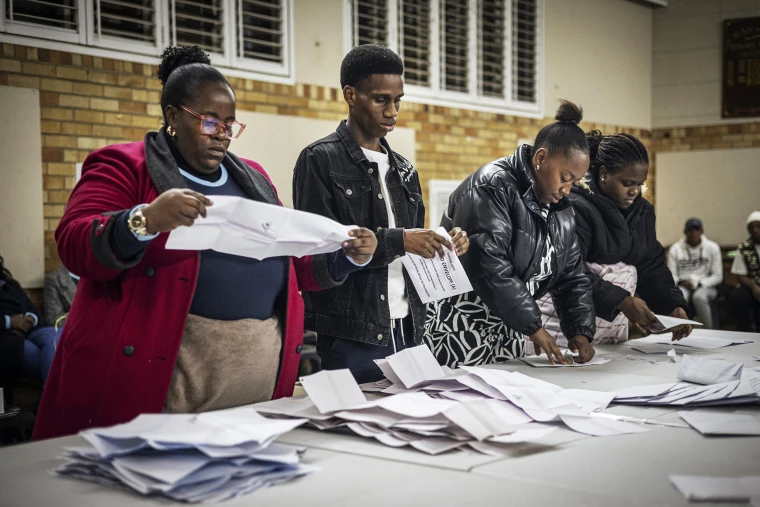
“The Independent Electoral Commission (IEC) released updated municipal by-election results today, confirming the ANC’s continued dominance with over 60% of the vote, while the DA and EFF trailed significantly. These results underscore the ANC’s entrenched support base but also highlight the DA’s resilience and the EFF’s struggle to expand its influence.”
South Africa’s political landscape continues to evolve as the Independent Electoral Commission (IEC) released the latest municipal by-election results on July 7, 2026. With the African National Congress (ANC) securing 60.91% of the vote, the Democratic Alliance (DA) at 22.72%, and the Economic Freedom Fighters (EFF) at 11.03%, the results reaffirm the ANC’s dominance while raising questions about the opposition’s ability to mount a serious challenge in the upcoming national elections.
ANC’s Continued Dominance
The ANC’s commanding lead demonstrates its ability to maintain voter loyalty despite widespread criticism over governance issues, corruption scandals, and service delivery failures. Analysts argue that the party’s deep-rooted presence in rural communities and its historical legacy as the liberation movement continue to resonate with voters.
DA’s Position
The DA’s performance, while significantly behind the ANC, shows resilience in urban and semi-urban constituencies. With 22.72% support, the party remains the strongest opposition force, appealing to voters frustrated with ANC governance but hesitant to embrace the radical policies of the EFF.
EFF’s Struggles
The EFF’s 11.03% share reflects its difficulty in expanding beyond its core base of younger, urban voters. Despite fiery rhetoric and promises of radical economic transformation, the party has struggled to translate its popularity into electoral gains, raising concerns about its long-term viability.
Voter Turnout and Spoilt Votes
Out of 13,902 registered voters, only 4,000 cast ballots, with 48 spoilt votes recorded. This relatively low turnout highlights voter apathy and disillusionment with the political system, a trend that could shape the national elections later this year.
Implications for 2026 National Elections
The by-election results serve as a microcosm of broader national trends. The ANC’s dominance suggests it remains the frontrunner heading into the 2026 general elections, though its margin of victory may shrink if opposition parties consolidate support. The DA’s steady performance positions it as the main challenger, while the EFF faces pressure to redefine its strategy.
Expert Analysis
Political analysts note that the ANC’s ability to mobilize rural voters remains unmatched. However, urban dissatisfaction with service delivery failures could erode its support. The DA’s challenge lies in broadening its appeal beyond middle-class voters, while the EFF must overcome perceptions of being too radical to govern responsibly.
Public Sentiment
Interviews with voters reveal mixed feelings. Many ANC supporters cite loyalty and historical gratitude, while DA voters emphasize governance and accountability. EFF supporters express frustration with economic inequality but acknowledge the party’s limited influence in local governance.
Conclusion
The July 7, 2026 municipal by-election results reaffirm the ANC’s dominance but also highlight the challenges facing South Africa’s opposition parties. With national elections looming, the political landscape remains dynamic, and the coming months will be critical in shaping the country’s democratic future.



