




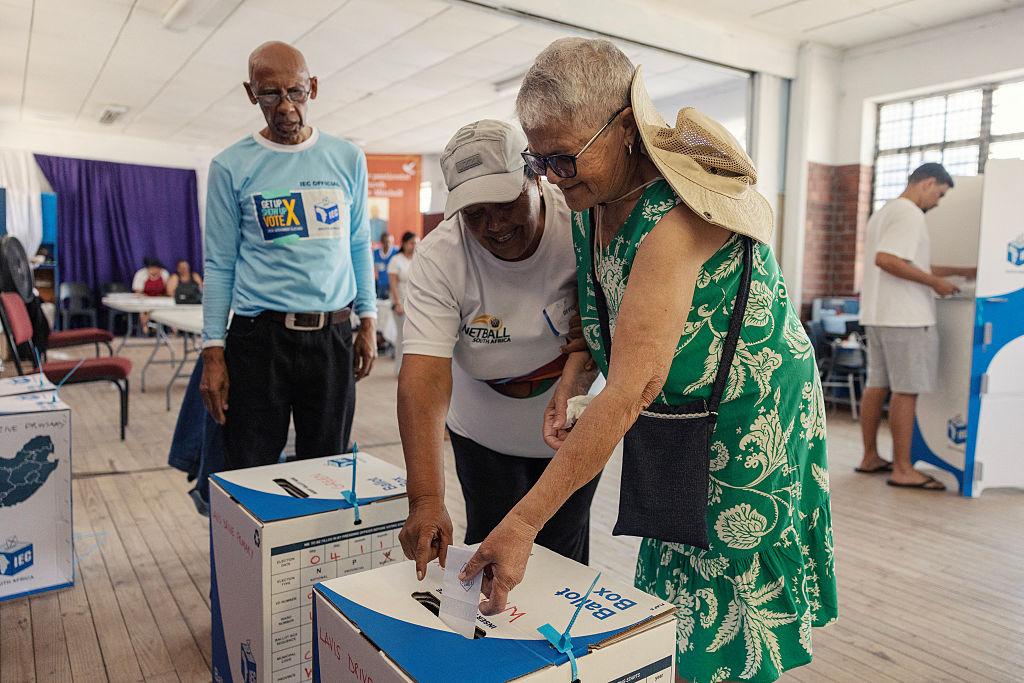
“South Africa’s 2026 local government election results have exposed a historic decline in public support for the African National Congress (ANC), with voters increasingly expressing dissatisfaction over corruption, inadequate municipal services and political accountability. The election outcome signals a significant transformation in public opinion, as fragmented political support, growing coalition politics and demands for improved governance reshape the country’s democratic landscape.”
South Africa’s political landscape is undergoing a significant transformation following the 2026 local government elections, with voters delivering a historic electoral setback to the African National Congress (ANC) and reinforcing growing demands for accountability, improved municipal services and responsive leadership. The results demonstrate that public opinion is increasingly influenced by practical governance concerns rather than traditional political loyalties, creating new challenges for established parties and opportunities for opposition movements.
The elections have become an important indicator of changing public sentiment ahead of the country’s next national elections. The ANC’s declining support, the Democratic Alliance’s strengthened position in several metropolitan areas and the growing influence of smaller political parties reflect an electorate increasingly willing to reconsider its political choices.
ANC Suffers Historic Electoral Setback
The African National Congress has experienced one of the most consequential political setbacks since the establishment of democratic government in 1994. According to results reported by the Associated Press, the party secured approximately 31% of the vote in the 2026 local government elections, falling substantially from approximately 45% in 2021.
The decline illustrates the weakening of the ANC’s longstanding electoral dominance and demonstrates the growing willingness of South Africans to express dissatisfaction through democratic participation.
The party’s electoral difficulties have become particularly visible in major metropolitan municipalities, where residents increasingly associate political leadership with the quality of public services, infrastructure maintenance and economic opportunities.
The ANC has faced sustained criticism over corruption allegations, governance failures and deteriorating municipal infrastructure. These concerns have contributed to a growing perception among voters that political promises have not consistently translated into improvements in everyday living conditions.
The election outcome therefore represents more than a numerical decline in electoral support. It reflects a broader challenge to the party’s political legitimacy and its historical relationship with South African voters.
Public Opinion Increasingly Focuses on Service Delivery
Municipal service delivery has emerged as one of the central influences shaping public opinion in South Africa.
Residents across different communities continue to experience challenges involving water shortages, electricity interruptions, damaged roads, inadequate sanitation, uncollected rubbish and deteriorating public infrastructure.
These problems have become particularly important because municipal governments are directly responsible for many services that affect households, businesses and community development.
Consequently, voters increasingly evaluate political parties according to their ability to address practical problems rather than simply their historical identities or ideological positions.
Public frustration has also been reflected in election-related polling.
An Ipsos study published before the elections found that only approximately one-quarter of South Africans expressed trust in their current local governments, while 55% of registered voters indicated distrust.
The findings suggest that dissatisfaction with municipal administration extends beyond individual political parties and reflects broader concerns about the effectiveness of local government institutions.
This environment has placed significant pressure on political organisations to demonstrate measurable improvements in service delivery.
For many communities, reliable water supplies, functioning roads, sanitation services and transparent municipal administration are increasingly regarded as essential measures of political performance.
Coalition Politics Reflect a Fragmented Electorate
The elections have reinforced South Africa’s transition towards coalition-based government.
No single political party has demonstrated the ability to command overwhelming national electoral support, while competing parties have gained influence in different metropolitan municipalities and local councils.
This fragmentation means that coalition negotiations will play a decisive role in determining municipal leadership.
Smaller political parties are likely to exercise considerable influence in councils where larger parties cannot secure outright majorities.
Although coalition arrangements provide opportunities for cooperation across political divisions, they also create challenges involving policy disagreements, leadership disputes and the stability of municipal administrations.
The increasing importance of coalition politics reflects a broader transformation in public opinion.
Voters are distributing their support across multiple political organisations, making political competition more complex and reducing the ability of established parties to govern independently.
This development may also encourage political parties to adopt more pragmatic approaches to governance, particularly where cooperation is necessary to establish functioning municipal administrations.
The ability of coalitions to deliver reliable services and maintain political stability will therefore become an important test of democratic accountability.
Democratic Alliance Gains Ground Amid Changing Voter Preferences
The Democratic Alliance has strengthened its position in several metropolitan areas, benefiting from growing dissatisfaction with ANC-led municipal administrations.
Reuters reported that the DA emerged as a leading political force in five of eight metropolitan areas, while the ANC failed to secure outright control of major cities.
The party’s gains demonstrate how changing public opinion can create opportunities for opposition organisations to expand their electoral support.
However, the DA’s electoral performance also presents significant governance responsibilities.
Winning votes is only the first stage of establishing public confidence. Opposition parties entering coalition negotiations or assuming municipal leadership must demonstrate that they can improve infrastructure, strengthen administrative efficiency and address economic challenges.
The ability to convert electoral support into tangible improvements will influence whether voters maintain their confidence in the party during future elections.
Political competition is therefore increasingly centred on performance, credibility and practical governance outcomes.
Growing Political Disillusionment and Voter Independence
Another important feature of South African public opinion is the growing distance between citizens and traditional political organisations.
Ipsos research conducted ahead of the elections indicated that 53% of registered voters believed no political party adequately represented their views.
The finding highlights an important challenge for political parties attempting to mobilise voters.
Although South Africa has hundreds of registered political organisations, many citizens remain dissatisfied with the available political choices.
This disconnect may contribute to electoral fragmentation, declining party loyalty and increased uncertainty surrounding future elections.
Political disillusionment does not necessarily mean that citizens have abandoned democracy.
Instead, it may indicate that voters increasingly expect political organisations to demonstrate credibility, responsiveness and accountability before receiving their support.
For political parties, rebuilding confidence will require more than campaign messaging.
Citizens increasingly expect measurable improvements in public administration, transparent decision-making and meaningful engagement with community concerns.
The challenge is particularly significant among younger voters, whose expectations regarding employment, economic opportunities and political participation may differ considerably from those of older generations.
Public Protest and Civic Participation Remain Important
Public opinion in South Africa is also shaped by community activism and protest movements.
The country’s democratic tradition includes a strong history of organised civic participation, demonstrations and public campaigns addressing political accountability and socioeconomic challenges.
Ipsos research conducted before the elections found that 58% of registered voters considered protests, strikes and marches acceptable responses to dissatisfaction with service delivery.
This finding demonstrates that many citizens continue to regard public protest as a legitimate mechanism for communicating grievances.
Protests can place pressure on municipal authorities to respond to community concerns, particularly when residents believe that formal political channels have failed to produce satisfactory results.
However, effective governance requires institutions to respond constructively to public demands while maintaining lawful and peaceful democratic processes.
The relationship between public opinion, civic activism and political accountability will remain important as municipalities negotiate coalition arrangements and establish new administrations.
Community organisations, residents’ associations and civil society groups are likely to continue monitoring municipal performance and demanding improvements.
Election Results Create New Challenges for Political Leadership
The changing electoral landscape presents significant challenges for political leadership across South Africa.
The ANC faces the task of rebuilding public confidence while addressing internal disagreements and concerns about governance performance.
The party’s declining electoral support may influence leadership debates and succession discussions as it prepares for future national elections.
Meanwhile, opposition parties must demonstrate that they can provide effective administration and maintain stable political partnerships.
Coalition negotiations will be particularly important in metropolitan municipalities where voters have distributed their support across competing parties.
Political leaders will need to balance ideological differences with practical responsibilities involving budgets, infrastructure investment and municipal services.
Failure to establish stable administrations could undermine public confidence in coalition government.
Conversely, successful cooperation could demonstrate that political diversity can support effective democratic governance.
The coming months will therefore provide an important opportunity for political organisations to demonstrate their commitment to accountability and institutional stability.
Economic Conditions Continue to Influence Public Sentiment
Public opinion about political leadership is closely connected to economic conditions.
Households facing unemployment, rising living expenses and limited economic opportunities may evaluate government performance through their personal financial circumstances.
Municipal infrastructure problems can further increase economic pressure by affecting businesses, transportation, property values and household productivity.
Political parties therefore face growing expectations to address both administrative failures and broader economic challenges.
Public confidence may improve when governments demonstrate progress in employment opportunities, infrastructure development and economic participation.
However, voters are likely to remain sceptical of political promises that are not accompanied by clear implementation plans and measurable results.
This relationship between economic performance and political legitimacy will remain important as South Africa approaches future electoral contests.
The Importance of Public Opinion for South Africa’s Democracy
The 2026 local government elections demonstrate the importance of public opinion in shaping democratic accountability.
South African voters have shown that political support can change significantly when citizens believe that elected representatives are not adequately addressing community needs.
The results also highlight the importance of political pluralism, electoral competition and public participation.
Rather than relying exclusively on historical political loyalties, many voters appear increasingly interested in evaluating parties according to their performance and credibility.
This transformation creates opportunities for democratic renewal, but it also introduces challenges involving coalition stability, political fragmentation and institutional capacity.
The success of South Africa’s democratic system will depend partly on whether political leaders can respond effectively to these changing expectations.
Conclusion
South Africa’s 2026 local government elections have delivered a powerful message about changing public opinion and the future of political leadership.
The ANC’s historic decline, the growing influence of opposition parties and the expansion of coalition politics demonstrate that the electorate is increasingly willing to demand accountability and reconsider traditional political loyalties.
Public dissatisfaction with service delivery, corruption concerns and economic pressures remain central influences on voter behaviour.
At the same time, citizens continue to demonstrate their commitment to democratic participation through elections, civic engagement and public activism.
The immediate challenge for political parties is to translate electoral support into effective governance.
Ultimately, the political organisations that demonstrate transparency, accountability, administrative competence and meaningful improvements in people’s lives are likely to be better positioned to earn public confidence in South Africa’s evolving democratic landscape.
The election results therefore represent not merely a change in political representation, but a significant expression of public expectations about the future of democratic governance in South Africa.



