




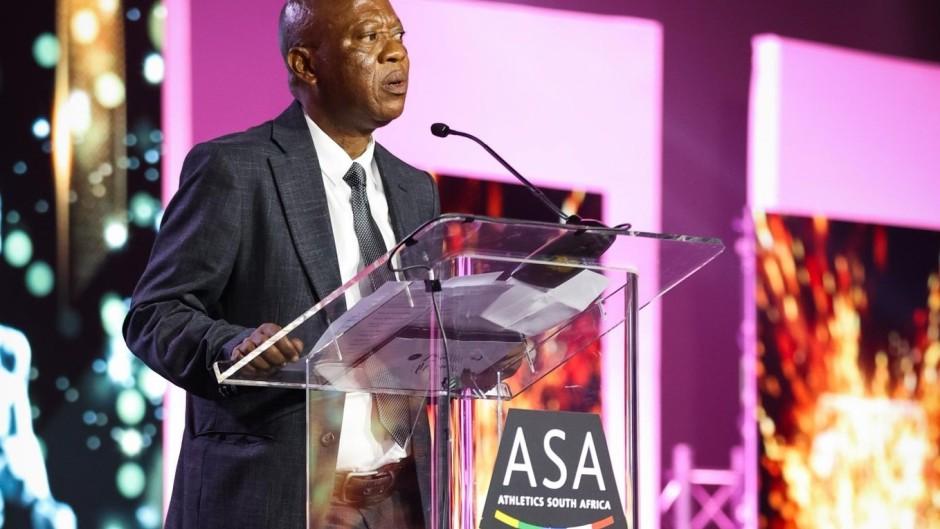
“World Athletics has instructed Athletics South Africa to implement the findings of an independent disciplinary panel concerning suspended president James Moloi and complete a comprehensive constitutional reform process within six months, warning that non-compliance could result in international sanctions. The intervention places the federation’s governance, financial accountability, election procedures and ability to serve athletes at the centre of a critical period for South African athletics.”
Athletics South Africa faces six-month reform deadline as World Athletics warns of possible sanctions
Introduction: A defining moment for South African athletics
South African athletics is facing a significant governance challenge after World Athletics demanded leadership changes and comprehensive constitutional reforms at Athletics South Africa (ASA). The intervention has intensified scrutiny of the national federation’s administration and raised important questions about accountability, transparency and the long-term interests of athletes across the country.
The issue became a major national sports story after World Athletics communicated its expectations to ASA following a fact-finding process examining the federation’s internal operations. According to reporting published by Business Day and TimesLIVE on 20 October 2026, the international governing body gave ASA six months to adopt a satisfactory revised constitution and subsequently organise fresh elections, warning that failure to comply could result in the matter being referred for sanctions.
The developments matter because athletics in South Africa extends far beyond elite international competition. The sport encompasses school competitions, community running clubs, provincial championships, road races, cross-country events and national teams competing on the world stage.
Consequently, the federation’s ability to operate transparently and make effective decisions is important to athletes, coaches, officials, sponsors and supporters throughout the country.
World Athletics demands decisive governance changes
At the centre of the dispute is World Athletics’ assessment that ASA faces structural governance problems requiring more than a temporary resolution between individual officeholders.
A fact-finding mission conducted in September was led by Zakhele Dlamini, president of the Southern African Confederation of Athletics and vice-president of the Confederation of African Athletics. The resulting report identified concerns involving divisions within the ASA executive board, difficulties with collective decision-making, uncertainty about the authority of elected officials and potential conflicts arising from overlapping national and provincial responsibilities.
These findings are significant because a national sports federation must provide a reliable administrative framework for its members. Decisions about competitions, athlete development, finances, appointments and international representation require clearly defined responsibilities and procedures.
When authority is disputed or decisions are difficult to implement, the consequences can extend beyond boardroom disagreements. Athletes and coaches may need clarity about selection processes, competition arrangements, funding decisions and the people responsible for resolving administrative problems.
World Athletics has therefore emphasised that the situation reflects weaknesses in ASA’s governance framework rather than simply disagreements between individuals.
The proposed reforms are intended to establish a more accountable structure and provide a clearer division of responsibilities among the federation’s governing council, executive board, president, commissions and administrative officials.
James Moloi’s disciplinary case adds to the pressure
The governance dispute is closely connected to disciplinary proceedings involving suspended ASA president James Moloi.
According to SABC Sport’s reporting on 13 October 2026, an independent disciplinary committee chaired by retired judge Basheer Waglay found Moloi guilty of charges relating to the misuse of the federation’s credit card and recommended his removal from the presidency and executive board.
The proceedings followed a prolonged period of scrutiny over the federation’s financial administration. SABC Sport reported that the investigation included concerns about credit-card expenditure, supporting receipts and monthly spending limits. Moloi had been suspended in October 2025 while the matter continued through disciplinary and governance processes.
The subsequent report from World Athletics stated that the independent panel’s findings, dated 6 October 2026, supported his removal from office and that ASA was expected to implement the decision.
These are reported disciplinary findings, not a basis for making additional allegations beyond what the sources establish. Nevertheless, the case has become a focal point in the broader debate about financial controls and accountability within the federation.
For a national sports organisation, financial governance is fundamental. Funds may support athlete preparation, coaching programmes, competitions, travel, administration and development initiatives. Clear expenditure rules and independent oversight help demonstrate that resources are being managed in accordance with the organisation’s responsibilities.
The immediate challenge for ASA is therefore to address the disciplinary decision while also establishing procedures that reduce the likelihood of similar disputes in the future.
Constitutional reform is central to the proposed solution
World Athletics and the Confederation of African Athletics have called for a comprehensive revision of ASA’s constitution. Although the federation had prepared draft constitutional arrangements, the international and continental bodies reportedly concluded that further changes were necessary.
One key principle is that ASA’s council should be clearly established as the federation’s supreme decision-making body, with voting rights reserved for properly accredited representatives of its constituent members.
The proposed framework would also prevent individuals from exercising multiple votes or representing more than one constituency at the same meeting. Such safeguards are intended to address potential conflicts of interest where people hold overlapping national and provincial positions.
Another priority is a clear separation between governance, oversight and day-to-day administration. The responsibilities of elected officials, executive board members, commissions and administrative staff must be defined so that decision-making authority is not confused.
The reform agenda also covers independent electoral and disciplinary mechanisms, financial oversight, transparent appointments, term limits, gender balance, athlete representation and the conduct of elected officials.
Taken together, these measures seek to create a system in which authority is exercised according to established rules rather than personal influence.
However, constitutional reform will be meaningful only if the final provisions are adopted and implemented consistently. A document may establish strong principles, but effective governance depends on whether those principles are followed in everyday decisions.
The six-month deadline creates a demanding timetable
World Athletics has established a defined timetable for ASA to complete the reform process.
The federation must provide World Athletics and the Confederation of African Athletics with a detailed timetable for constitutional revision and adoption within one month of the relevant letter. The revised constitution must then be finalised and formally adopted within six months.
Following adoption, fresh elections must be organised within a further three-month period, in accordance with the new constitution. An independent observer nominated by World Athletics and the continental governing body is expected to oversee the constitutional adoption and election process.
The timetable places responsibility on ASA’s governing structures to move beyond public disagreements and reach decisions through an agreed process.
Consultation will be important because constitutional amendments affect the federation’s membership and internal distribution of authority. Representatives must understand the proposed changes, assess their implications and ensure that the final arrangements can operate effectively.
At the same time, the deadline means that prolonged disagreement could make compliance more difficult. The federation must balance meaningful consultation with the need to complete the required work on schedule.
World Athletics has warned that failure to adopt an acceptable constitution within the prescribed period, or deliberate obstruction of the agreed process, could lead to referral to its council for consideration of sanctions under its constitution.
The warning does not mean that a global suspension has already occurred. Rather, it establishes a potential consequence if the federation fails to satisfy the requirements.
What the dispute could mean for athletes
For athletes, the most important question is how the governance process affects their ability to train, compete and develop their careers.
South Africa has a substantial athletics community spanning sprinting, middle-distance running, long-distance events, road running, cross-country, jumps and throws. Elite performers depend on coordinated administration, while emerging athletes need clear pathways from schools and clubs to provincial and national competition.
A stable federation can help provide predictable competition calendars, transparent selection policies, reliable communication and clear channels for resolving disputes. It can also help maintain confidence among coaches, sponsors, development partners and international sporting bodies.
Conversely, prolonged institutional uncertainty can create additional administrative burdens and weaken confidence in decision-making.
Nevertheless, the available reporting does not establish that all South African athletics competitions or athlete programmes have been disrupted by the current dispute. It would therefore be inaccurate to suggest that athletes have already lost their opportunities or that international participation has been suspended.
The immediate concern is the possibility that unresolved governance problems could create further difficulties if the federation does not respond effectively.
Athletes should remain at the centre of the reform process. Their representation, access to transparent procedures and ability to raise concerns are important considerations when the new constitution is developed.
Financial transparency and public confidence
Financial accountability is another major issue arising from the case.
Sports federations often operate with a combination of membership resources, sponsorships, event income and other funding arrangements. Whatever the source, stakeholders need confidence that financial decisions are documented, authorised and subject to appropriate review.
Independent oversight can help distinguish routine administrative decisions from matters requiring additional scrutiny. Clear expenditure limits, supporting documentation, conflict-of-interest rules and regular financial reporting can also improve the quality of internal controls.
The ASA dispute illustrates why these mechanisms matter. Financial concerns can become institutional crises when stakeholders disagree over the handling of expenditure, the independence of investigations or the authority responsible for implementing disciplinary outcomes.
Constitutional reform offers an opportunity to strengthen the framework governing these responsibilities.
However, restoring confidence will require more than new rules. Consistent implementation, transparent communication and credible oversight will be essential to demonstrating that governance standards apply equally to everyone within the organisation.
Implications for South African sport
The ASA situation also has broader implications for the administration of sport in South Africa.
National federations operate within domestic sporting structures while remaining accountable to the international bodies governing their disciplines. This relationship creates responsibilities on both sides: domestic organisations must maintain legitimate decision-making procedures, while international authorities must apply their rules through established processes.
World Athletics’ intervention demonstrates that governance shortcomings can become an international concern when they affect a member federation’s ability to fulfil its obligations.
For South African athletics, successfully completing the reform process could provide an opportunity to rebuild institutional confidence and establish more durable administrative arrangements.
Failure to do so, by contrast, could prolong uncertainty and expose the federation to further scrutiny.
The issue is particularly important because athletes should not have to carry the consequences of preventable administrative conflict. Good governance should support sporting performance rather than distract from it.
What happens next?
The next stages involve implementing the disciplinary findings, developing a detailed constitutional reform timetable, consulting the relevant federation structures and submitting revised provisions for review.
Fresh elections are expected after the new constitution is adopted, within the additional period specified by World Athletics and the Confederation of African Athletics.
Progress will depend on ASA’s ability to reach agreement on the proposed changes and demonstrate that the final arrangements meet the required governance standards.
The most important developments to monitor are the publication of a formal reform timetable, the handling of the leadership decision, the adoption of constitutional amendments and the arrangements for independent oversight of the elections.
As of 28 October 2026, the reporting reviewed for this article establishes the reform deadline and the potential for sanctions, but does not establish that the constitutional process has been completed or that a global suspension has been imposed.
Conclusion: An opportunity to rebuild trust
The governance challenge facing Athletics South Africa is an important test of the federation’s ability to protect the interests of its athletes and restore confidence in its administration.
World Athletics has set out clear expectations concerning leadership, constitutional reform, accountability and elections. The next phase will require practical decisions, cooperation among stakeholders and a sustained commitment to transparent governance.
For athletes, coaches, clubs and supporters, the desired outcome is straightforward: a national federation that operates predictably, manages its resources responsibly and provides a fair framework for participation and development.
The coming months will reveal whether ASA can turn the current pressure into lasting institutional improvement. Ultimately, the success of the reform process should be measured not only by compliance with international requirements but also by whether it creates a stronger, more accountable organisation capable of serving South African athletics.



