




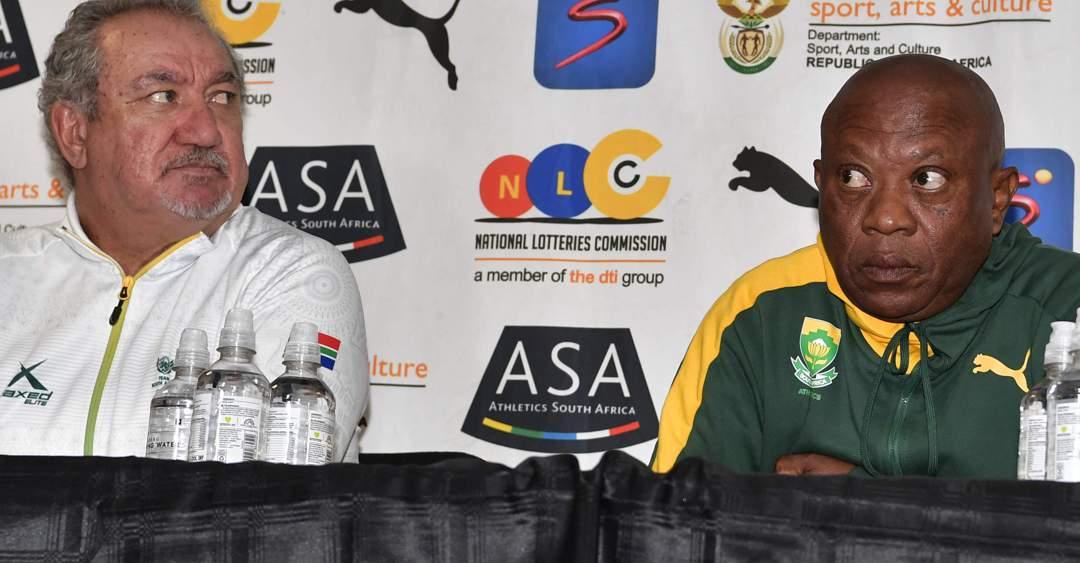
“Athletics South Africa is under pressure to implement governance reforms following the removal of former president James Moloi after an independent disciplinary panel found him guilty of misconduct involving federation funds. World Athletics has set a six-month reform deadline, including constitutional changes and fresh elections, with possible international suspension threatening to affect South African athletes if the requirements are not met.”
Athletics South Africa’s governance crisis raises questions over athletes’ international future
Athletics South Africa (ASA) faces a defining period as it works to restore confidence in its leadership, strengthen its governance structures and protect the interests of athletes competing under the national flag. The organisation’s difficulties have attracted international attention after World Athletics demanded substantial reforms and warned that failure to comply could result in suspension from international competition.
The situation presents a serious challenge for one of South Africa’s most important sporting federations. Athletics has a strong national tradition, producing world-class sprinters, distance runners, middle-distance specialists and field-event competitors. However, sporting achievements depend not only on athletes’ performances but also on effective administration, financial accountability and reliable relationships between national federations and international governing bodies.
Leadership changes put the federation under scrutiny
The immediate issue centres on the removal of former ASA president James Moloi. An independent disciplinary panel chaired by retired judge president Basheer Waglay found Moloi guilty of two charges relating to the misuse of federation funds and recommended his removal from the presidency and executive board. World Athletics subsequently instructed ASA to implement the panel’s findings without delay.
The findings have placed the federation’s financial controls and leadership accountability at the centre of the debate. Sports organisations manage resources intended to support athletes, competitions, administration, development programmes and international participation. Consequently, allegations or findings of financial misconduct can damage confidence among athletes, sponsors, administrators and the public.
For ASA, removing a president is an important step, but it does not automatically resolve every institutional problem. Effective reform requires clear financial procedures, independent oversight, documented decisions and transparent mechanisms for addressing misconduct. It also requires leaders to demonstrate that the federation’s interests take precedence over individual ambitions.
The case has therefore become part of a wider discussion about how South African sports organisations should be governed. Athletes and supporters need assurance that money allocated to athletics is managed responsibly and that decisions are made according to established rules.
World Athletics demands structural reform
World Athletics has identified concerns extending beyond the conduct of one individual. According to reports published in October, an international fact-finding mission identified divisions within ASA’s executive board, difficulties with collective decision-making, uncertainty about the authority of elected officials and potential conflicts of interest involving overlapping national and provincial responsibilities.
These concerns point to structural weaknesses that could continue even after leadership changes. A federation needs a constitution that clearly defines its governing bodies, establishes voting rights, explains how decisions are approved and provides a fair process for resolving disagreements.
World Athletics has called for a revised constitution and fresh elections within six months. Its requirements include establishing the council as the supreme decision-making body, protecting the integrity of voting procedures and preventing individuals from exercising multiple votes or representing more than one constituency at the same meeting.
Such safeguards are intended to make governance more transparent and representative. If implemented effectively, they could help reduce conflicts of interest, clarify responsibilities and make it easier to hold decision-makers accountable.
Nevertheless, constitutional reform can be complicated. ASA must reconcile the interests of its constituent members while ensuring that the resulting rules comply with international requirements. Consultation, legal review and proper approval procedures will be essential if the revised framework is to command broad support.
Six months to protect international participation
The deadline creates an important timetable for the federation. World Athletics has indicated that failure to meet the requirements could lead to suspension. The consequences would extend beyond the administration offices and potentially affect athletes who have no direct involvement in the dispute.
International competition is a central part of elite athletics. South African competitors rely on opportunities to participate in continental championships, global road-running events, track meetings and other international competitions. These experiences allow athletes to measure themselves against leading competitors, improve their performances and pursue qualification standards for major championships.
A suspension could complicate South Africa’s participation in international athletics, depending on the scope and terms of any sanction imposed. It would therefore be premature to claim that particular athletes or events have already been excluded. The immediate issue is the risk created by non-compliance and the importance of resolving the dispute before it escalates.
The six-month period should be treated as an opportunity to demonstrate that the federation can meet its obligations. Timely implementation, clear public communication and evidence of meaningful progress would help reassure athletes and stakeholders.
Athletes should remain at the centre of reform
The most important consideration is the effect of the crisis on athletes. Professional runners and track competitors spend years developing the physical capacity, technique and mental discipline required to perform at international level. Their preparation often involves coaches, medical professionals, training partners, sponsors and family members.
Administrative instability can complicate that work. Athletes need clear selection procedures, predictable competition calendars, reliable communication and confidence that their federation can represent them effectively. Uncertainty surrounding international eligibility can also make long-term planning more difficult.
Young athletes may be particularly vulnerable. Emerging competitors need access to development programmes, experienced coaching, national championships and opportunities to progress through the sporting system. If resources or administrative attention are diverted towards prolonged disputes, their development could suffer.
For these reasons, reform should not become an exercise limited to changing officeholders or rewriting documents. The objective should be to create a federation that consistently delivers services to athletes and supports their ambitions.
ASA can help achieve this by communicating regularly with athletes and provincial structures, publishing clear selection criteria, strengthening complaint procedures and explaining how decisions affect competition opportunities. These measures would not eliminate every disagreement, but they could reduce uncertainty and improve trust.
Financial transparency and accountability are essential
The controversy has also highlighted the importance of strong financial governance. National sports federations must ensure that expenditure is authorised, recorded accurately and connected to legitimate organisational purposes.
Practical safeguards include independent financial audits, clear expense policies, documented approval processes, appropriate separation of financial responsibilities and procedures for investigating suspected misconduct. Regular reporting can help governing councils and members understand how funds are being used.
Transparency also matters to commercial partners. Sponsors invest in sport to support athletes, engage audiences and build associations with successful competitions and organisations. Confidence in the management of a federation can influence whether partnerships remain sustainable.
Public institutions and other funding partners likewise need assurance that resources are being managed responsibly. Good governance therefore supports not only ethical administration but also the financial stability required to deliver competitions and development programmes.
However, financial accountability should be fair and evidence-based. Any additional allegations must be investigated through appropriate procedures, and individuals should not be treated as guilty of matters that have not been established. A credible reform programme depends on consistent rules and impartial enforcement.
Constitutional reform must produce practical results
A revised constitution can provide the foundation for better administration, but its effectiveness will depend on implementation. Clear rules must be reflected in everyday decisions, from council meetings and elections to financial approvals and dispute resolution.
The federation will need to establish responsibilities for its governing bodies and ensure that members understand how authority is exercised. Procedures for handling conflicts of interest should be practical, consistently applied and supported by appropriate record-keeping.
Fresh elections will also be significant. A credible election process should establish who is eligible to vote, how representatives are accredited and how disputes are resolved. Transparent procedures can help ensure that elected leaders have a clear mandate and that the membership accepts the legitimacy of the outcome.
World Athletics’ intervention places ASA under considerable pressure, but the longer-term objective should be sustainable governance rather than temporary compliance. A system that depends entirely on external intervention will struggle to maintain public confidence.
The federation’s leadership must therefore demonstrate that reforms are understood, supported and embedded in its operations. Independent oversight and regular progress reporting could help establish whether commitments are translating into meaningful change.
South Africa’s Olympic ambitions add another dimension
The governance challenge is unfolding alongside South Africa’s broader ambitions in international sport, including discussions around a possible bid to host the Olympic Games in 2036 or 2040. Reporting has highlighted the uncomfortable contrast between those ambitions and the uncertainty surrounding athletics administration.
Hosting a major international sporting event requires extensive planning, institutional credibility, investment and cooperation between public authorities and sporting bodies. Although ASA’s difficulties do not alone determine the prospects of a national Olympic bid, they underline the importance of reliable governance throughout the sporting system.
South Africa has substantial sporting infrastructure, an established athletics community and experience hosting major competitions. Protecting its international reputation requires institutions that can demonstrate accountability and fulfil their responsibilities.
Resolving the current dispute would help strengthen the credibility of athletics administration. It would also provide an opportunity to show that South African sport can respond constructively to governance problems rather than allowing them to undermine wider ambitions.
What happens next?
The immediate priorities are implementing the disciplinary outcome, completing constitutional reforms and preparing for fresh elections within the prescribed timeframe. The federation must also maintain its routine responsibilities while addressing the governance concerns identified by World Athletics.
Athletes, coaches, provincial associations and supporters will be watching for evidence that the process is progressing. Important indicators will include clear communication, properly documented decisions, credible election arrangements and demonstrable improvements in financial oversight.
It is equally important to avoid assuming that suspension is inevitable. World Athletics has identified a potential consequence of failing to comply; the final outcome will depend on what ASA does and how the international governing body assesses its response.
The coming months will therefore test the federation’s ability to translate external pressure into institutional improvement. Constructive engagement, transparent procedures and a clear focus on athletes could help prevent the dispute from causing further disruption.
Conclusion: governance reform is essential for athletics’ future
Athletics South Africa’s leadership crisis is more than an internal administrative dispute. It raises questions about accountability, international representation and the responsibility of sporting institutions to protect the athletes they serve.
The removal of James Moloi addresses one part of the problem, but the wider challenge is to establish a governance system that is transparent, representative and effective. World Athletics’ six-month deadline gives ASA a defined period in which to demonstrate that it can meet international expectations and strengthen its internal structures.
For South African athletes, the stakes are significant. They need an organisation capable of supporting their development, protecting competition opportunities and representing their interests with credibility. For supporters and sponsors, they need confidence that the sport is administered responsibly.
If ASA completes the reforms effectively, the crisis could become a turning point towards stronger accountability and more stable leadership. If it fails, the potential consequences could extend far beyond its boardroom.
Ultimately, the measure of success will not simply be whether new rules are adopted or new leaders elected. It will be whether those changes create a federation that works reliably for athletes, earns the trust of its members and safeguards South Africa’s place in international athletics.



