




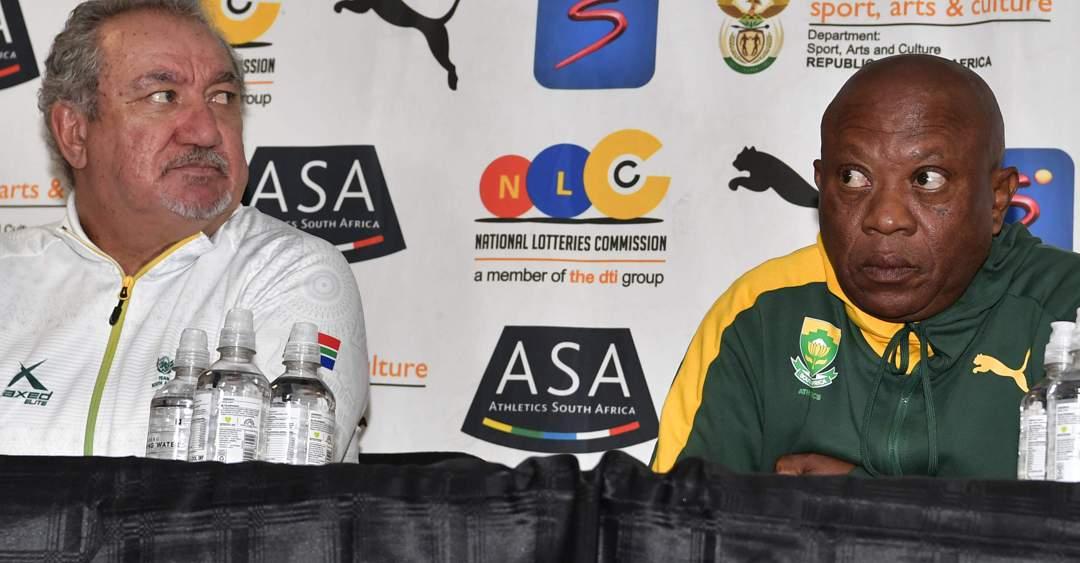
“Athletics South Africa’s governance crisis and reform plan take centre stage as World Athletics deadline approachesAthletics South Africa (ASA) is facing a critical period of governance reform after World Athletics demanded a clear recovery plan to address leadership instability, constitutional weaknesses and administrative problems. Acting president Jean Verster and an international oversight team are working towards constitutional changes and fresh elections, with the reforms intended to protect South African athletes and prevent possible international suspension.”
Athletics South Africa (ASA) is entering one of the most important periods in its administrative history as the national federation works to resolve a governance crisis that threatens its international standing and the future development of athletics in the country. With World Athletics demanding a comprehensive recovery roadmap before the end of November 2026, the organisation is under increasing pressure to demonstrate that it can restore leadership stability, introduce transparent administrative procedures and rebuild confidence among athletes, coaches, clubs, sponsors and sporting authorities.
The developments have attracted considerable attention throughout South African athletics because the consequences of the crisis extend far beyond the federation’s boardroom. South Africa has established itself as a competitive athletics nation, producing internationally recognised sprinters, middle-distance runners, field-event athletes and successful relay teams. However, continued success requires a reliable governing organisation capable of providing athletes with opportunities, resources, professional support and effective competition structures.
World Athletics demands meaningful governance changes
The immediate challenge facing Athletics South Africa is a deadline imposed by World Athletics. The international governing body has requested a clear recovery roadmap explaining how the federation intends to address its institutional weaknesses and establish a sustainable governance structure.
World Athletics representative Zakhele Dlamini has been involved in discussions with ASA leadership and other South African sporting authorities. Following meetings in Kempton Park on 14 and 15 November, Dlamini expressed confidence that the federation was making progress towards meeting the international requirements.
Importantly, ASA remains a member federation in good standing and has not been suspended. Nevertheless, the possibility of international sanctions makes the reform process particularly important.
According to reporting by Eyewitness News on 16 November, the federation must submit a credible plan before the end of November or risk further action from World Athletics.
The intervention is intended to ensure that the organisation operates according to appropriate governance standards. These include clear leadership responsibilities, accountable financial management, fair elections and constitutional provisions that prevent institutional disagreements from repeatedly disrupting administration.
The situation demonstrates why governance is essential in modern international sport. National federations are responsible for representing athletes and managing relationships with international organisations. They must therefore demonstrate transparency, financial discipline and compliance with established regulations.
Jean Verster leads the transitional administration
Acting president Jean Verster has become a central figure in the recovery process. His appointment followed significant leadership instability within the federation, including the departure of former deputy president John Mathane.
Verster previously served as chairperson of ASA’s Track and Field Commission. He was appointed acting president following a board meeting on 30 October 2026 and is expected to lead the transitional administration until the ASA Council meeting scheduled for 28 November.
His responsibility is to guide the organisation through constitutional reform, maintain administrative continuity and coordinate the development of a recovery programme acceptable to World Athletics.
During the November media briefing, Verster emphasised that the reforms should ultimately benefit athletes. His position reflects an important principle: the purpose of a national athletics federation is not simply to manage meetings and elections, but to create an environment in which competitors can develop and perform.
The federation must therefore ensure that the transition does not interrupt competitions, athlete preparation, provincial programmes or opportunities for young athletes.
Verster has also indicated his willingness to contribute to rebuilding the organisation. However, the success of the process will depend on cooperation among the board, provincial representatives, clubs and other stakeholders.
A new constitution is central to the recovery plan
One of the most important elements of the proposed reforms is the replacement of ASA’s existing constitution, which has been criticised for weaknesses that can complicate decision-making and create governance disputes.
The proposed changes include stronger election procedures, improved accountability, candidate vetting, term limits and a more balanced voting system.
These measures are intended to reduce opportunities for conflicts of interest and ensure that leadership appointments are conducted fairly.
Zakhele Dlamini has raised concerns about the previous voting arrangements, particularly where national board members could exercise voting rights both as executive members and as provincial representatives.
Such arrangements can create unequal influence between provinces and weaken confidence in the federation’s democratic processes.
An independent electoral committee is among the measures discussed as a way of improving election credibility. Candidate screening would also help ensure that individuals seeking leadership positions meet appropriate integrity and governance expectations.
The proposed constitution should establish clear responsibilities for office bearers and explain how disputes, disciplinary matters and appeals are handled.
This is particularly important because governance documents must provide practical procedures for resolving disagreements rather than allowing administrative uncertainty to undermine the organisation.
A properly developed constitution could provide a stronger foundation for ASA’s future administration and help prevent similar problems from recurring.
Leadership instability has damaged confidence
The current crisis developed following the removal of former president James Moloi after a disciplinary process concerning the use of federation funds and its corporate credit card.
His removal created an administrative vacuum that contributed to further disagreements within the organisation.
John Mathane subsequently occupied an acting leadership position before resigning from his national leadership responsibilities in November. His departure added another challenge to an already difficult transition.
The disagreements exposed weaknesses in the federation’s internal structures and raised questions about accountability, decision-making and the relationship between national and provincial leadership.
The situation has also affected public confidence in the organisation.
Athletes and supporters expect national sporting bodies to demonstrate professional standards because they represent the country internationally. When leadership disputes dominate the news, attention shifts away from competitions, sporting achievements and athlete development.
Restoring confidence will therefore require more than appointing new office bearers. ASA must demonstrate that its financial procedures, administrative decisions and governance arrangements are reliable.
SASCOC and sporting authorities support the transition
The South African Sports Confederation and Olympic Committee (SASCOC) has become involved in efforts to assist the federation.
Veteran sports administrator Dr Jacques Faul and University of Johannesburg sports director Nomsa Mahlangu have been appointed to a special task force supporting the reform process.
Their involvement is intended to provide administrative guidance and strengthen the recovery programme.
The Department of Sport, Arts and Culture has also expressed support for the intervention. Sport Minister Gayton McKenzie reportedly communicated the government’s backing for the recovery process to World Athletics.
However, the reform process must respect the principles governing international sporting autonomy. Government support and cooperation are important, but national sporting federations must maintain appropriate independence in their internal elections and sporting administration.
The involvement of experienced administrators could help ASA develop a practical recovery programme with measurable deadlines.
It also provides an opportunity to examine the federation’s financial management, institutional responsibilities and relationships with provincial structures.
Athletes remain the most important stakeholders
Although the governance crisis concerns administrators, its consequences are particularly important for athletes.
South African competitors require consistent access to competitions, qualified coaching, medical support, training facilities, travel arrangements and opportunities to participate in international championships.
Administrative instability can affect these essential services.
For developing athletes, interruptions in national programmes can be especially damaging. Young competitors need structured progression from school athletics and provincial competitions to national championships and international events.
Coaches also depend on stable competition calendars and effective communication from the governing federation.
ASA must therefore ensure that its recovery programme protects the everyday operations of athletics while constitutional changes are being introduced.
The country has recently demonstrated its potential through strong performances at the Youth Olympic Games in Dakar, where South African athletes contributed six athletics medals to the national team’s record overall medal achievement.
Those results underline the importance of investing in emerging competitors and establishing development pathways that allow young athletes to progress into senior international competition.
The federation’s administrative recovery should create better conditions for these achievements to continue.
International competitiveness requires stronger structures
South Africa’s athletics reputation depends on more than individual sporting talent.
The country has produced outstanding sprinters, relay teams, middle-distance competitors and field-event athletes. However, maintaining international competitiveness requires sustained investment in development programmes.
Recent discussions surrounding the demanding qualification standards for the 2028 Los Angeles Olympic Games have highlighted the importance of improving performance across a wider range of events.
South African athletes will need appropriate competition opportunities and professional support to meet international standards.
A stable national federation can help coordinate these opportunities by developing competition calendars, supporting provincial associations and improving relationships with international athletics organisations.
The governance reforms therefore arrive at an important time for the sport.
If implemented effectively, they could help establish a stronger administrative foundation for preparations towards future African championships, world championships and the Los Angeles Olympic Games.
The November 28 council meeting will be important
The next major development is expected at the ASA Council meeting scheduled for 28 November 2026.
Provincial representatives will have an opportunity to consider the proposed recovery roadmap and determine the next steps for the federation.
The plan envisages a six-month period for developing, consulting on and adopting a new constitution, followed by fresh board elections within three months of the adoption of the new constitutional framework.
This represents a substantial administrative undertaking.
The process will require meaningful consultation with provincial structures and other stakeholders. It must also establish realistic deadlines and clearly identify who is responsible for implementing each reform.
The council meeting will consequently provide an important indication of whether the federation’s leadership can achieve agreement on the future direction of South African athletics.
Conclusion: A defining moment for South African athletics
Athletics South Africa’s governance challenges represent a serious institutional test, but the recovery process also provides an opportunity to establish stronger foundations for the future.
The immediate priority is to satisfy World Athletics’ requirements and avoid international suspension. However, the longer-term objective should be to create a transparent, accountable and athlete-focused federation.
Jean Verster, Zakhele Dlamini, SASCOC and the wider athletics community face an important responsibility in ensuring that the proposed reforms produce practical improvements.
South African athletes should not have to carry the consequences of administrative disagreements. They deserve an organisation that supports their ambitions, protects their interests and creates opportunities for sporting excellence.
The November 28 council meeting will be an important step in determining whether the proposed reforms can move from commitments to implementation.
Ultimately, the success of this recovery will not be measured only by a new constitution or the appointment of a new board. It will be measured by whether South African athletics becomes more stable, more transparent and better equipped to develop the next generation of international champions.



