




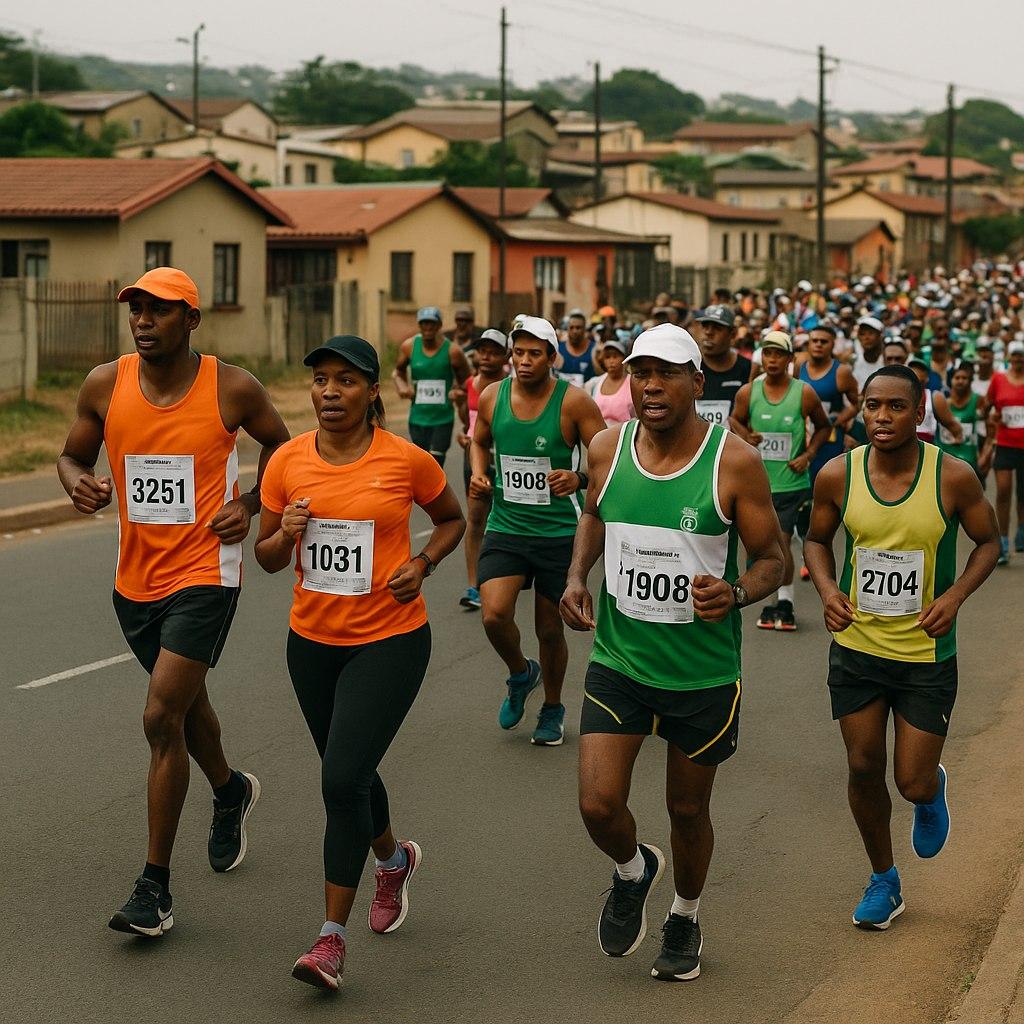
“South Africa’s road-running calendar reaches an important milestone on Sunday, 11 October 2026, as the Ethekwini Township to Township Marathon brings back its full 42km marathon distance after a nine-year absence, connecting KwaMashu, Chesterville and Umlazi in Durban. Organisers say the return restores an important opportunity for distance runners preparing for major races, while the event also supports cancer awareness through a commitment to donate 10% of entry fees towards commentator Cuan Walker’s medical expenses.“
A historic marathon distance returns to Durban
Durban, KwaZulu-Natal — South African athletics receives a welcome boost on Sunday, 11 October 2026, as the Ethekwini Township to Township Marathon returns with its full 42km distance after a nine-year absence. The race, which connects some of Durban’s best-known townships, represents more than another event on the national road-running calendar. It also demonstrates how community athletics can preserve sporting traditions, create opportunities for developing runners and unite people through a shared challenge.
According to The Top Runner, the marathon distance was removed from the event programme after the organisers lost their title sponsor, Metropolitan. Financial constraints made it difficult to maintain the full-distance race, despite its established reputation and history of attracting accomplished South African distance runners. Race director Sihle Shange has welcomed its return, describing the restoration of the marathon as overdue good news for athletes who prefer longer distances.
The 2026 event is scheduled to include both a full marathon and a half marathon. The full-distance race starts at Princess Magogo Stadium in KwaMashu, with the route passing through the wider Durban township landscape before finishing at King Zwelithini Stadium in Umlazi. The half-marathon starts separately on Sasol Bellair Road. Published event information lists a 05:00 start.
The return of the 42km distance matters because established races help maintain the depth of South Africa’s road-running culture. A marathon gives experienced competitors an opportunity to test their preparation, while providing ambitious runners with a recognised target around which to organise training, recovery and race-day strategy.
A route connecting communities through sport
The Township to Township Marathon draws its identity from the places it connects. KwaMashu, Chesterville and Umlazi are important parts of Durban’s urban and social history. Bringing a major athletic event through these communities places local residents at the centre of the sporting experience rather than restricting competition to conventional stadiums or isolated racing venues.
Road running has a particular capacity to connect communities. Unlike many sports that require specialist facilities, it can bring competition directly onto public streets, allowing residents to watch athletes pass through familiar neighbourhoods. When a race is organised effectively, it can encourage local participation, create a shared atmosphere and introduce young people to competitive sport.
For runners, meanwhile, the route provides a physical challenge that extends beyond the distance shown on a race entry form. Marathon preparation requires months of consistent training, careful pacing, appropriate nutrition and an understanding of how the body responds to prolonged exertion. Completing 42.2km is demanding even for experienced athletes, making a well-organised event essential.
The route also gives the race a distinct identity. A point-to-point course between townships differs from a circuit confined to a single neighbourhood. It creates a journey across the city, linking the starting and finishing communities through the efforts of the participants.
Organisers and local stakeholders therefore have an opportunity to make the event more than a competitive fixture. Community involvement, spectator engagement and visible support for athletes can help strengthen the relationship between road running and the places through which races take place.
The importance of qualification opportunities
One of the most significant aspects of the marathon’s return is its potential value to athletes preparing for other major South African distance races.
The race director told The Top Runner that bringing back the full marathon gives runners an opportunity to seek qualification for the Comrades Marathon and the Two Oceans Marathon. The event’s published information also identifies it as a qualifying race for both competitions.
The Comrades Marathon is one of the country’s best-known ultra-distance events, while the Two Oceans Marathon attracts substantial interest from recreational and competitive runners. For athletes targeting these races, a suitable qualifying marathon can become an important part of their preparation.
Qualification, however, is not automatic. Runners must meet the applicable requirements for the particular event and year. They also need to ensure that their performance is officially recognised and that they comply with the relevant entry conditions.
The Township to Township Marathon gives athletes another opportunity to pursue their goals, but runners should confirm the latest qualification standards and race regulations before relying on any result.
For emerging distance runners, a marathon can also serve as a significant personal milestone. It offers an opportunity to evaluate training, learn how to manage fatigue and develop the confidence needed for future competitions. Experienced athletes may use it to test their form, while first-time marathoners can treat it as the culmination of a long preparation cycle.
This broad appeal is one reason community road races remain important. They bring together runners with different ambitions, from elite competition to personal achievement, within a common sporting environment.
A proud history and the return of an established event
The Township to Township Marathon has a history that predates its current 42km format. According to the published report, the event previously featured a 50km race before becoming a standard marathon. Its past winners include accomplished athletes such as Bongmusa Mthembu, a three-time Comrades Marathon champion, as well as Comrades gold medallist Prodigal Khumalo and Two Oceans gold medallist Melly Kennedy.
That history gives the event a connection to South Africa’s wider distance-running tradition. Road racing in the country is supported by a network of clubs, training groups, volunteers and race organisers who help athletes progress from local competition to major national events.
The return of an established race distance can strengthen this network. It gives runners another event to consider when developing their annual schedules and gives clubs an opportunity to prepare groups of athletes for a shared objective.
Nevertheless, restoring a marathon requires more than enthusiasm. Organisers must coordinate route management, medical support, hydration, timing, volunteer deployment and communication with local authorities. These responsibilities become especially important when participants travel across multiple neighbourhoods.
Race-day safety must remain a priority. Marathon runners need access to water and appropriate medical assistance, while spectators and other road users need clear information about route restrictions. Reliable signage, well-positioned officials and timely communication can help the event run smoothly.
The organisers’ ability to maintain these standards will contribute to the event’s long-term reputation and its capacity to attract runners in future editions.
Financial sustainability remains a challenge
Although the marathon’s return is positive news, its history highlights the financial pressures facing road-running events.
Shange explained to The Top Runner that the loss of the title sponsor had previously forced organisers to remove the full marathon from the programme. He also indicated that new supporters had helped make the 2026 return possible, although further sponsorship remained necessary to take the event to the next level.
Sponsorship can help cover essential operating costs, including race administration, timing services, medical provision, route management and participant facilities. Without adequate financial backing, organisers may struggle to maintain the scale and quality expected of an established event.
The challenge is particularly important for community-based races. Such events may have strong local support and sporting value but lack the commercial visibility of larger international competitions.
Developing a sustainable funding model could involve partnerships with businesses, local organisations, sporting institutions and community stakeholders. Sponsors can receive visibility through event branding and public engagement, while organisers gain resources needed to improve the participant experience.
However, financial support should not be viewed solely in terms of advertising exposure. A well-supported community race can also contribute to local participation, promote physical activity and strengthen the profile of the host communities.
For the Township to Township Marathon, the return of the full distance provides a foundation on which organisers can build. Sustaining that progress will depend on maintaining event quality, communicating its value and establishing dependable partnerships for future editions.
Athletics joins the fight against cancer
The event also carries a charitable purpose. In recognition of October’s cancer-awareness campaign, organisers have committed to donate 10% of race entry fees towards medical expenses for Cuan Walker, a well-known athletics commentator who has been diagnosed with cancer.
Shange explained in the published report that the decision reflects the organisers’ desire to support someone who has contributed to the running community. The initiative also builds on the event’s previous engagement with cancer awareness.
This commitment gives the race an additional dimension. Athletes will compete for personal goals and sporting achievement, while the event will also seek to mobilise support for an individual facing a serious health challenge.
Sport regularly creates opportunities for collective action. Runners, spectators, clubs and sponsors can contribute to charitable initiatives through participation, fundraising and awareness campaigns. When these efforts are communicated transparently, they can help build solidarity across the sporting community.
For organisers, clear reporting on charitable contributions is important. Explaining how funds are calculated and transferred helps participants understand the impact of their entry fees and reinforces public confidence in the initiative.
The donation commitment does not diminish the competitive importance of the marathon. Instead, it demonstrates how an athletics event can combine sporting participation with a wider community purpose.
What the event means for South African road running
The Township to Township Marathon returns at a time when South African distance running continues to produce notable performances.
Earlier in October, Tayla Kavanagh ran 30 minutes and 50 seconds for 10km at the tRUNsylvania International 10K in Romania. The performance was reported as a South African women’s 10km record, pending ratification, and made her the first South African woman to break the 31-minute barrier over the distance. Meanwhile, Glenrose Xaba claimed a historic fourth SPAR Grand Prix title after winning the Jozi Women’s 10km Challenge in 32:26.
These achievements illustrate the range of opportunities available within athletics, from elite international competition to domestic road racing. Although the performances involve different athletes and distances, they help maintain public interest in running and provide examples for aspiring competitors.
Community races are an important part of that broader environment. They offer participation opportunities beyond the small group of athletes competing for national records and international medals. They can also help identify developing talent and connect runners with clubs, coaches and structured training programmes.
South Africa’s athletics future depends not only on exceptional performances at the top level but also on accessible pathways into the sport. Schools, community clubs and local road races all have a role in building that foundation.
The return of the Township to Township Marathon therefore represents a meaningful development, even though the event’s ultimate impact will depend on participation, organisation and continued support.
Looking ahead
Sunday’s marathon is an opportunity for Durban to celebrate its road-running culture and restore a distance that had been missing from the event since 2017. The scheduled course connects communities, offers athletes a potential qualification opportunity for major races and supports a charitable initiative for a respected member of the running fraternity.
The next challenge will be ensuring that the event can continue beyond this year’s edition. Stable sponsorship, strong operational planning, community participation and transparent fundraising could help establish a more secure future for the race.
For athletes, the immediate priority is to compete responsibly, respect race regulations and manage the physical demands of the distance. For spectators, the event provides an opportunity to support participants and celebrate the communities along the route.
For South African athletics, the marathon’s return is a reminder that the sport’s strength lies in both its elite achievements and its community foundations. Rebuilding established events can preserve sporting heritage, create fresh opportunities and encourage more people to take part.
The restoration of the full marathon is therefore more than a return to a familiar distance. It is a renewed investment in Durban’s running tradition and a chance to demonstrate how athletics can connect people through competition, perseverance and shared purpose.



