




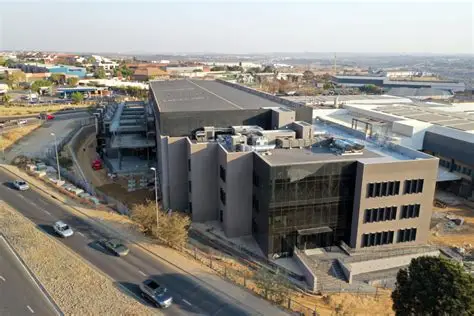
“Civil rights and civil society groups in South Africa are urging the government to pause new data centre projects, citing fears over water scarcity, electricity demand, and environmental impact. The issue has become political, with President Cyril Ramaphosa promoting South Africa as Africa’s digital hub while watchdogs warn of opaque approvals and community risks.”
South Africa is at the centre of a heated political and technological debate. As global tech giants like Amazon, Microsoft, and Equinix expand their digital infrastructure in the country, civil society groups are raising alarms about the environmental and social consequences of this boom. The controversy highlights the tension between economic modernization and sustainability, and it has quickly become a political flashpoint.
The Rise of Data Centres in South Africa
- Government Strategy: President Cyril Ramaphosa has positioned South Africa as Africa’s digital hub, noting that the country hosts 70% of Africa’s data centre capacity.
- Global Investment: Major U.S. technology companies are building hyperscale facilities, with Cape Town and Johannesburg emerging as key sites.
- Economic Promise: Officials argue that data centres will attract investment, create jobs, and integrate South Africa into the global digital economy.
Civil Society Concerns
- Water Scarcity: Cape Town narrowly avoided “Day Zero” in 2018, when taps were predicted to run dry. Activists fear new data centres could reignite water crises.
- Electricity Demand: South Africa already struggles with rolling blackouts (load-shedding). Data centres consume massive amounts of power, raising fears of worsening shortages.
- Land Use & Transparency: Groups argue that approvals lack transparency, with over 250 submissions sent to the South African Human Rights Commission demanding accountability.
Political Dimensions
- Government vs. Civil Society: The ruling party promotes digital infrastructure as a path to modernization, while opposition parties and NGOs frame it as reckless resource exploitation.
- Local Governance: Municipal approvals, such as the Equinix hyperscale facility in Cape Town, have sparked protests from residents and environmentalists.
- Global Comparisons: Similar debates are unfolding in the U.S. and Europe, where communities question the sustainability of hyperscale data centres.
The Human Rights Commission’s Role
- Investigations: The South African Human Rights Commission is leading a preliminary inquiry into the environmental and social impacts.
- Key Issues Identified: Transparency in electricity and water demand, environmental impacts, and community effects.
- Political Weight: The Commission’s involvement elevates the issue from a technical debate to a matter of rights and governance.
Economic vs. Environmental Trade-Offs
| Promise | Risk |
|---|---|
| Job creation | Water scarcity |
| Global competitiveness | Electricity shortages |
| Digital modernization | Environmental degradation |
| Attracting foreign investment | Community displacement |
Voices from Civil Society
- Activists: Call for a temporary moratorium on new projects until full environmental assessments are conducted.
- Community Leaders: Warn that rural and urban communities will bear the brunt of resource shortages.
- Academics: Stress the need for sustainable computing models, including renewable-powered data centres.
Broader Implications
- Regional Leadership: South Africa’s choices will influence how other African nations approach digital infrastructure.
- Global Tech Politics: The debate reflects the growing tension between Big Tech expansion and local governance.
- Climate Change: With climate pressures intensifying, resource-heavy projects like data centres face increasing scrutiny worldwide.
Conclusion
South Africa’s data centre boom is more than a technological story—it is a political battle over resources, rights, and the future of digital modernization. Civil society groups demand accountability, while the government insists on progress. The outcome will shape not only South Africa’s digital economy but also its democratic and environmental trajectory.



