




“The Department of Forestry, Fisheries and the Environment (DFFE) has called for urgent reforms in dust and air pollution management during the 2026 Annual Air Quality Priority Area Summit in Rustenburg. Officials emphasized that poor air quality disproportionately harms vulnerable populations, framing clean air as a fundamental right rather than a privilege.”
South Africa’s environmental policy landscape is undergoing a critical shift as the Department of Forestry, Fisheries and the Environment (DFFE) intensifies its campaign against air pollution. At the 2026 Annual Air Quality Priority Area Summit, held in Rustenburg, Deputy Minister Bernice Swarts underscored the urgency of collective accountability in tackling dust emissions and industrial pollutants. The summit’s theme, “Clean Air is Not a Privilege, but a Fundamental Right”, captured the essence of the government’s renewed commitment to environmental justice.
The Context of Air Pollution in South Africa
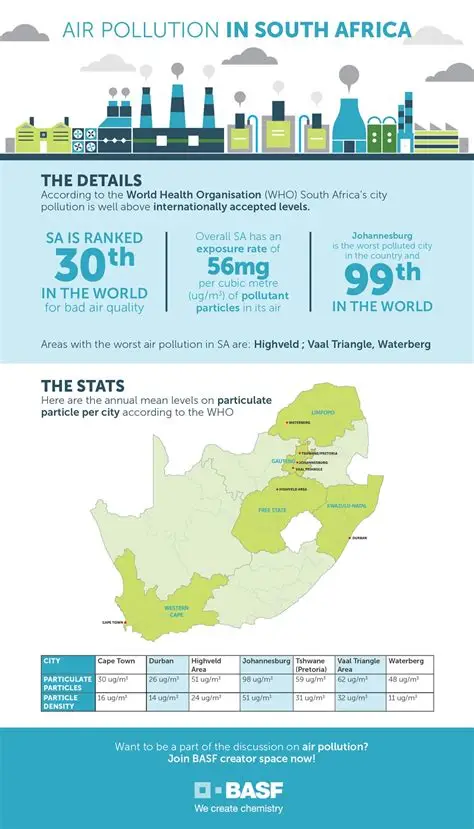
South Africa’s industrial hubs—particularly the Highveld, Vaal Triangle Airshed, and Waterberg-Bojanala regions—have long struggled with poor air quality. Heavy reliance on coal-fired power plants, mining operations, and industrial manufacturing has contributed to elevated particulate matter levels. These pollutants not only degrade ecosystems but also pose severe health risks, including respiratory diseases, cardiovascular complications, and premature deaths.
The summit highlighted that children, the elderly, and individuals with pre-existing conditions are disproportionately affected. This aligns with global research showing that vulnerable populations bear the brunt of environmental degradation.
Key Outcomes of the Summit
- Government Commitment: DFFE pledged to strengthen dust management regulations and enforce stricter compliance among industries.
- Civil Society Engagement: NGOs and community groups were encouraged to participate in monitoring air quality and holding polluters accountable.
- Academic Collaboration: Universities were tasked with expanding research into pollution mitigation technologies and health impact assessments.
- Citizen Responsibility: The summit emphasized that ordinary citizens also play a role, from reducing household emissions to advocating for cleaner energy.
Policy Shifts and Legal Framework
South Africa’s National Environmental Management: Air Quality Act (2004) provides the legal foundation for regulating emissions. However, enforcement has often been inconsistent. The summit signaled a renewed push for dust suppression technologies, stricter licensing requirements, and penalties for non-compliance.
Deputy Minister Swarts noted that clean air should be enshrined as a constitutional right, reinforcing the idea that environmental justice is inseparable from human rights.
Health and Social Implications
The summit presented alarming statistics:
- Respiratory Illnesses: Rising cases of asthma and chronic obstructive pulmonary disease (COPD) in polluted regions.
- Economic Costs: Billions lost annually due to healthcare expenses and reduced worker productivity.
- Educational Impact: Children exposed to polluted air show lower school attendance and cognitive development challenges.
Technological Innovations
South Africa is exploring dust suppression systems, renewable energy adoption, and real-time air quality monitoring networks. These innovations aim to reduce reliance on coal and provide transparent data for communities.
International Comparisons
The summit drew parallels with countries like China and India, which have implemented aggressive air quality reforms. South Africa’s challenge lies in balancing industrial growth with environmental sustainability, a tension mirrored across the developing world.
Voices from the Summit
- Government Officials: Called for stricter enforcement and community partnerships.
- Industry Leaders: Expressed concerns about compliance costs but acknowledged the need for sustainable practices.
- Civil Society: Advocated for grassroots monitoring and stronger legal protections.
Conclusion
The Rustenburg summit marks a turning point in South Africa’s environmental governance. By framing clean air as a fundamental right, the DFFE is pushing for a paradigm shift that integrates health, justice, and sustainability. The challenge ahead lies in translating policy commitments into tangible outcomes, ensuring that vulnerable populations are protected, and that South Africa moves closer to a cleaner, healthier future.



