




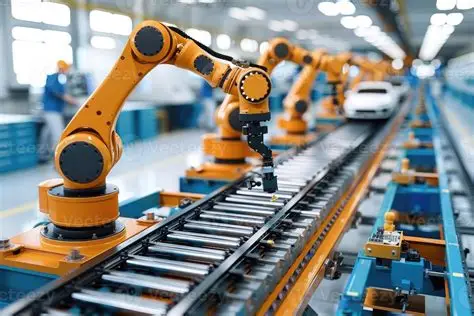
“The CSIR unveiled cutting-edge robotics systems at the Manufacturing Indaba 2026 in Johannesburg, highlighting applications in precision manufacturing, automated assembly, and industrial inspection. These innovations aim to strengthen South Africa’s industrial base, reduce reliance on imports, and position the country as a leader in innovation-driven manufacturing.”
South Africa’s manufacturing sector is undergoing a profound transformation, driven by the integration of robotics and advanced technologies. At the Manufacturing Indaba 2026, held at the Sandton Convention Centre in Johannesburg, the Council for Scientific and Industrial Research (CSIR) showcased a suite of robotics innovations that promise to reshape the country’s industrial landscape. With the theme “Made in Africa: Scaling Growth, Shaping Trade”, the event underscored the importance of localization and regional competitiveness under the African Continental Free Trade Area (AfCFTA).
Robotics at the Forefront
Among the technologies presented, robotics emerged as the most transformative. CSIR researchers demonstrated robotic systems capable of:
- Precision manufacturing – ensuring accuracy in complex production processes.
- Automated assembly – reducing production time and minimizing human error.
- Industrial inspection – guaranteeing consistent product standards.
These systems are not confined to research laboratories; they are already being integrated into production lines, warehouses, and even healthcare applications. The overarching goal is clear: reduce reliance on imported machinery, enhance localization, and strengthen South Africa’s competitiveness in global markets.
Economic and Policy Context
The South African government has prioritized industrial localization as a strategic pillar to reduce dependency on imports and create jobs. Robotics aligns with this vision by enabling local manufacturers to produce high-quality goods at competitive costs. By embedding robotics into industrial processes, South Africa can:
- Boost efficiency – automated systems streamline workflows.
- Lower costs – localized robotics manufacturing reduces reliance on costly imports.
- Expand sectors – applications extend beyond manufacturing into logistics, healthcare, and agriculture.
Complementary Technologies
The robotics showcase was complemented by other advanced manufacturing technologies, including:
- Metal 3D Printing – enabling rapid prototyping and customized production.
- Hot Isostatic Press (HIP) – improving material strength and durability.
- Laser Surface Engineering – enhancing industrial component longevity.
- Materials Engineering – supporting sustainable and eco-friendly manufacturing.
Together, these technologies form an ecosystem where robotics plays a central role in automation and efficiency.
Strategic Impact on Manufacturing
Robotics is expected to significantly impact South Africa’s industrial competitiveness. By reducing reliance on imported machinery, the country can strengthen its domestic supply chains and foster resilience against global disruptions. Moreover, robotics-driven efficiency gains will allow South African manufacturers to compete more effectively in international markets, particularly within the AfCFTA framework.
Challenges and Risks
While the promise of robotics is immense, challenges remain:
- Skills gap – South Africa must invest in training to ensure workers can operate and maintain advanced robotics systems.
- Capital investment – robotics integration requires significant upfront costs, which may be prohibitive for small and medium enterprises (SMEs).
- Policy alignment – regulatory frameworks must evolve to support innovation while safeguarding labor rights.
Future Outlook
The CSIR’s robotics showcase signals a new era for South African manufacturing. By embracing robotics and complementary technologies, the country is positioning itself as a hub for innovation-driven industrial growth. The long-term vision is to create a resilient, competitive, and inclusive manufacturing sector that contributes to economic development and job creation.



