




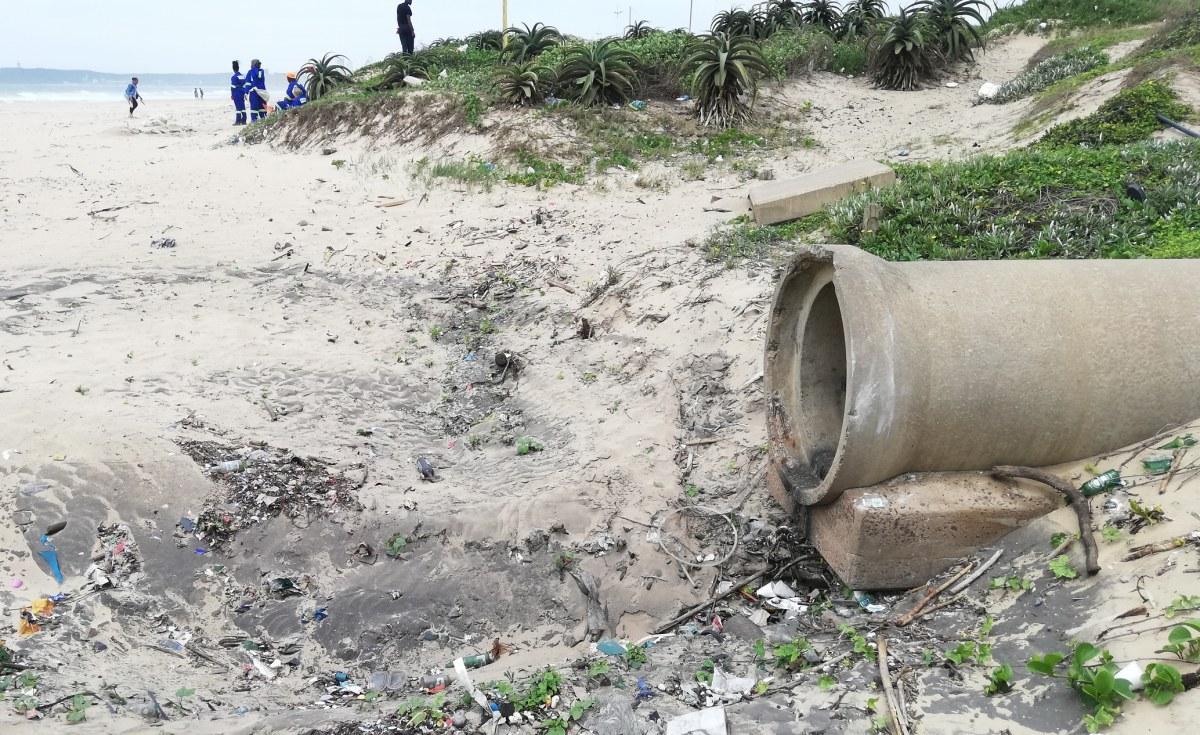
“eThekwini Municipality has suffered a major legal setback after the KwaZulu-Natal High Court rejected its attempt to appeal an order requiring it to address persistent untreated sewage spills, improve wastewater infrastructure and publish regular E. coli results for swimming beaches. The ruling has significant public-health implications because contaminated rivers, beaches and residential environments can expose communities to pathogens while highlighting the importance of reliable sanitation, environmental monitoring and municipal accountability.”
South Africa’s public-health debate has received a significant new development after the eThekwini Municipality lost its attempt to appeal a High Court judgment concerning persistent sewage spills and deteriorating wastewater infrastructure. The decision places renewed pressure on one of the country’s largest municipalities to improve sanitation systems, protect water resources and provide residents with reliable information about the safety of beaches and other public environments.
The matter is important beyond the legal dispute because sanitation is a fundamental public-health issue. When wastewater systems fail, untreated sewage can enter rivers, streams, residential areas and coastal waters. This can create conditions in which people may be exposed to harmful microorganisms and contaminated environments. The latest court decision therefore raises questions about how municipalities should respond when infrastructure failures become prolonged public-health risks.
The KwaZulu-Natal High Court ruled on 30 September that eThekwini had no reasonable prospects of success in its attempt to appeal an earlier judgment. The municipality had sought permission to challenge the December 2025 ruling, but the full bench dismissed the application for leave to appeal, with costs. The judgment means that the obligations imposed on the municipality remain a central requirement as it deals with its wastewater problems.
Among the requirements is an obligation to explain how the city intends to comply with legally binding compliance notices and directives concerning inadequate wastewater treatment. The municipality must also publish weekly E. coli readings for swimming beaches, including through its social-media platforms, obtain necessary authorisations for wastewater treatment works operating without required water-use licences, and develop a detailed action plan addressing infrastructure problems.
The significance of E. coli monitoring is particularly important from a public-health perspective. E. coli is commonly used as an indicator of faecal contamination in water. Elevated readings can indicate that water has been contaminated with material containing microorganisms associated with human or animal waste. While an E. coli result does not by itself identify every pathogen present, monitoring provides an important warning mechanism for authorities and members of the public.
For residents, transparent water-quality information can help people make safer decisions about recreational activities. This is especially relevant in a coastal city where beaches are important for recreation, tourism and local economic activity. If wastewater enters rivers that eventually reach the ocean, contamination can become an environmental and public-health concern extending beyond the immediate location of a sewage failure.
The court case followed years of concern about wastewater management in eThekwini. According to the court record, government authorities had issued compliance notices and directives addressing sewage and wastewater problems as far back as 2021 and 2022. The legal dispute therefore did not concern a single isolated infrastructure failure but a broader pattern of problems that had persisted over several years.
The municipality argued that some of its difficulties were linked to factors including the devastating KwaZulu-Natal floods of 2022 and vandalism. It also argued that its wastewater infrastructure had been designed to serve a smaller population and that municipal expansion had placed pressure on ageing systems. However, the court found that several problems predated the 2022 floods and had remained unresolved for years.
This distinction is important for public-health planning. Extreme weather events can unquestionably damage sanitation infrastructure. Flooding can overwhelm wastewater systems, damage pipelines and pump stations and increase the possibility of contaminated water spreading through communities. Nevertheless, a resilient public-health system must also have plans for maintenance, emergency repairs, monitoring and long-term infrastructure replacement.
The court’s decision therefore places infrastructure management alongside environmental protection and public health. South Africa’s Constitution recognises the right of everyone to an environment that is not harmful to their health or wellbeing. The December 2025 judgment found that eThekwini had breached several environmental and water-related legal requirements, while the subsequent appeal ruling confirmed that the municipality had not established sufficient grounds for challenging the findings.
The implications extend beyond Durban. Municipalities across South Africa face challenges involving ageing infrastructure, population growth, maintenance backlogs, financial pressures and service-delivery failures. Where wastewater treatment systems deteriorate, the consequences can include environmental pollution, unpleasant living conditions, beach closures and increased concerns about exposure to contaminated water.
Public-health protection therefore cannot depend only on hospitals and clinics. Prevention begins with basic infrastructure. Safe water, effective sanitation, waste management, functioning drainage and environmental monitoring are all essential components of a healthy community.
The eThekwini case also highlights the importance of public communication. Residents cannot make informed decisions about environmental risks if they do not have access to accurate and timely information. The court-ordered requirement to publish weekly E. coli readings is consequently significant because it creates a mechanism through which residents can monitor beach-water conditions.
The municipality has said that it is already publishing beach-water-quality information on its website and that it has been complying with the December judgment while challenging certain aspects of it. However, the latest court ruling means that the municipality must now focus on implementing the required measures rather than relying on further appeal proceedings.
There is also an economic dimension to the crisis. Durban and the wider eThekwini region depend heavily on tourism, hospitality, recreation and coastal activities. Poor water quality can undermine public confidence and create reputational damage for a destination that relies on its beaches. Consequently, investment in wastewater infrastructure should be viewed not simply as an engineering expense but as an investment in health, environmental protection and economic resilience.
The case also demonstrates the role that courts can play in enforcing environmental and public-health responsibilities. When administrative directives are not adequately implemented, litigation can become a mechanism through which affected communities and political organisations seek accountability. In this matter, the legal action involved challenges brought by the Democratic Alliance, with ActionSA pursuing separate proceedings concerning water and sewage management.
However, court victories alone cannot repair broken infrastructure. The long-term solution requires sustained municipal planning, adequate funding, skilled technical personnel, preventative maintenance and transparent reporting. It also requires authorities to identify vulnerable wastewater facilities before failures become emergencies.
For communities, the immediate concern is safety. Residents should pay attention to official warnings about contaminated water and avoid entering water where authorities have advised against recreational use. Communities can also report sewage spills and infrastructure failures to relevant municipal authorities, particularly where sewage is entering streets, rivers or other public areas.
For policymakers, the broader lesson is that sanitation must remain central to South Africa’s public-health agenda. Disease prevention begins long before a patient reaches a clinic. A functioning wastewater system can prevent contamination; a failing one can create risks that spread across entire communities.
The eThekwini ruling consequently represents more than another municipal legal setback. It is a reminder that environmental management, infrastructure and public health are closely connected. The court has reaffirmed that prolonged sewage problems cannot simply be treated as ordinary service-delivery difficulties when they affect water resources, communities and human wellbeing.
As eThekwini considers its next steps, the public-health priority should be clear: prevent untreated sewage from entering the environment, restore failing wastewater facilities, provide reliable water-quality information and ensure that residents are protected from avoidable environmental hazards.
The ruling creates an opportunity for the municipality to move from prolonged dispute towards measurable action. For the millions of people who live, work and travel in the eThekwini region, the success of that response will ultimately be judged not by legal arguments but by cleaner waterways, safer beaches, functioning sanitation infrastructure and a healthier environment.



