




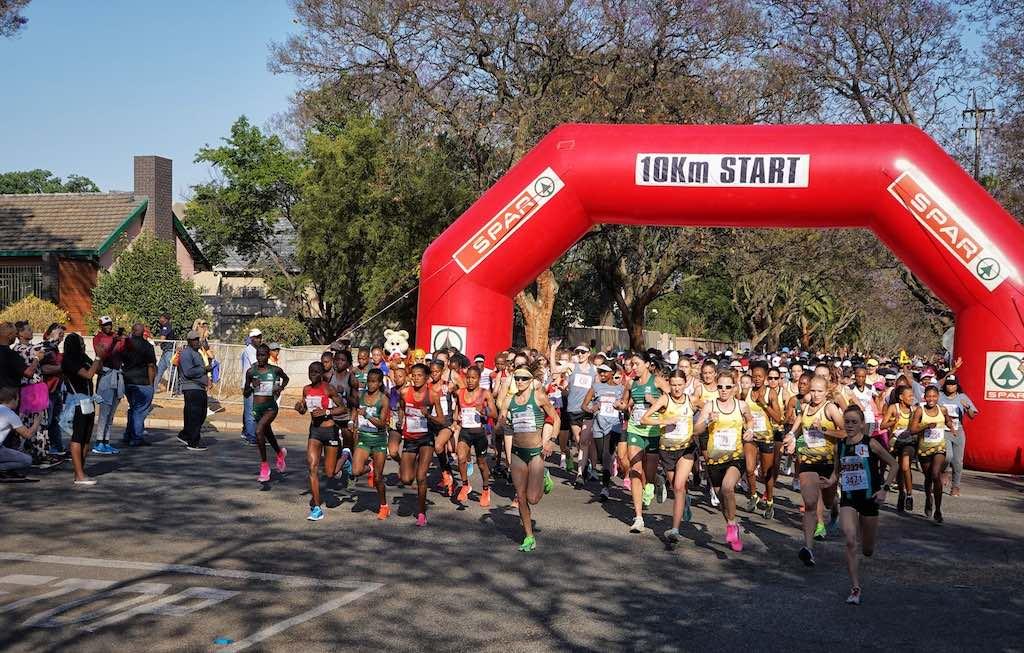
“Thousands of participants are gathering in Johannesburg today for the 2026 SPAR Women’s Challenge Jozi, a major 5km and 10km running and walking event at Marks Park Sports Club. The event highlights the growing role of accessible physical activity in promoting fitness, social connection, confidence and healthier lifestyles among South African women.”
Johannesburg puts fitness and women’s wellness in the spotlight
Johannesburg is placing physical activity, community participation and women’s wellness at the centre of attention today as the 2026 SPAR Women’s Challenge Jozi takes place at Marks Park Sports Club in Emmarentia.
The event offers two principal distances, a 5km Fun Run and a 10km Run/Walk, with both starting at 08:00. The official event information says entries were limited to 15,000 participants, while current race information confirms that the event is sold out.
Although road races are often associated with competitive athletes and personal-best times, the Johannesburg challenge has a much broader fitness message. It is designed to accommodate people at different levels of physical ability, from experienced runners to recreational walkers and participants who may simply want to become more active.
That accessibility is important because fitness is not only about elite performance. Regular movement, walking, running and other forms of physical activity can form part of a healthier lifestyle, while community-based events can make exercise more enjoyable and motivating.
The 2026 event carries the theme #CelebrateHer, placing women and their individual journeys at the heart of the challenge. The organisers describe the event as a celebration of every woman, every pace and every story, reinforcing the idea that participation does not have to be measured solely by speed or finishing position.
A fitness event designed for different levels of ability
One of the most significant features of the Johannesburg challenge is the availability of different distances.
The 10km Run/Walk provides a more demanding fitness challenge for participants who want to test their endurance, while the 5km event creates a shorter and potentially more approachable option for recreational participants and newcomers.
According to the official race information, the 10km Challenge is open to female runners aged 14 and older, while the 5km Fun Run is open to female participants aged nine and older. The organisers also state that men may participate, although they are not eligible for prizes.
This range demonstrates how organised fitness events can create opportunities for people with different levels of experience. Someone preparing for a 10km race may approach the event as a serious endurance goal, while another participant may simply use the 5km distance as motivation to walk more regularly.
For public health, that distinction matters. A fitness culture does not need to be built entirely around intense workouts. Walking, recreational running and gradually increasing physical activity can all contribute to a more active lifestyle.
The social environment also matters. Running alongside friends, relatives, colleagues and other community members can create accountability and encouragement that may be difficult to achieve when exercising alone.
Why community matters to fitness
The SPAR Women’s Challenge is also an example of how fitness can extend beyond the gym.
Gyms and fitness centres remain important places for structured exercise, strength training and cardiovascular workouts. However, community road races provide a different environment. They combine physical activity with social interaction, shared goals and a sense of occasion.
The official SPAR information describes the Johannesburg event as a gathering for women of different ages, shapes and fitness levels. The challenge has been held at Marks Park Sports Club since moving from Wanderers Stadium in 2017, and the organisers say the event has continued to attract runners, walkers and supporters.
That community dimension can be particularly valuable for people who struggle with motivation.
Preparing for a specific event gives participants a tangible objective. Instead of simply deciding to “exercise more”, a person can establish a target such as completing 5km. Training can then be organised around that goal.
For beginners, the process can involve gradually increasing walking time and distance. More experienced participants may incorporate running intervals, endurance sessions and recovery days. In both cases, the event provides a deadline and a reason to remain consistent.
Fitness is about more than competition
The competitive side of the event should not be overlooked. The Johannesburg challenge is connected to the SPAR Grand Prix Series, which features elite female athletes competing for points and prize money. The official series information confirms that the Jozi event is part of the 2026 calendar and has a 15,000-participant limit.
However, the presence of elite runners does not make the event exclusively competitive.
This combination of elite and recreational participation is one of the strongest aspects of large-scale running events. Highly trained athletes can compete at a professional level while ordinary participants focus on their own personal goals.
For one runner, success may mean winning. For another, it may mean completing 10km without stopping. For a first-time participant, simply crossing the finish line can represent a significant achievement.
That broad definition of success can make fitness more sustainable.
When exercise is connected exclusively to appearance, weight or competition, some people may become discouraged. By contrast, goals such as improving endurance, completing a distance, spending time outdoors or participating with friends can create a more positive relationship with physical activity.
Johannesburg event reflects wider running culture
The SPAR Women’s Challenge Jozi is taking place during a particularly active period on South Africa’s running calendar.
Current event listings show numerous road-running and trail-running events scheduled across the country in early October, including races in Gauteng, KwaZulu-Natal and the Western Cape. The South African endurance calendar lists several events for 4 October, demonstrating the strength of the country’s recreational running culture.
Another running calendar lists the Johannesburg challenge as a verified event and confirms its 5km and 10km distances, 08:00 start and Marks Park location. It also records the race as sold out, indicating substantial demand.
This activity is significant from a health perspective because running and walking are among the most accessible forms of physical activity. They do not necessarily require expensive equipment or a gym membership.
A participant needs suitable footwear, appropriate clothing, a safe route and enough preparation for the chosen distance. Community races can therefore provide a relatively straightforward entry point into organised fitness.
Preparation and responsible participation remain important
While large fitness events can be exciting, participants still need to approach exercise responsibly.
Anyone beginning a new fitness programme should increase activity gradually rather than attempting to make dramatic changes immediately before an event. Adequate hydration, appropriate nutrition, sleep and recovery are important parts of preparation.
Participants should also listen to their bodies. Persistent pain, dizziness, unusual shortness of breath or other concerning symptoms should not simply be ignored in pursuit of a finishing time.
For new runners, walking is not a failure. A combination of walking and running can be an effective way to build endurance, particularly for people who have not exercised regularly.
The event itself provides practical support, including refreshment points, medical support, toilets and facilities for participants. Current race information also confirms the availability of water points and medical assistance.
These measures are important because large gatherings of physically active people require appropriate race-day planning and participant support.
The wider message for South African fitness
The biggest significance of today’s Johannesburg event may not be the final results.
Its broader importance lies in the number of people being encouraged to move.
A major community fitness event can introduce people to exercise, encourage inactive individuals to take their first steps and help experienced participants maintain an active routine.
The #CelebrateHer theme also gives the event a wider social dimension. Rather than presenting fitness as a narrow pursuit reserved for professional athletes, the campaign encourages participants to celebrate strength, participation and individual progress.
That approach reflects a broader understanding of wellness.
Physical fitness can contribute to everyday function, confidence and quality of life. Exercise can also provide opportunities for social interaction and personal achievement. For communities, organised physical activity can create shared experiences that bring people together.
The Johannesburg challenge therefore sits at the intersection of sport, fitness and health.
Looking beyond race day
The greatest health benefit of an event such as the SPAR Women’s Challenge Jozi may ultimately come from what participants do after the race.
Completing a 5km or 10km event can become the beginning of a longer fitness journey rather than its conclusion.
Participants can continue walking, running, cycling, swimming, strength training or taking part in other forms of movement. Someone who started preparing for 5km might eventually progress to 10km, while another person may decide that regular walking is the most sustainable form of exercise for them.
The important point is consistency.
Fitness does not need to mean exercising at maximum intensity every day. Sustainable activity is built through realistic routines that people can maintain alongside work, family and other responsibilities.
For Johannesburg and South Africa more broadly, today’s challenge provides a highly visible reminder of that principle.
Conclusion
The 2026 SPAR Women’s Challenge Jozi stands out as today’s most significant fitness-focused development taking place in South Africa, even though I could not verify a major fitness news article published today itself.
With 5km and 10km options, a 15,000-person capacity and a sold-out status, the event demonstrates the continuing popularity of organised running and walking in Johannesburg.
More importantly, it presents fitness as something that can be social, inclusive and personally meaningful.
For elite runners, today’s race is an opportunity to compete. For recreational participants, it is a chance to move. For beginners, it can represent a first step toward a more active lifestyle.
That is ultimately the strongest health message from the event: fitness does not have to look the same for everyone. What matters is finding a safe, sustainable and enjoyable way to keep moving.



