




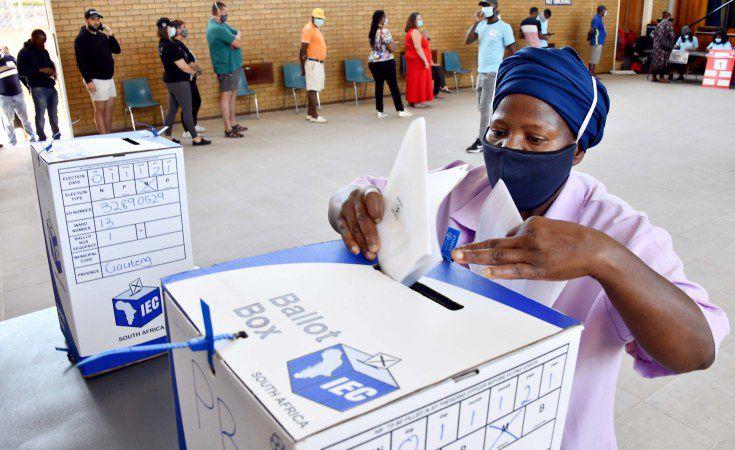
“South Africa’s Electoral Commission (IEC) is working to complete the printing of election ballots by Friday, 30 October, ahead of the 4 November 2026 local government elections, following a Constitutional Court ruling that affected candidate lists and required additional ballots. The challenge places ballot production, distribution, voter access and public confidence under close scrutiny as political parties prepare for an election shaped by municipal service-delivery concerns and competition for control of local councils.”
South Africa’s Election Countdown Intensifies as IEC Works to Finalise Ballots Before 4 November Polls
Court ruling creates additional work for election officials
South Africa’s preparations for the 2026 local government elections have entered a critical phase, with the Independent Electoral Commission (IEC) working to finalise ballot printing, coordinate election logistics and prepare voting stations ahead of polling day on 4 November. The immediate challenge follows a Constitutional Court ruling that restored the participation of African National Congress (ANC) candidates previously excluded from the elections and extended an opportunity to submit candidate lists to other political parties in similar circumstances.
The ruling has added pressure to an already demanding election timetable. Although the commission has maintained that it is working towards completing preparations on schedule, the additional printing requirements have placed ballot production and distribution at the centre of the final preparations.
The elections will determine the composition of municipal councils across South Africa. These councils make decisions affecting residents’ daily lives, including local infrastructure, water provision, sanitation, waste collection, electricity distribution where municipalities are responsible, and other essential services.
Consequently, the administrative work required to deliver the election is not simply a technical matter. It is fundamental to ensuring that eligible voters can participate and that the eventual results accurately reflect the choices expressed at the ballot box.
Constitutional Court ruling changes candidate-list arrangements
The dispute arose after the ANC failed to complete the required final submission process for some of its candidates through the IEC’s electronic nomination system before the deadline of 28 August 2026. The commission had excluded 181 ANC candidates from contesting in six municipalities, prompting the party to pursue legal remedies.
On 15 October, the Constitutional Court ruled in the ANC’s favour. The affected candidates were to be included in the electoral process, requiring the commission to adjust its preparations.
The IEC subsequently extended the opportunity to submit candidate lists to 32 other political parties that had been in a similar position. Those parties were contesting in 121 municipalities, according to reporting by EWN.
The legal dispute highlighted the relationship between compliance with electoral procedures and the constitutional rights associated with democratic participation. Political parties must meet prescribed requirements, but election administration must also operate within the constitutional framework governing political participation and voting.
The commission had initially defended its application of the submission deadline. Following the judgment, however, it committed to implementing the court’s order and respecting the legal process.
The decision therefore introduced an additional operational requirement shortly before the election. Ballot papers had to reflect the revised candidate arrangements, while election officials continued preparing voting materials and coordinating distribution.
Additional ballot printing puts pressure on the timetable
The commission’s revised printing programme has become one of the most closely watched aspects of the election preparations.
According to EWN’s reporting on 16 October, the IEC expected to produce an additional 6.6 million ballot papers after the judgment, bringing the total requirement for the affected process to approximately 33 million. The commission had already printed 27 million of that revised total at the time of the report.
The figures illustrate the scale of the challenge. Ballots must be produced according to the relevant electoral contests and candidate lists, checked for accuracy and delivered to the correct locations. Errors could cause confusion, delay voting or require corrective action.
The IEC has identified 30 October as the target for completing the additional printing. That deadline leaves only a short period before special voting begins on 2 November and general voting takes place on 4 November.
The timetable also means that printing is only one part of the task. Completed materials must be accounted for, packed and transported through the election supply chain. The commission must ensure that the correct ballots reach the appropriate municipalities and voting stations.
The available reporting indicates that the IEC has been working to meet the deadline. However, the final outcome should be assessed against confirmed updates from the commission rather than assumptions that all logistical stages have already been completed.
Electoral administration and public confidence
The additional work has drawn attention to the IEC’s ability to maintain confidence in election administration while responding to legal developments.
The commission is responsible for conducting elections independently and impartially. Its duties include registering voters, managing candidate nominations, preparing ballots, arranging voting stations, recruiting and training election officials, overseeing voting and counting, and announcing results.
Each stage depends on accurate information and coordination. Candidate-list changes must be reflected in ballot production, while voting officials must understand the procedures applicable to the elections they administer.
The commission’s response to the court ruling will therefore be judged not only by whether ballots are printed on time, but also by whether the correct materials reach the correct places and voters can exercise their rights without unnecessary obstacles.
The IEC has also undertaken measures to strengthen election-system integrity. Its preparations have included independent auditing and opportunities for political parties to examine the election results system. Five parties identified in the commission’s 14 October update had designated information and communications technology experts to review the system.
Such measures are important because confidence in elections depends on both reliable procedures and public understanding of how those procedures work. Parties, observers, journalists and civil society organisations all have roles in monitoring the process and raising concerns through appropriate channels.
Municipal performance remains central to the campaign
While ballot printing has become an immediate administrative priority, the election itself concerns the future direction of local government.
Municipal councils are responsible for decisions that directly affect residents and businesses. These include budgeting, infrastructure priorities, local development planning and oversight of municipal administration.
Issues such as unreliable services, deteriorating infrastructure, unemployment and rising living costs have featured prominently in the wider election debate. Reuters’ 26 October analysis identified Johannesburg, Tshwane, Cape Town, eThekwini and Ekurhuleni among the metropolitan areas attracting particular attention ahead of the polls.
These contests matter because municipal governments operate close to communities. Residents can evaluate elected representatives against practical outcomes, including whether roads are maintained, refuse is collected, water systems function and municipal finances are managed transparently.
However, local election results cannot be understood through national political arguments alone. Municipal conditions differ considerably, and the performance of individual councils may reflect local leadership, administrative capacity, revenue collection, infrastructure constraints and relationships between political parties.
The election will provide an opportunity for voters to assess those circumstances and decide which candidates and parties they want to represent their communities.
Coalitions add another dimension to the election
The structure of municipal government is also an important consideration, particularly in councils where no party secures an outright majority.
Coalition arrangements can allow parties to share responsibility for governing a municipality. They can also create difficulties when partners disagree over budgets, appointments or policy priorities.
Reuters’ election analysis has highlighted the experience of coalition instability in major metropolitan areas, including Johannesburg and Tshwane.
For voters, the implications extend beyond which party receives the largest share of votes. Council composition can affect the selection of mayors, the approval of budgets and the stability of governing arrangements.
Political parties have therefore been campaigning not only on their individual records and proposals, but also on the type of municipal leadership they would seek to establish.
Nevertheless, coalition outcomes will depend on the actual results and subsequent negotiations. No reliable conclusion about the composition of a particular council can be drawn before the votes have been counted and the relevant procedures completed.
Voter participation and election accessibility
The IEC’s logistical responsibilities must ultimately support voters, including people who require additional assistance to participate.
In its 14 October readiness update, the commission reported that 2,655,067 special-vote applications had been approved, substantially exceeding the comparable figure for the 2021 local government elections. These applications covered home visits for people unable to travel because of physical infirmity or disability, as well as voting-station visits for people unable to vote on ordinary polling day. Special voting is scheduled for 2 and 3 November.
The figures underline the importance of planning for different voter needs. Special-voting arrangements require appropriate staffing, scheduling and verification, while voting stations must be prepared to assist eligible voters in accordance with electoral rules.
Voter education is equally important. People should verify their registered voting stations, understand the identification requirements and obtain information from official sources rather than relying on unverified social-media messages.
The IEC has encouraged registered voters to check their voting-station details ahead of election day. Its readiness programme has also included public information initiatives and measures intended to address election-related disinformation.
These measures become particularly important when political disagreements or administrative changes generate competing claims about eligibility, candidate participation or the voting process.
Security and election-day coordination
Security is another consideration during the final preparations. Election authorities and law-enforcement agencies must coordinate to protect voters, election workers, materials and voting facilities while respecting the rights of citizens to participate peacefully.
The Presidency announced plans for the deployment of 510 members of the South African National Defence Force to KwaZulu-Natal to assist police in maintaining security ahead of the elections. The deployment was reported by SABC News on 27 October.
Security arrangements must operate alongside transparent election procedures. Political parties should be able to campaign lawfully, voters should be able to reach voting stations safely, and any allegations of intimidation or electoral misconduct should be addressed through appropriate authorities.
The presence of security personnel does not itself establish that an election is unsafe. Rather, such deployments form part of the authorities’ stated response to specific security concerns and their preparations for the period surrounding the vote.
What happens next
The remaining days before 4 November will test the coordination of ballot production, distribution, staffing, special voting and voter communication.
The immediate milestones include the completion of additional ballot printing by the end of October, the special-voting period on 2 and 3 November, and general polling on 4 November. Election officials must also ensure that counting, results verification and public reporting proceed according to established procedures.
For the IEC, the priority is to implement the Constitutional Court’s ruling while maintaining the accuracy and integrity of the election. For political parties, the remaining campaign period offers an opportunity to present their municipal priorities and encourage supporters to participate lawfully. For voters, it is a chance to examine candidates’ records, compare proposals and make independent decisions.
The broader significance of the election will emerge through the results and the governing arrangements that follow. Those outcomes will help determine how municipalities are led and how local priorities are addressed over the next council term.
Ultimately, successful election administration requires more than meeting a printing deadline. It depends on accurate ballots, accessible voting arrangements, trained officials, effective security coordination and public confidence in the process. As South Africa approaches polling day, the IEC’s ability to complete the remaining preparations will be an important part of ensuring that the elections proceed in accordance with the law and that eligible voters can exercise their democratic rights.



