




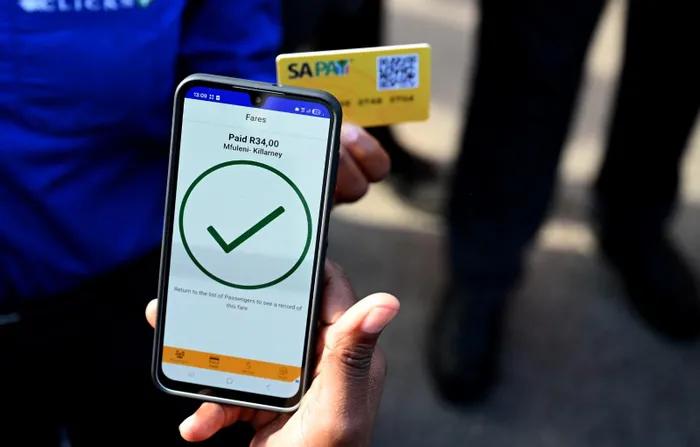
“South Africa’s Department of Transport is piloting cashless payment systems in the minibus taxi industry, using commuter cards and smartphone payments to reduce cash-handling risks and improve operators’ financial records. Transport Minister Barbara Creecy says the initiative could strengthen taxi businesses’ access to formal financial services while supporting the broader transition towards digital payments.”
South Africa Accelerates Cashless Taxi Payments as Government Seeks Greater Financial Inclusion
Government expands efforts to modernise taxi payments
South Africa is intensifying efforts to modernise payments in its minibus taxi industry, with the Department of Transport piloting cashless systems designed to reduce reliance on physical money and improve financial visibility across the sector.
Transport Minister Barbara Creecy disclosed the government’s latest initiatives in response to a parliamentary question from MP Katherine Christie, according to reporting published by Daily Investor on Thursday, 5 November 2026. The programme includes commuter cards and smartphone-based payments intended to replace cash fares while creating verifiable transaction records.
The development represents an important intersection between South Africa’s banking industry, financial technology providers and informal economic activity. Although cash remains widely used in everyday transactions, government and financial institutions increasingly view electronic payments as an opportunity to improve security, financial inclusion and business transparency.
Creecy said the department had been working towards digital payment adoption for years, including cooperation with the South African Reserve Bank (SARB) and the Payments Association of South Africa. The department has also supported the South African National Taxi Council (SANTACO) in developing digital payment initiatives.
Cashless systems target financial challenges in the taxi industry
South Africa’s minibus taxi industry plays a critical role in transporting commuters to workplaces, schools, healthcare facilities and commercial centres. However, many operators have historically relied on cash transactions, creating challenges around revenue management, security and financial administration.
The government’s current pilot projects seek to address these issues by introducing electronic fare collection systems.
Under the proposed approach, passengers can pay using commuter cards or smartphones rather than handing cash to drivers. These transactions generate electronic records that can provide operators with clearer information about their revenue.
According to Creecy, the technology improves revenue visibility, reduces cash-handling risks and creates payment histories that may support access to formal financial services.
This is significant because businesses with documented income and reliable transaction histories may be better positioned to demonstrate financial activity when applying for banking products.
For taxi operators, improved financial records could potentially support access to business accounts, financing, insurance and other services, depending on the requirements of individual financial institutions.
However, electronic records alone do not guarantee credit approval. Banks must still assess affordability, repayment capacity, business risks and applicable regulatory requirements.
Government works with payment providers
The Department of Transport is working with four automated fare collection providers to customise and implement sustainable payment solutions for the taxi industry.
The initiative builds on previous regulatory and institutional efforts.
Creecy indicated that the department began promoting digital payments in 2011 through Integrated Fare Payment Regulations. Cooperation with the SARB and the Payments Association of South Africa helped establish the framework supporting these developments.
SANTACO is also financing a separate pilot project in Gauteng, while an automated smart-card system already operates within parts of the Western Cape taxi industry.
These developments demonstrate that the transition is not dependent on a single technology provider or one national rollout.
Instead, different payment systems and partnerships are being tested to establish practical solutions for operators and passengers.
The government’s challenge will be ensuring that these initiatives can eventually operate sustainably, without imposing unnecessary costs or complexity on taxi businesses and commuters.
Banking industry faces new opportunities
The expansion of cashless payments creates potential opportunities for South African banks and payment technology companies.
Digital transactions can increase demand for payment processing, transaction accounts, electronic wallets, merchant services and business financial management products.
Banks could also benefit from greater visibility into the financial activities of previously underserved businesses.
For taxi operators, digital payment records may help establish more consistent financial histories. This could make it easier for participating businesses to engage with financial institutions and demonstrate their commercial activity.
However, the benefits will depend on how payment systems are designed, how transaction information is managed and whether operators can access useful financial services.
The initiative also introduces competition between traditional banking institutions and fintech companies.
South Africa’s payments sector includes established banks alongside businesses specialising in payment processing, digital wallets and merchant technology.
Financial Mail’s Michael Avery highlighted this competitive pressure in his 5 November analysis, which examined the growing challenge fintech companies pose to traditional banking payment revenues.
The taxi industry’s transition could strengthen this competition as additional businesses and consumers become active participants in digital payments.
Cash remains important despite digital growth
South Africa’s movement towards digital transactions does not mean cash has disappeared.
Daily Investor reported that 56% of transactions remain cash-based, with cash usage particularly important among lower-income consumers.
The report also cited Reserve Bank estimates placing the annual cost associated with cash usage at approximately R90 billion.
These costs include withdrawal and deposit fees, time spent queuing, crime and cash losses.
Nevertheless, cash remains attractive because it is familiar, accessible and does not necessarily require a smartphone, digital account or electronic payment infrastructure.
For many commuters, small cash payments remain practical.
Consequently, the transition towards cashless taxi payments will require more than technological innovation. It will also require affordability, accessibility and confidence among passengers and operators.
Western Cape provides an example of implementation
The Western Cape has already demonstrated how cashless taxi payments can work in practice.
On 1 June 2026, the Cape Organisation for the Democratic Taxi Association (Codeta) launched a cashless payment pilot involving routes connecting Site C in Khayelitsha to Killarney and Mfuleni to Killarney.
Passengers use digital cards scanned when boarding taxis instead of paying cash.
The Western Cape Government described the initiative as an important step towards modernising the minibus taxi industry, with potential benefits for commuter safety and operational efficiency.
The pilot also introduced discounted fares for certain groups, including scholars, pensioners and people travelling to healthcare facilities.
These measures illustrate how digital payments can potentially be integrated with broader transport policy objectives.
However, successful implementation requires dependable technology, sufficient payment infrastructure and effective communication with passengers.
The Western Cape experience provides a useful reference point as national authorities and taxi organisations consider additional payment solutions.
Security and fraud remain critical concerns
Digital payment systems can reduce some risks associated with physical cash, but they introduce other security challenges.
South Africa’s expanding digital payments environment must contend with fraud, identity theft, account compromise and mobile-number vulnerabilities.
Financial Mail’s Michael Avery identified SIM-card fraud as an important consideration in the country’s payments modernisation efforts.
Mobile numbers are frequently used for banking authentication, payment notifications and account recovery. If criminals fraudulently obtain control of a mobile number, they may potentially exploit weaknesses in authentication or account-security processes.
This means that the expansion of smartphone payments should be accompanied by appropriate security safeguards.
Banks, payment providers and telecommunications companies have important roles in protecting users.
Measures may include stronger authentication, transaction monitoring, fraud detection, secure customer verification and clear procedures for reporting suspicious activity.
Public education will also be essential because commuters and taxi operators may have different levels of familiarity with digital payment technologies.
Financial inclusion must extend beyond payment access
The government’s initiative could support financial inclusion, but meaningful inclusion requires more than replacing cash with electronic transactions.
Taxi operators must be able to use payment records to access appropriate financial services.
These could include savings products, business accounts, working-capital facilities and insurance, depending on their eligibility and financial circumstances.
Similarly, passengers should be able to participate without being excluded because they lack smartphones or conventional bank accounts.
Accessible payment alternatives, affordable transaction costs and transparent fee structures will therefore remain important.
Digital systems should complement broader efforts to improve financial access rather than create additional barriers for vulnerable consumers.
Implications for South Africa’s banking future
The government’s cashless taxi initiative reflects a broader transformation in South Africa’s financial ecosystem.
Banks, fintech companies, regulators and transport authorities increasingly interact through digital payment infrastructure.
As additional businesses adopt electronic transactions, financial institutions may gain opportunities to develop products that better serve small businesses and informal-sector participants.
At the same time, greater digital participation will require investment in technology, cybersecurity, customer support and consumer protection.
The long-term success of these initiatives will depend on whether digital systems deliver practical benefits to the people who use them.
For taxi operators, this means reliable payments, improved revenue management and potentially better access to financial services.
For passengers, it means convenient payment options, transparent transactions and appropriate protection against fraud.
For banks, it means developing services that respond to changing payment behaviour while maintaining security and affordability.
Conclusion
South Africa’s government is pushing forward with cashless minibus taxi payments as part of a broader effort to modernise financial transactions and strengthen financial inclusion.
The initiative could improve revenue visibility for taxi operators, reduce risks associated with handling physical money and create transaction records that support engagement with formal financial institutions.
Nevertheless, cash remains important across the economy, particularly among lower-income consumers, and the transition will require accessible payment options, affordable services and robust security.
As the government works with payment providers and taxi organisations, the banking industry will have an important role in translating digital transaction growth into meaningful financial inclusion.
The ultimate measure of success will not simply be the number of cashless transactions completed. It will be whether taxi businesses become financially stronger, passengers gain convenient and secure payment choices, and more South Africans can participate confidently in the formal financial system.



