




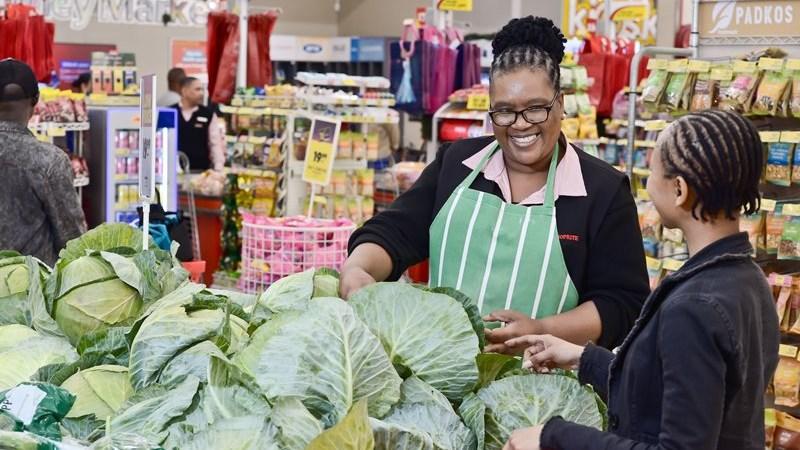
“South Africa’s average household food basket increased to R5,512.53 in October 2026, according to the Pietermaritzburg Economic Justice and Dignity Group, while minimum-wage workers continue to face a substantial gap between earnings and the cost of nutritious food. Rising vegetable prices, regional differences in grocery costs and the heavy burden of transport and electricity are forcing low-income households to make difficult purchasing decisions, threatening food security and weakening consumer purchasing power.”
South Africa’s Food Basket Crisis Deepens as Minimum-Wage Households Struggle with Rising Grocery Costs
South African households are facing persistent affordability pressures as food prices, electricity expenses and transport costs continue to consume a significant share of earnings. The latest Household Affordability Index published by the Pietermaritzburg Economic Justice and Dignity Group (PMBEJD) illustrates the growing difficulties experienced by low-income consumers attempting to secure sufficient nutritious food while managing increasingly expensive essential services.
The October 2026 Household Affordability Index places the average cost of a household food basket at R5,512.53, an increase of R24.48 compared with September. Although the monthly increase appears relatively small, the broader economic implications remain significant because household incomes have not necessarily increased at the same pace as essential expenditure.
The findings highlight a critical microeconomic challenge: the relationship between consumer purchasing power, household budget constraints and the prices of essential goods.
Food Prices Continue to Pressure Household Budgets
According to PMBEJD’s October 2026 findings, the average household food basket increased by approximately 1.3% compared with October 2025. The basket measures the cost of 44 basic food products purchased by low-income households.
The organisation collects prices from 52 supermarkets and 36 butcheries across seven locations, including Johannesburg, Cape Town, Durban, Pietermaritzburg, Mthatha, Mtubatuba and Springbok.
The research demonstrates that food affordability remains a major concern even when annual price increases appear relatively moderate.
For households earning limited incomes, the affordability of groceries depends not only on the overall inflation rate but also on how much money remains after essential expenses have been paid.
Consequently, a relatively small increase in grocery prices can create considerable pressure when household budgets are already stretched.
Vegetable Prices Contribute to October’s Increase
The October index recorded substantial price movements across individual food products.
Butternut increased by approximately 26% during the month, while onions rose by 11% and tomatoes increased by 10%.
Margarine and oranges also recorded increases of around 6%.
Onions experienced particularly significant annual inflation, with prices approximately 104% higher than October 2025.
However, several products became cheaper during October. Spinach prices declined by approximately 10%, while soup and cabbage fell by around 5%.
Maize meal and frozen chicken portions also recorded monthly decreases.
These contrasting movements demonstrate that food inflation does not affect every product equally.
Consumers who regularly purchase vegetables experiencing sharp price increases may face considerably higher grocery expenses than households whose shopping baskets contain products that have become cheaper.
For low-income consumers, substitutions between products can become an important survival strategy.
Nevertheless, switching to cheaper alternatives does not always guarantee that households maintain adequate nutritional intake.
Minimum-Wage Workers Face a Significant Food Affordability Gap
The relationship between earnings and grocery expenditure remains one of the most concerning findings in the October affordability assessment.
South Africa’s national minimum wage stands at R30.23 per hour.
A worker completing eight hours daily over 22 working days in October would earn approximately R5,320.48 before considering additional household circumstances.
The average household food basket, meanwhile, costs R5,512.53.
This comparison demonstrates that the food basket alone exceeds the calculated monthly minimum-wage earnings.
However, households must also pay for electricity, transport, accommodation, healthcare, education and other essential expenses.
The resulting budget constraint leaves families with limited opportunities to purchase sufficient food.
PMBEJD estimates that transport and electricity expenses absorb approximately R3,375.45 of a minimum-wage worker’s October earnings under its affordability model.
After these expenses, approximately R1,945.03 remains available for groceries and other household requirements.
The amount is substantially below the estimated R3,828.72 required to purchase a basic nutritious food basket for a family of four.
This creates a food affordability shortfall of approximately R1,883.69.
The figures underline the difference between nominal income and real purchasing power.
Although workers receive wages, those earnings may be insufficient to purchase the goods and services required for an acceptable standard of living.
Regional Differences Complicate Consumer Spending
Food prices also vary considerably between South African cities and communities.
PMBEJD’s October assessment identified Springbok as the location with the highest average household food basket cost among the seven monitored areas.
The basket reached approximately R5,848.83 in Springbok, compared with R5,766.71 in Johannesburg.
Pietermaritzburg recorded the lowest average cost, at approximately R5,207.31.
The difference between Springbok and Pietermaritzburg amounted to more than R640 monthly.
These regional differences demonstrate how geographical factors can influence consumer affordability.
Transportation infrastructure, distribution networks, supplier access, local competition and the distance between production centres and retail markets can affect the final prices consumers pay.
For households living in areas where groceries are relatively expensive, the same nominal income may purchase considerably fewer goods.
Consequently, regional price differences can influence household welfare and purchasing decisions.
Household Purchasing Behaviour Changes Under Financial Pressure
When consumers experience rising prices and limited income growth, they frequently adjust their purchasing behaviour.
Microeconomic theory explains that households attempt to maximise satisfaction within their available budgets.
However, when essential products become more expensive, consumers may respond by purchasing smaller quantities, selecting cheaper alternatives or reducing expenditure on non-essential products.
South African grocery shopping patterns reflect these pressures.
Research published by Worldpanel by Numerator in September 2026 indicated that households were making more frequent grocery trips while purchasing fewer items per visit.
The number of grocery trips increased, while the average number of packs purchased per trip declined.
These patterns suggest that consumers are becoming more deliberate about managing their budgets.
Instead of purchasing large quantities during a single shopping trip, households may increasingly buy smaller amounts as cash becomes available.
This behaviour can influence retail sales, product demand and the performance of different food categories.
It also demonstrates how affordability pressures affect both consumers and businesses.
Retail Competition and Consumer Protection Remain Important
Food affordability is not determined exclusively by agricultural production costs or international commodity prices.
Retail competition, distribution expenses, market concentration and pricing decisions can also influence consumer prices.
South Africa’s Competition Commission has previously raised concerns about whether consumers consistently benefit when production costs decline.
Its cost-of-living assessments have examined the relationship between producer prices and retail prices across several essential food products.
The commission has highlighted concerns involving bread, maize meal, sunflower oil and other staple products where changes in upstream commodity prices have not always translated proportionately into lower retail prices.
These concerns are relevant because competitive markets can encourage businesses to improve efficiency, reduce unnecessary costs and offer consumers better prices.
Where competition is limited, consumers may have fewer alternatives and weaker bargaining power.
However, identifying differences between producer and retail prices does not automatically establish unlawful conduct.
A comprehensive assessment must consider processing expenses, transportation, storage, energy costs, supplier contracts and retailer operating expenses.
Competition monitoring therefore remains important for distinguishing legitimate cost increases from potentially problematic pricing behaviour.
Electricity and Transport Intensify the Cost-of-Living Challenge
Food affordability cannot be understood independently of other household expenses.
Electricity and transport are particularly important because they compete directly with groceries for available income.
The Competition Commission’s cost-of-living analysis has identified substantial increases in essential administered prices.
BusinessTech reported on 2 November 2026 that cumulative electricity price inflation had reached approximately 101% by July 2026.
This substantially exceeded the cumulative increase in overall consumer prices since 2020.
Electricity is essential for cooking, refrigeration, lighting and other household activities.
When electricity becomes more expensive, consumers may have less money available for food.
Transport expenses create similar difficulties.
Workers who depend on public transport or minibus taxis must pay to travel to employment opportunities.
These expenses reduce disposable income and can influence where households shop, which products they purchase and how frequently they travel.
For low-income consumers, the combined effect of transport and electricity expenses can substantially reduce the resources available for nutrition.
Nutrition and Child Welfare Remain Major Concerns
The affordability challenge extends beyond household purchasing decisions to nutritional outcomes.
PMBEJD estimated the October cost of feeding a child a basic nutritious diet at approximately R975.66 monthly.
The Child Support Grant of R580 remains considerably below that amount.
This difference illustrates the difficulties experienced by households relying on social assistance to support children’s nutritional needs.
When food becomes unaffordable, households may reduce portion sizes, purchase less expensive products or prioritise certain family members over others.
Such adjustments can affect nutritional quality and household wellbeing.
The affordability gap is therefore not merely a question of grocery expenditure.
It also concerns public health, educational development and the long-term economic consequences of inadequate nutrition.
Economic Implications for Retailers and Policymakers
Persistent household affordability pressures have implications for South African businesses.
Consumers with limited disposable income may reduce expenditure on clothing, entertainment, household appliances and other discretionary products.
Retailers operating in these categories could consequently experience weaker demand.
Food retailers may also face changing consumer preferences, increased price sensitivity and stronger competition for budget-conscious shoppers.
Businesses may respond through promotions, smaller package sizes, discount products and improved supply-chain efficiency.
Nevertheless, maintaining profitability while serving increasingly price-sensitive customers remains a difficult balancing act.
Policymakers face a similar challenge.
Measures supporting agricultural productivity, efficient logistics, transparent pricing and competitive retail markets could help reduce unnecessary costs.
Social protection programmes also remain important for households whose earnings are insufficient to meet basic requirements.
However, sustainable improvements require more than temporary assistance.
Greater employment opportunities, productivity growth, stronger income generation and improved infrastructure are essential to strengthening purchasing power over time.
Outlook: Affordability Remains a Defining Economic Issue
South Africa’s October food basket figures demonstrate that household affordability remains a major economic concern entering November.
Although the average basket increased relatively modestly during the month, its absolute cost remains substantial compared with minimum-wage earnings.
The pressure becomes more severe when electricity, transport and other essential expenses are included.
For consumers, the immediate challenge is managing limited budgets while maintaining access to sufficient nutritious food.
For businesses, the challenge involves adapting to changing consumer preferences and maintaining competitive pricing.
For policymakers, the central objective is improving household welfare while strengthening the efficiency and competitiveness of essential markets.
Ultimately, South Africa’s food affordability challenge illustrates the importance of understanding microeconomic relationships between prices, income, consumer behaviour and market competition.
The October 2026 Household Affordability Index provides an important reminder that economic stability must translate into meaningful improvements in the everyday purchasing power of households.
Without stronger affordability, even modest increases in essential expenses can continue to undermine consumer welfare and deepen economic vulnerability among low-income families.
Sources: PMBEJD October 2026 Household Affordability Index; Reported, 30 October 2026; The Gazette, 30 October 2026; The National, 29 October 2026; BusinessTech, 2 November 2026; Statistics South Africa consumer-price information.



