




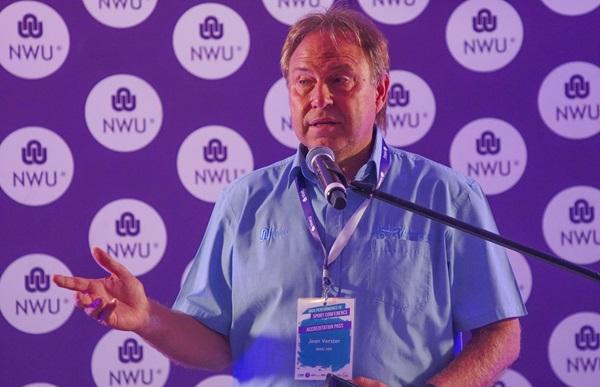
“Athletics South Africa (ASA) has appointed Jean Verster as acting president following the removal of James Moloi, marking an important development in the federation’s ongoing governance crisis. The interim leadership appointment is intended to stabilise the organisation, address World Athletics compliance requirements and prepare the federation for a more permanent leadership arrangement.”
Jean Verster’s Appointment Signals New Chapter for Athletics South Africa as Federation Faces Governance Reforms
Athletics South Africa (ASA) has appointed Jean Verster as acting president in a significant leadership development that could influence the future direction of the country’s athletics administration. The appointment comes at a critical moment for the federation, which is working to address governance concerns raised by World Athletics while protecting the interests of athletes competing nationally and internationally.
Verster, who previously served as ASA’s chairperson of track and field, was appointed following a board meeting on 30 October 2026. His leadership responsibilities will continue until the next ASA Council meeting scheduled for 28 November, when the federation’s supreme decision-making body is expected to consider the interim leadership arrangement and determine the organisation’s next steps.
The announcement, confirmed on Monday, 2 November, represents another important development in a governance crisis that has placed South African athletics under considerable international scrutiny.
Verster appointed to lead athletics federation
The appointment followed a directive from Zakhele Dlamini, president of the Southern African Confederation of Athletics (SACA) and vice-president of the Confederation of African Athletics (CAA). Dlamini attended the ASA board meeting in his capacity as a representative of World Athletics and the continental governing body.
During the proceedings, ASA vice-president John Mathane, who had previously been serving as acting president, briefly participated before voluntarily leaving the meeting.
Following his departure, Dlamini directed the remaining board members to appoint an acting president from among their ranks. The purpose was to establish interim leadership capable of facilitating governance reforms, maintaining organisational stability and advancing compliance with international directives.
The board unanimously agreed to appoint Verster, who accepted the responsibility.
According to ASA’s announcement, his appointment will remain effective until the council meeting on 28 November. At that meeting, council members are expected to consider the interim arrangement and determine the federation’s leadership direction.
The appointment therefore provides temporary administrative continuity while the organisation continues addressing broader institutional challenges.
Leadership change follows James Moloi’s removal
Verster’s appointment follows the removal of former ASA president James Moloi, whose leadership became the subject of disciplinary proceedings involving financial misconduct.
An independent disciplinary committee chaired by retired judge Basheer Waglay found Moloi guilty of charges relating to the unauthorised use of federation financial resources.
The committee examined transactions involving an ASA corporate credit card, including expenses considered personal rather than legitimate federation expenditure.
Among the findings were allegations concerning personal expenses and the use of the corporate card alongside an allowance received during the same period.
The disciplinary committee recommended Moloi’s removal from the presidency and the executive board. ASA subsequently acted on the findings, bringing his leadership tenure to an end.
The controversy has significantly affected the federation’s credibility and intensified calls for stronger financial oversight, transparent administration and institutional accountability.
Importantly, the disciplinary findings did not address only an individual leadership dispute. They became part of a wider examination of the federation’s governance structures and its ability to fulfil responsibilities towards athletes, provincial associations and international sporting organisations.
World Athletics subsequently called for the federation to implement the disciplinary outcome and undertake comprehensive institutional reforms.
World Athletics demands comprehensive governance reforms
The leadership transition comes against the background of a six-month reform deadline imposed by World Athletics.
Following a fact-finding mission in September 2026, the international governing body identified significant governance weaknesses within ASA.
The investigation highlighted divisions within the executive board, difficulties in collective decision-making, uncertainty surrounding the authority of elected officials and concerns about overlapping responsibilities between national and provincial structures.
World Athletics indicated that these problems had contributed to institutional instability and affected the federation’s ability to discharge its constitutional obligations effectively.
Consequently, the international governing body concluded that ASA needed a comprehensive constitutional revision rather than isolated administrative adjustments.
The reform requirements include establishing clear authority for the ASA Council as the federation’s supreme decision-making body, defining responsibilities between elected officials and administrative structures, and strengthening independent oversight mechanisms.
The proposed constitutional changes are also expected to address financial accountability, electoral procedures, disciplinary processes, conflicts of interest, gender balance and athlete representation.
World Athletics has warned that failure to adopt an acceptable revised constitution within the prescribed period could result in sanctions, including international suspension.
The deadline therefore represents a serious challenge for South African athletics administration.
Constitutional reform becomes a central priority
Following Verster’s appointment, ASA announced plans for a comprehensive strategic planning meeting scheduled for 13–15 November 2026.
The meeting will focus on finalising an organisational roadmap intended to guide governance improvements and operational alignment with the requirements of World Athletics and the Confederation of African Athletics.
Zakhele Dlamini is expected to assist with the process, providing guidance on the expectations of the international and continental governing bodies.
The proposed roadmap will subsequently be presented to the ASA Council for consideration and formal adoption before being submitted to World Athletics and the CAA.
This process is particularly important because constitutional reform will determine how the federation operates, how leadership responsibilities are allocated and how future elections are conducted.
A revised governance framework could establish clearer accountability mechanisms and reduce the likelihood of recurring disputes over authority and decision-making.
Furthermore, transparent administrative arrangements could improve confidence among athletes, coaches, sponsors, provincial associations and other stakeholders.
ASA has stated that strengthening governance structures and promoting organisational stability remain central priorities.
International suspension threat raises concerns for athletes
The consequences of the governance crisis extend beyond administrative offices.
South African athletes depend on ASA and its international relationships for participation in major competitions, national representation and access to established qualification pathways.
A potential suspension by World Athletics could significantly affect the country’s international athletics programme.
Such sanctions could prevent athletes from representing South Africa at important international competitions and disrupt preparations for major championships.
The possibility of restrictions affecting the 2027 World Athletics Championships and qualification preparations for the 2028 Los Angeles Olympic Games has raised particular concern.
Athletes who have spent years developing their careers could face uncertainty through circumstances largely outside their control.
Elite competitors require regular international exposure, professional coaching, appropriate medical support and structured competition opportunities to remain competitive.
Any disruption to these systems could affect performance development and reduce opportunities for emerging athletes to establish themselves internationally.
The situation also highlights the importance of effective governance in protecting sporting careers.
Athletes should not be placed at a disadvantage because of unresolved institutional problems involving administrative leadership.
For this reason, the reform process has become a matter of considerable importance for the wider South African athletics community.
Implications for South Africa’s Olympic ambitions
The governance crisis also creates challenges for South Africa’s broader sporting ambitions.
The country has been considering a possible bid to host the 2036 or 2040 Olympic Games, an undertaking that would require strong institutional credibility and effective cooperation among national sporting organisations.
Athletics remains one of the most prominent Olympic disciplines, making the condition of its national federation particularly significant.
The contrast between South Africa’s international sporting ambitions and the challenges confronting ASA has attracted attention within the sporting community.
Successful Olympic hosting ambitions require confidence in administration, organisational integrity and the ability to manage complex sporting programmes.
Although the governance crisis does not automatically determine the outcome of a potential Olympic bid, resolving the federation’s difficulties would help strengthen the country’s wider sporting environment.
The appointment of interim leadership is therefore relevant not only to athletics but also to the broader discussion about South Africa’s position in international sport.
Athletes and administrators await the November council meeting
The ASA Council meeting scheduled for 28 November is expected to become an important moment in determining the federation’s immediate future.
The council will consider Verster’s interim leadership arrangement and assess the direction of the governance reform process.
Meanwhile, the strategic planning meeting scheduled for 13–15 November should provide an opportunity to clarify priorities, establish timelines and develop a practical roadmap for implementing the required changes.
The reform process will require cooperation among national leadership, provincial associations, athletes and other stakeholders.
It will also require effective communication so that the athletics community understands the decisions being taken and their implications.
For athletes, the priority remains the continuation of training, competition and development programmes while administrators work towards restoring organisational stability.
South Africa has a strong athletics tradition, with internationally recognised competitors in sprinting, middle-distance running, long-distance events and field disciplines.
Maintaining that tradition requires a federation capable of supporting athletes through transparent administration and reliable governance.
A defining moment for South African athletics
Jean Verster’s appointment represents an important transitional development for Athletics South Africa.
However, the appointment alone cannot resolve the federation’s underlying governance problems.
The organisation must still demonstrate that it can implement meaningful constitutional reforms, establish credible leadership arrangements and satisfy the requirements communicated by World Athletics and the CAA.
The coming weeks will therefore be crucial.
The November strategic planning meeting, followed by the ASA Council gathering, will provide opportunities to clarify the federation’s reform programme and determine its leadership direction.
Ultimately, the success of these efforts should be measured not simply by administrative changes but by their ability to protect athletes, strengthen accountability and restore confidence in South African athletics.
For the country’s runners, sprinters, jumpers, throwers, coaches and development programmes, the stakes are considerable.
The future of South African athletics depends on ensuring that institutional leadership serves the sport, supports its athletes and creates conditions in which sporting excellence can flourish.
Verster’s interim presidency offers an opportunity to advance that objective. Whether the federation can translate the leadership transition into lasting reform will become clearer as the November council meeting approaches.
The central challenge now facing Athletics South Africa is to transform a period of governance instability into a foundation for stronger accountability, renewed confidence and sustained international competitiveness.



